Pillar Article
How to Lose Weight
Sometimes even straightforward things are difficult. Although we fully understand that change is necessary and the steps are simple, we can still struggle. We can find success, only to have the very thing we changed come roaring back with a vengeance.
Many things in life are like this. No doubt, all have experienced this frustration in some way. We each have something more difficult for us compared to other elements of our lives. For many, this “something” is losing weight and keeping it off. Unlike smoking or drinking in excess, we cannot merely stop eating. We need food to live. Therefore, controlling weight is a different kind of challenge.
A few never battle excess weight. While they may have other health concerns, they seem to shed accumulated pounds quickly—or never put it on to begin with. Proper food choices and consumption are not a significant concern for them.
For the rest of us, maintaining a healthy weight is a constant battle. It is a frustrating one! But there are practical ways to LOSE weight and keep it off. Those who have done it know it is well worth it.
This article covers practical ways to shed excess pounds and maintain a healthy weight. By applying them, you can lose and keep the weight off, permanently. As Christians, we can take a unique approach to the challenge.
Uniquely Motivated
Good health, which includes maintaining a proper weight, has several implications for Christians.
Our body is God’s temple, which becomes a critical reason to take care of it. The latter part of II Corinthians 6:16 states, “for you are the temple of the living God; as God has said, I will dwell in them, and walk in them; and I will be their God, and they shall be My people.” I Corinthians 6:19 adds, “know you not that your body is the temple of the Holy Spirit which is in you, which you have of God…?”
Another critical motivation for Christians to be physically healthy is our service to others. Being at a proper weight helps us serve others more effectively, more frequently, and over a longer time. We avoid being unnecessarily sick and we avoid dying prematurely.
With a proper weight comes increased energy, which allows us to do more while serving. It also increases our endurance and life expectancy, which means we can serve longer in the short- and long-term. A healthy weight also helps prevent us from burdening others due to the associated disease that comes with being overweight. The benefits are many!
Our Creator’s positive reinforcement to lose weight also comes with admonishment. Ezekiel 16:49 reads, “Behold, this was the iniquity of your sister Sodom, pride, fullness of bread, and abundance of idleness was in her and in her daughters, neither did she strengthen the hand of the poor and needy.” God indicted the people of Sodom for overeating. We do not want to be like the citizens of Sodom!
We live in the Laodicean age, where the people rule, judge and decide. In reaction to society long promoting underweight body images as positive, some have chosen the opposite extreme, promoting excess weight as acceptable, healthy and appropriate. The Bible should determine our outlook.
God Promotes Health
God wants us to be healthy. He says through the apostle John, “I wish above all things that you may prosper and be in health, even as your soul prospers” (III John 1:2). But God goes even further.
Human beings can find it incredibly difficult to change. Yet Christians have an extraordinary promise that applies in the most challenging situations, which requires us to behave differently than we have in the past.
Philippians 2:13 reads, “For it is God which works in you both to will and to do of His good pleasure.” We can ask God to motivate us with the determination and ability to do the most difficult things in life. Our Father promises He will work in us to accomplish what can seem impossible.
Through God comes the desire the change and the ability to do it. God works in us. Rather than depending on ourselves, we are not left alone. What a tremendous promise!
He not only gives us the motivation we need but also a promised way to escape the temptations that come along the way to reaching our goal (I Cor. 10:13).
We can claim these promises in prayer with a humble yet determined attitude. The motivation to make the right choices while also avoiding the wrong decisions that come through temptation are generally the most challenging part of weight loss.
Occasional Indulgence
Before listing the practical ways to lose weight and keep it off, it is good to address a common question that comes from those looking to lose weight: “Can I ever treat myself to dessert or any other high-calorie foods while trying to lose weight?”
Foods such as cakes, pies, cookies, ice cream, and high-calorie drinks are a few examples. These foods contain a lot of sugar and not many nutrients—basically empty calories. Regularly consuming such foods and doing so at more than a single serving causes people to put on, and keep on, excess weight.
Read Proverbs 23:1-3, which states: “When you sit to eat with a ruler, consider diligently what is before you: and put a knife to your throat, if you be a man given to appetite. Be not desirous of his dainties: for they are deceitful meat.” This confirms what most of us already know—our bodies do not respond well to regularly eating rich foods!
This verse encapsulates the dangers of the Western lifestyle. We can eat like “kings,” yet we must be careful of “deceitful meat”—which we could consider “empty foods.” If we are “given to appetite,” meaning overeating is a weakness in our character, we must take drastic action. We should consider greatly reducing or even eliminating “empty calories” for a time until we can change our habits.
As we gradually work the occasional indulgence back into our diets, we must be careful to avoid large servings, which are really multiple servings. Those overweight must work even more diligently and more carefully than others not carrying excess weight.
Points to Reduce Pounds
Find Your Motivation
- In addition to our spiritual improvement, what is our motivation?
- Do you want to be healthier for yourself, your spouse and your kids?
- Have you been hampered in serving brethren?
- Do you want to improve your appearance? Do you want to look your best when coming before God during Sabbath services?
- It will be most difficult the first two to three weeks. Building motivation before you start helps you to stick to it.
Principles
- We must take in fewer calories than we are burning.
- Reduced calories mean we need to focus on proper nutrition. Many use nutritional supplements. A multivitamin is helpful in most circumstances.
- Celebrate successes.
- Do not beat yourself up over failures. Just pick yourself up and keep going.
- Avoid fad diets. They do not work. Various diets might work at first, but pretty much all of us will gain the weight back.
- Eat when hungry. Stop when full or even slightly before.
- Eating slower over at least 20-30 minutes helps you better realize when you are full.
- Ask friends and family for support. Ask for them to not eat in front of you when you cannot. They can encourage and cheer you on.
Implement Healthful Habits
- Be persistent and constant! This is often the most difficult part.
- Drink plenty of water. It helps control hunger and helps you feel better.
- Eat only at meals. Sit down with utensils and plates for even small meals.
- Do not skip meals.
- Second portions must be vegetables and fruits.
- Snack foods like chips are a treat, not part of a regular diet.
- Keep snack calories as part of the calorie total—even a single bite.
- Avoid eating snacks in front of the TV because subconscious eating can cause us to eat more.
- Read labels when shopping.
- Buy fresh foods such as vegetables and meats that do not need labels—frozen is a quick alternative.
Other Tips
- Avoid calories in drinks. For coffee or tea, drink it plain without additives such as honey or creamer. Consume no juice or similar items.
- A balanced approach works best.
- Get protein from lean meats, especially fish and fowl.
- Fat is satiating but do not overdo it. Twenty-five percent of calories from fat is a reasonable goal.
- Carbohydrates should be complex such as those in vegetables. Avoid simple carbohydrates like those in sugars, honey, alcohol and white bread.
- Exercise can help by increasing the calories burned in a day, but diet with calorie control is the mainstay of weight loss.
- Avoid allowing yourself to make little exceptions to your rules. Even small amounts add up.
- Eat before you go and refuse to eat at non-meal social gatherings.
- View mild hunger as evidence you are accomplishing your goal!
Source: Getty Images
Physical Benefits
Science and medicine back up what the Bible says about the way to lose weight and its benefits. Take the connection between maintaining a proper weight and avoiding illness. The World Health Organization notes that being overweight or obese is a major risk factor for several chronic diseases. It adds that carrying excess weight is a problem seen in both high- and low-income countries, especially in urban settings.
People the world over are unnecessarily sick and dying prematurely. These weight-related health problems include diabetes, cardiovascular diseases, sleep apnea, and various cancers, among other risks.
The world is coming to understand the benefits of maintaining a proper weight, including increased energy, better overall health, improved body image, improved confidence, and better sleep and mood.
Tips to Lose and Maintain Weight
There is information on the proper way to lose weight available from several credible websites. Look for disease management programs that focus on helping individuals achieve health goals, including weight loss.
This article includes specific tried-and-true actions you can take. These come from disease management websites, from similar governmental health sites, and from individuals experienced in successful weight reduction and maintenance. Taken together, these are all effective in reducing and maintaining a healthy weight.
What Is a Normal Weight?
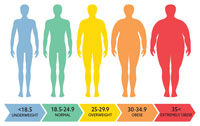
A weight in the healthy range is considered normal. Experts use body mass index to determine this range. BMI is a simple calculation available from many free online sources. It measures an adult’s weight in relation to his or her height. Abnormal BMI can translate to certain health risks.
According to the United States Centers for Disease Control and Prevention, a normal weight is defined as a BMI between 18.5 and 24.9. Less than 18.5 is considered underweight. A BMI in the range of 25.0 to 29.9 is considered overweight, and 30.0 and higher is considered obese.
BMI is an independent health risk. This means it is not a calculation adjusted based on gender, race, geography or any of the customary health-related risk adjustments. For example, men and women of the same height and weight have the same BMI and therefore a similar health-risk profile. Even bone structure and muscle mass do not reduce the risks associated with an abnormal BMI. Its universal use makes BMI a simple and helpful health metric.
Those under 18, pregnant or who have specific medical problems should seek professional counsel before addressing an abnormal BMI.
Plan and Prepare
Weight loss is not rocket science. But it can be exceptionally hard for many to achieve.
To succeed, be certain you honestly desire to lose excess weight. Understand, this is not the same as a desire to simply lose weight or be at a lower weight. It is the desire to lose excess weight. Think deeply about the difference.
If your normal BMI weight is 150 pounds, and you currently weigh 200 pounds, your ultimate goal is to lose 50 pounds of excess weight—not just lose 10-25 pounds. While interim goals are helpful, you should keep your long-term goal in focus. Sure, celebrate at 195 pounds, 180 pounds, and 175 pounds, but you must keep going until you hit 150 pounds, no matter how long it takes.
This commitment level takes spiritual motivation as the foundation.
Spiritual motivation is what keeps you on track. God-given drive will bring you back in line when sidesteps in your weight-loss journey happen. Review and apply the five tools of Christian growth—prayer, Bible study, fasting, meditation and exercising God’s Spirit—all with your goal to lose excess weight in mind.
Be slow and steady, taking the approach of a marathon runner rather than a sprinter. Slow weight reduction increases the likelihood of keeping those excess pounds off permanently. While weight loss can vary from week to week, targeting one or two pounds in a week is realistic and healthy.
Calorie Intake Is Key
Calorie control is the mainstay for weight control. What we eat and how much we eat drives our weight. There are many ways to adjust both to help us meet our goals. But realize that some approaches will work better for some than for others.
- Strive to eat at least six servings of vegetables and fruits each day.
- “Be a calorie detective,” as one website put it. Record all calories consumed. You can do this by writing down everything you eat. You can also use one of the numerous apps available for smartphones that can even scan labels.
- Measure your portion sizes. You can weigh food or use volume metrics. After a while of doing this, you will become accustomed to proper portion sizes.
- Keep condiments like ketchup, salad dressings, and sauces to infrequent, small and measured portions with their caloric content in mind. It is best to avoid them most of the time.
- Carbohydrates are a staple in the Western diet. After we mature, carbs remain important, but we need to keep eating them to a minimum. Breads, pastas and cereals are high in carbs, as are many processed foods. These all should be eaten in moderation.
Set Goals and Reward Yourself!
As with all worthwhile things in life, we need to set goals. Goals keep us motivated and keep us moving ahead. Our ultimate weight-loss goal could be years in the making. Therefore, it is important to set interim goals to keep us on track and to help us measure our progress.
Along the way, as you lose weight, periodically take a break and maintain your caloric intake for a few weeks or months to stay at that weight. You will find that when you start your program again, it is even more motivating.
When you meet a goal, celebrate and reward yourself! There are numerous noncaloric rewards. Supplement your wardrobe at your new weight. Buy a new tie or a new scarf. Once you have lost even more weight, an entire outfit or two is very rewarding and motivating. Take a trip or drive somewhere that allows you to showcase your new healthy lifestyle.
Weight loss and maintenance are difficult, but not complicated. Both take a certain amount of will. Permanent weight loss takes persistence.
But Christians have an advantage. In the most difficult of times, God says—He promises—to give us both the will and the ability to accomplish what we desire. God clearly wants us to be healthy. Good health allows us to avoid physical distractions and focus even better on spiritual things.
The booklet God’s Principles of Healthful Living evaluates many issues and answers even more questions about this topic and many others.
出版 March 19, 2021