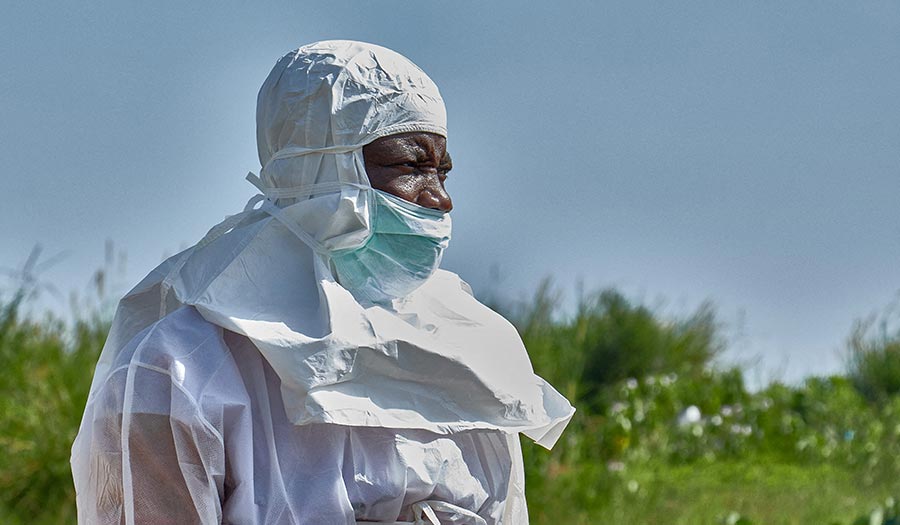
Bracing for Swine Flu’s Second Wave
Reports from the first wave of the H1N1 pandemic reveal that hospitals are swamped with rapidly declining patients in need of resource-heavy intensive care unit support.
As healthcare facilities brace for the coming second wave of the swine flu virus, governments must decide how to distribute sparse vaccine supplies among their citizens.
A report published in the Journal of the American Medical Association (JAMA) described summer’s worst swine flu cases in Canada and Mexico: “The influenza outbreak lasted about 3 months in both countries, but the peak lasted just a few weeks, during which time hospitals struggled to accommodate the increased patient load, with 4 Mexican patients dying while awaiting ICU beds.”
The JAMA essay “Preparing for the Sickest Patients With 2009 Influenza A(H1N1)” detailed the virus’s progression: “Patients tended to be relatively healthy adolescents and young adults who developed a brief prodromal illness [early symptoms] followed by rapidly progressive respiratory failure”—spiraling into shock, multisystem organ failure, and prolonged and severe hypoxemia.
On average, swine flu victims required “12 days of mechanical ventilation and frequent use of rescue therapies such as high-frequency oscillatory ventilation, prone positioning, neuromuscular blockade, and inhaled nitric oxide” (ibid.).
According to the World Health Organisation, between March 18 and June 1 of 2009, Mexico documented 5,029 H1N1 cases and 97 related deaths. By the end of August, the virus encircled the planet: 116,046 cases and 2,234 deaths in the Americas, and 277,607 cases and 3,205 deaths worldwide.
Hospitals face a grueling battle during the fall flu season.
“‘This is one of the most difficult conditions I’ve ever had to treat,’ said Dr. Anand Kumar of St. Boniface Hospital in Winnipeg, Manitoba, a hotspot of infection during the first wave of the swine flu in May and June” (Reuters).
“At one point, 50 percent of the available ICU (intensive care unit) beds in the entire city were filled with H1N1 patients,” Dr. Kumar continued. “We basically maxed out our capacity.”
As the first shipments of H1N1 vaccine are made available in the United States, local and state health departments must decide who will receive the vaccine first. Across the nation, children, healthcare workers and pregnant women are often the first choice. But until high-risk groups are covered and more vaccine doses made available, other citizens must wait to receive a flu shot.
In a controversial move, some private healthcare facilities have made the anti-flu shot mandatory for their employees. Proponents of compulsory vaccination say the measure cuts sick days, protects family members and friends, and decreases patient infections. But critics say the measure interferes in a person’s civil liberties. Typically during a normal flu season, only about half of healthcare workers are inoculated.