The Restored Church of God|The Real Truth Magazine|WCG Background?
Donation InformationHelpContact
THE

REAL TRUTH

A MAGAZINE RESTORING PLAIN UNDERSTANDING
Subscribe
WorldAmericasMiddle EastSocietyScienceReligionFrom the EditorIssues
THE
REAL TRUTH

A Magazine Restoring Plain Understanding

Providing clear, biblical answers to life's greatest questions and making sense of today's headlines.

SECTIONS

  • Issues
  • News
  • Personal
  • All Articles
  • Subscribe
  • Search

ABOUT

  • About Us
  • Donation Information
  • Contact Us
  • Help
  • Privacy Policy
  • Press Resources
  • RSS Feed

RCG SITES

  • Main Site
  • The World to Come
  • WCG Background?
  • RCG Hub
  • MyRCG

© 2026 The Restored Church of God. All rights reserved.

RCG|The Restored Church of God
Weather & Environment

Study: Microscopic Plastic Found in 83 Percent of World’s Tap Water

September 20, 2017
Study: Microscopic Plastic Found in 83 Percent of World’s Tap Water

Nearly all of the world’s tap water contains microscopic fibers of plastic, a new study found, sparking concerns that millions may be consuming hazardous water.

The research, directed by nonprofit news outlet Orb Media based in Washington, D.C., with the help of researchers from the University of Minnesota and the State University of New York, involved collecting more than 150 tap-water samples in cities on five continents. Of those, 83 percent tested positive for microplastic.

Rates varied depending on location, from 72 percent across test samples in Europe to 82 percent in India and a high of 94 percent in the United States.

Plastic waste in the world’s oceans has been a major environmental concern for decades—300 million tons of plastic are produced annually and much of it ends up floating in rivers and oceans. This devastates marine life and ecosystems. But Orb’s study revealed the increasing threat plastic waste poses to human health.

Deutsche Welle reported: “When consumed, plastic fibers may ferry toxins from the environment into the human body, experts fear.

“Researcher Richard Thompson of Plymouth University said that in animal studies, ‘it became clear very early on that the plastic would release those chemicals—and that actually, the conditions in the gut would facilitate really quite rapid release.’”

Experts are not entirely clear how the plastic fibers enter tap water sources. But there is “one confirmed source of plastic fiber pollution,” the German news outlet continued. “Synthetic garments emit up to 700,000 fibers per washload, researchers found. Much of that evades treatment and is discharged into public waterways.”

Mary Kosuth, who worked on the study, said that while the findings present a serious issue, there is more to discover.

“Since this is the first global tap water survey of plastic pollution to have been completed, the results of this study serve as an initial glimpse at the consequences of human plastic use [and] disposal rather than a comprehensive assessment of global plastic contamination,” she wrote, according to Fox News. “These results call for further testing within and between regions.”


SHARE

Related Stories

Analysis: ‘Breakneck’ Ebola Epidemic in Congo Outpaces World’s Response
Analysis

Analysis: ‘Breakneck’ Ebola Epidemic in Congo Outpaces World’s Response

Europe Faces a Ukrainian Drone Problem as Kyiv Targets Russian Oil Exports
Geopolitics

Europe Faces a Ukrainian Drone Problem as Kyiv Targets Russian Oil Exports

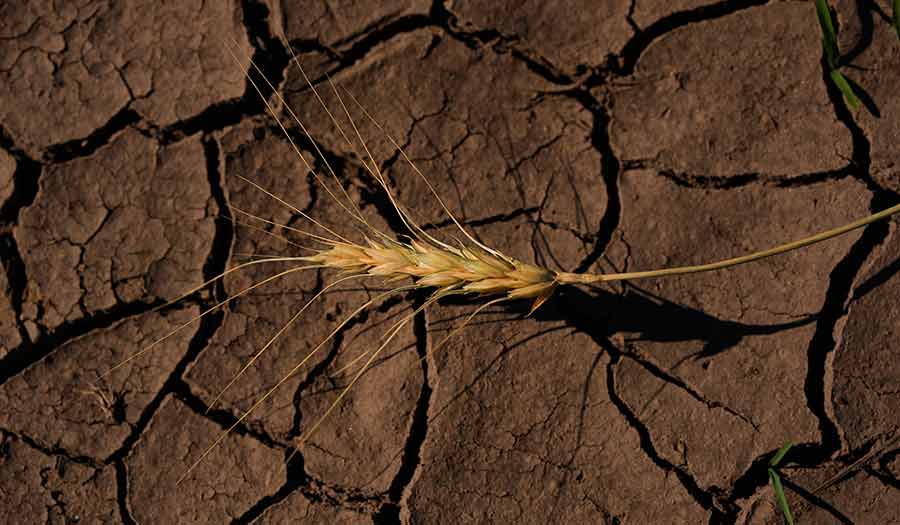
Kansas Farmers Hit Hard by Weather Extremes and Growing Costs, Wheat Crop Could Be Worst Since 1972
Weather & Environment

Kansas Farmers Hit Hard by Weather Extremes and Growing Costs, Wheat Crop Could Be Worst Since 1972

Latest Stories

  • Analysis: ‘Breakneck’ Ebola Epidemic in Congo Outpaces World’s Response
    Analysis

    Analysis: ‘Breakneck’ Ebola Epidemic in Congo Outpaces World’s Response

  • Europe Faces a Ukrainian Drone Problem as Kyiv Targets Russian Oil Exports
    Geopolitics

    Europe Faces a Ukrainian Drone Problem as Kyiv Targets Russian Oil Exports

  • Kansas Farmers Hit Hard by Weather Extremes and Growing Costs, Wheat Crop Could Be Worst Since 1972
    Weather & Environment

    Kansas Farmers Hit Hard by Weather Extremes and Growing Costs, Wheat Crop Could Be Worst Since 1972

  • In Iran’s Capital, Weapons Demonstrations Send a Signal at Home and Abroad as Threat of War Remains
    Middle East

    In Iran’s Capital, Weapons Demonstrations Send a Signal at Home and Abroad as Threat of War Remains

  • Kids Are in a ‘Reading Recession,’ as Test Scores Continue to Decline
    Education

    Kids Are in a ‘Reading Recession,’ as Test Scores Continue to Decline

  • Mali at Risk of Splintering After Jihadi and Separatist Attacks
    Analysis

    Mali at Risk of Splintering After Jihadi and Separatist Attacks

FREE SUBSCRIPTION

Learn the why behind the headlines.

Subscribe to The Real Truth for FREE news and analysis.