The Restored Church of God|The Real Truth Magazine|WCG Background?
Donation InformationHelpContact
THE

REAL TRUTH

A MAGAZINE RESTORING PLAIN UNDERSTANDING
Subscribe
WorldAmericasMiddle EastSocietyScienceReligionFrom the EditorIssues
THE
REAL TRUTH

A Magazine Restoring Plain Understanding

Providing clear, biblical answers to life's greatest questions and making sense of today's headlines.

SECTIONS

  • Issues
  • News
  • Personal
  • All Articles
  • Subscribe
  • Search

ABOUT

  • About Us
  • Donation Information
  • Contact Us
  • Help
  • Privacy Policy
  • Press Resources
  • RSS Feed

RCG SITES

  • Main Site
  • The World to Come
  • WCG Background?
  • RCG Hub
  • MyRCG

© 2026 The Restored Church of God. All rights reserved.

RCG|The Restored Church of God
Americas

Increasing Numbers of Predatory Coywolves Are Roaming in U.S. Cities
December 10, 2017
Increasing Numbers of Predatory Coywolves Are Roaming in U.S. Cities

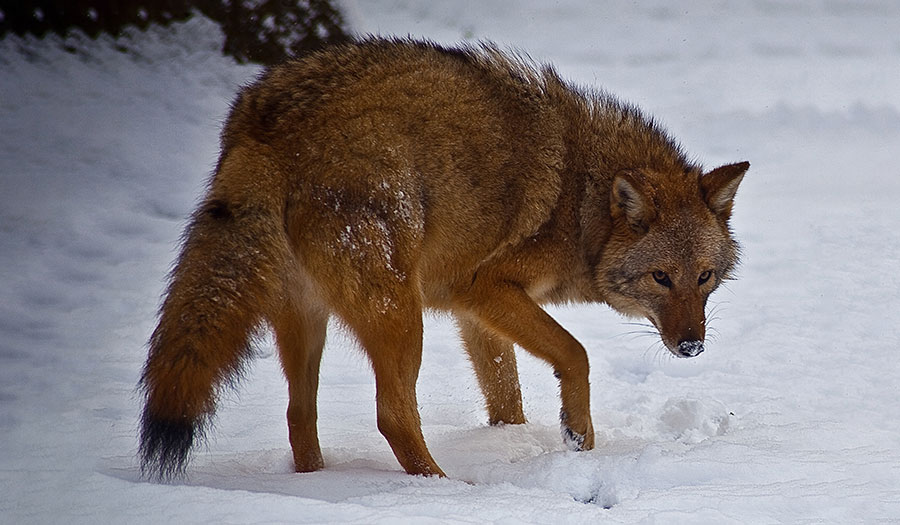
Millions of coywolves—coyote-wolf hybrids—are spreading rapidly across the American East.

These predatory creatures, which are on average one-quarter wolf and one-tenth dog, weigh up to 75 pounds more than a coyote, are faster due to their longer legs, and have larger, more powerful jaws.

“National Geographic noted in 2011 the hybrid animals can devour practically anything including shoe leather,” the New York Daily Post reported.

“The mixture of wolf and coyote DNA likely make the animals ‘able to do things like take down deer, which a little, scrappy Great Plains wily coyote would not be able to do on its own,’ Christine Bozarth, a former researcher at the National Zoo, told the magazine in 2011.”

Most concerning for cities across the East is that they are not as shy of humans as is typical with wolves. In recent years, several have been spotted living in New York City, Washington, D.C., Boston and Philadelphia, as well as Toronto, Canada.

“The dog DNA might even include some tolerance for the noise of cities,” an article by Smithsonian magazine reported.

Experts have noted coywolves’ danger to populated areas. David Dilworth, president of pest control company Chaos Wildlife Solutions, told The Daily Mail that coywolves “do pose a threat to people and in particular, domestic animals.”

“A lot of them feed on moose and deer and small game. It would be uncommon for them to attack humans, but each animal has an individual personality. Without a doubt there is always that chance of a human attack. They’re always dangerous.”

He also noted that the animals instinctively track living things that are in their sight. According to CBS, one New York City resident was stalked by a coywolf while she was taking out her trash.

Coywolves have existed on the eastern part of North America since the first was spotted in Ontario, Canada, around 1919. Biologists believe they first came about because dwindling wolf populations in southern Ontario, Canada, forced wolves to seek other mating partners.

“The clearance of forests for farming, together with the deliberate persecution which wolves often suffer at the hand of man, had made life tough for the species,” The Economist reported. “That same forest clearance…both permitted coyotes to spread from their prairie homeland into areas hitherto exclusively lupine, and brought the dogs that accompanied the farmers into the mix.”

There are now millions of coywolves across North America, and they are increasingly coming out of the woods and treading into urban areas.


FREE SUBSCRIPTION

Learn the why behind the headlines.

Subscribe to The Real Truth for FREE news and analysis.

SHARE

Related Stories

Analysis: ‘Breakneck’ Ebola Epidemic in Congo Outpaces World’s Response
Analysis

Analysis: ‘Breakneck’ Ebola Epidemic in Congo Outpaces World’s Response

Europe Faces a Ukrainian Drone Problem as Kyiv Targets Russian Oil Exports
Geopolitics

Europe Faces a Ukrainian Drone Problem as Kyiv Targets Russian Oil Exports

Kansas Farmers Hit Hard by Weather Extremes and Growing Costs, Wheat Crop Could Be Worst Since 1972
Weather & Environment

Kansas Farmers Hit Hard by Weather Extremes and Growing Costs, Wheat Crop Could Be Worst Since 1972

Latest Stories

  • Analysis: ‘Breakneck’ Ebola Epidemic in Congo Outpaces World’s Response
    Analysis

    Analysis: ‘Breakneck’ Ebola Epidemic in Congo Outpaces World’s Response

  • Europe Faces a Ukrainian Drone Problem as Kyiv Targets Russian Oil Exports
    Geopolitics

    Europe Faces a Ukrainian Drone Problem as Kyiv Targets Russian Oil Exports

  • Kansas Farmers Hit Hard by Weather Extremes and Growing Costs, Wheat Crop Could Be Worst Since 1972
    Weather & Environment

    Kansas Farmers Hit Hard by Weather Extremes and Growing Costs, Wheat Crop Could Be Worst Since 1972

  • In Iran’s Capital, Weapons Demonstrations Send a Signal at Home and Abroad as Threat of War Remains
    Middle East

    In Iran’s Capital, Weapons Demonstrations Send a Signal at Home and Abroad as Threat of War Remains

  • Kids Are in a ‘Reading Recession,’ as Test Scores Continue to Decline
    Education

    Kids Are in a ‘Reading Recession,’ as Test Scores Continue to Decline

  • Mali at Risk of Splintering After Jihadi and Separatist Attacks
    Analysis

    Mali at Risk of Splintering After Jihadi and Separatist Attacks