Avocado and Lemon Crops Destroyed by California Wildfires
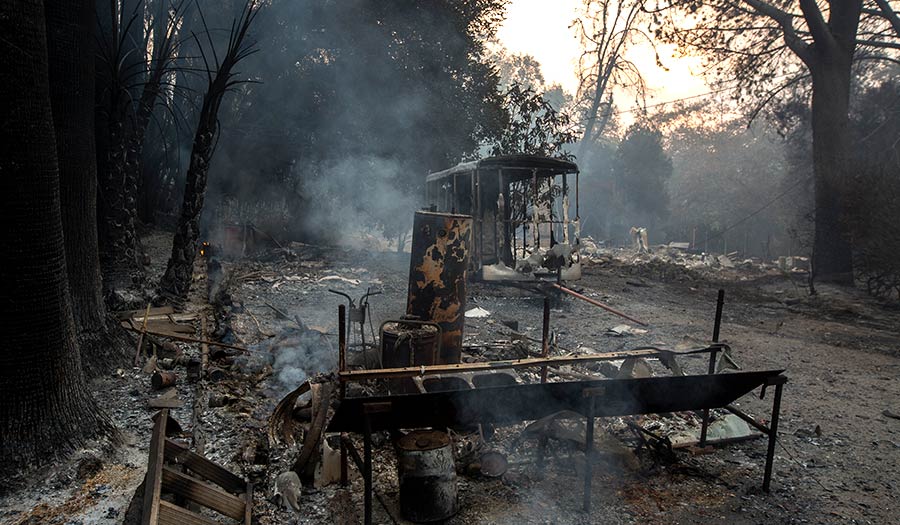
As firefighters scrambled to contain the massive wildfires that have raged in Southern California since December 4, the flames have already damaged two of the state’s most important crops.
Hundreds of thousands of acres of avocado and lemon orchards were charred when the blaze raced into Ventura County—which produces the most avocados and lemons in the state.
The full extent of damage is not yet certain. “It will take days, weeks or longer to assess the loss,” John Krist, chief executive of the Ventura County Farm Bureau, told The New York Times. “What we know is, there’s a lot of fruit on the ground.”
Avocado trees are particularly vulnerable as they grow on the hillsides in the path of the fire and their leaves collect on the ground to form tinder.
The damage could severely impact California’s agriculture. The state “accounts for 90 percent of the country’s avocado crop and 80 percent of its lemons,” according to Reuters, with Ventura County alone counting for 40 percent of the national output.
Yet experts do not believe consumers will experience higher prices, since domestic production only accounts for a small portion of national consumption. Most of the avocados sold in the United States are grown in Mexico and lemons can be imported to make up for losses.
“Still, the wildfires happened just before some growers planned to start harvesting their avocados and lemons,” The New York Times reported. “And farmers who are relieved that their entire crop was not wiped out are still worried about having enough workers when they will need them later in the season, because it is still unclear how many people lost their homes.
“‘Everything has been thrown up in the air,’ said Lisa Churchill, who grows avocados and specialty tangerines, like the pixie variety, in the Ojai Valley. Churchill said she believes she lost about half of her avocado crop and about 20 percent of her mandarins. ‘We don’t know what impact this will have on our ability to put together a crew,’ she said.”
In addition, the fires are far from over. According to a report from the Santa Barbara County Fire Department, officials do not expect to fully contain the flames—the fourth largest in the state’s history—until January 7. Weather analysts blame continued Santa Ana wind gusts and single-digit humidity.
“These winds, especially in the mountain areas, are really going to start blowing the fire around again,” Stuart Seto, a weather specialist with the National Weather Service, told Los Angeles Times. “What it does is carry the embers further down and can create more flames.”
So far, the Southern California wildfires have destroyed hundreds of homes and caused more than 94,000 people to flee their residences.