The Restored Church of God|The Real Truth Magazine|WCG Background?
Donation InformationHelpContact
THE

REAL TRUTH

A MAGAZINE RESTORING PLAIN UNDERSTANDING
Subscribe
WorldAmericasMiddle EastSocietyScienceReligionFrom the EditorIssues
THE
REAL TRUTH

A Magazine Restoring Plain Understanding

Providing clear, biblical answers to life's greatest questions and making sense of today's headlines.

SECTIONS

  • Issues
  • News
  • Personal
  • All Articles
  • Subscribe
  • Search

ABOUT

  • About Us
  • Donation Information
  • Contact Us
  • Help
  • Privacy Policy
  • Press Resources
  • RSS Feed

RCG SITES

  • Main Site
  • The World to Come
  • WCG Background?
  • RCG Hub
  • MyRCG

© 2026 The Restored Church of God. All rights reserved.

RCG|The Restored Church of God
Weather & Environment

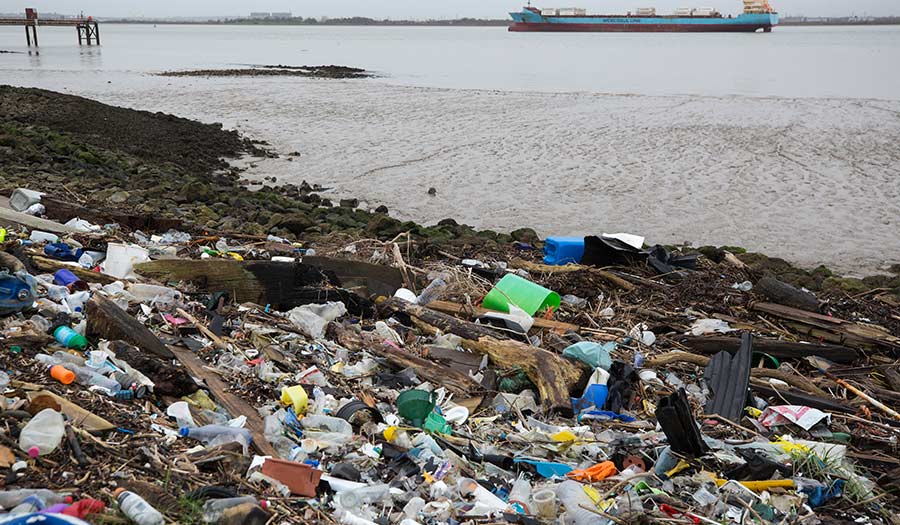
Plastic Particles Found in Three-quarters of Deep-sea Fish
February 22, 2018
Plastic Particles Found in Three-quarters of Deep-sea Fish

Tiny particles of plastic have been found in 73 percent of fish 600 to 3,300 feet deep in the Northwest Atlantic Ocean, a study published in Frontiers in Marine Science found. These deep-sea fish could spread the toxins back to humans as they are prey for sea creatures such as tuna.

Microplastics are small particles such as clothing fibers that are less than five millimeters in diameter. These fragments flow from population centers through wastewater streams to the ocean, where they float on the surface and are consumed by deep sea fish when they rise at night to feed on plankton.

The study’s finding that nearly three out of four fish have microplastics in their stomachs represents one of the highest levels of microplastic contamination in the world’s oceans and shows that even these “seemingly remote fishes located thousands of [miles] from land and [2,000 feet] down in our ocean are not isolated from our pollution,” study co-author Tom Doyle, a marine biologist at the National University of Ireland in Galway, stated.

“It’s worrying to think that our daily activities, such as washing our synthetic clothes in our washing machines, results in billions of microplastics entering our oceans through our wastewater stream that may eventually end up in these deep sea fishes,” Dr. Doyle said.

When fish consume microplastics, they lose weight, experience inflammation, and do not feed regularly, according to the study.

Humans are at risk too. Deep-sea fish infected with microplastics are prey for other creatures humans typically eat, including tuna and swordfish.

“These microplastics often carry toxic contaminants and pose a real risk to food security and human health if they enter the human food chain via the fish that we eat,” Yvette DieiOuadi, the fishery industry officer at the United Nations Food and Agriculture Organization, stated to UN News.

“With an estimated 9.7 billion people to be fed by 2050, the threat of fish stocks contaminated with microplastics and their associated toxins is clear.”


SHARE

Related Stories

Analysis: ‘Breakneck’ Ebola Epidemic in Congo Outpaces World’s Response
Analysis

Analysis: ‘Breakneck’ Ebola Epidemic in Congo Outpaces World’s Response

Europe Faces a Ukrainian Drone Problem as Kyiv Targets Russian Oil Exports
Geopolitics

Europe Faces a Ukrainian Drone Problem as Kyiv Targets Russian Oil Exports

Kansas Farmers Hit Hard by Weather Extremes and Growing Costs, Wheat Crop Could Be Worst Since 1972
Weather & Environment

Kansas Farmers Hit Hard by Weather Extremes and Growing Costs, Wheat Crop Could Be Worst Since 1972

Latest Stories

  • Analysis: ‘Breakneck’ Ebola Epidemic in Congo Outpaces World’s Response
    Analysis

    Analysis: ‘Breakneck’ Ebola Epidemic in Congo Outpaces World’s Response

  • Europe Faces a Ukrainian Drone Problem as Kyiv Targets Russian Oil Exports
    Geopolitics

    Europe Faces a Ukrainian Drone Problem as Kyiv Targets Russian Oil Exports

  • Kansas Farmers Hit Hard by Weather Extremes and Growing Costs, Wheat Crop Could Be Worst Since 1972
    Weather & Environment

    Kansas Farmers Hit Hard by Weather Extremes and Growing Costs, Wheat Crop Could Be Worst Since 1972

  • In Iran’s Capital, Weapons Demonstrations Send a Signal at Home and Abroad as Threat of War Remains
    Middle East

    In Iran’s Capital, Weapons Demonstrations Send a Signal at Home and Abroad as Threat of War Remains

  • Kids Are in a ‘Reading Recession,’ as Test Scores Continue to Decline
FREE SUBSCRIPTION

Learn the why behind the headlines.

Subscribe to The Real Truth for FREE news and analysis.

Education

Kids Are in a ‘Reading Recession,’ as Test Scores Continue to Decline

  • Mali at Risk of Splintering After Jihadi and Separatist Attacks
    Analysis

    Mali at Risk of Splintering After Jihadi and Separatist Attacks