The Restored Church of God|The Real Truth Magazine|WCG Background?
Donation InformationHelpContact
THE

REAL TRUTH

A MAGAZINE RESTORING PLAIN UNDERSTANDING
Subscribe
WorldAmericasMiddle EastSocietyScienceReligionFrom the EditorIssues
THE
REAL TRUTH

A Magazine Restoring Plain Understanding

Providing clear, biblical answers to life's greatest questions and making sense of today's headlines.

SECTIONS

  • Issues
  • News
  • Personal
  • All Articles
  • Subscribe
  • Search

ABOUT

  • About Us
  • Donation Information
  • Contact Us
  • Help
  • Privacy Policy
  • Press Resources
  • RSS Feed

RCG SITES

  • Main Site
  • The World to Come
  • WCG Background?
  • RCG Hub
  • MyRCG

© 2026 The Restored Church of God. All rights reserved.

RCG|The Restored Church of God
Weather & Environment

Study: Dead Zone in Gulf of Mexico Will Not Disappear Any Time Soon
March 28, 2018
Study: Dead Zone in Gulf of Mexico Will Not Disappear Any Time Soon

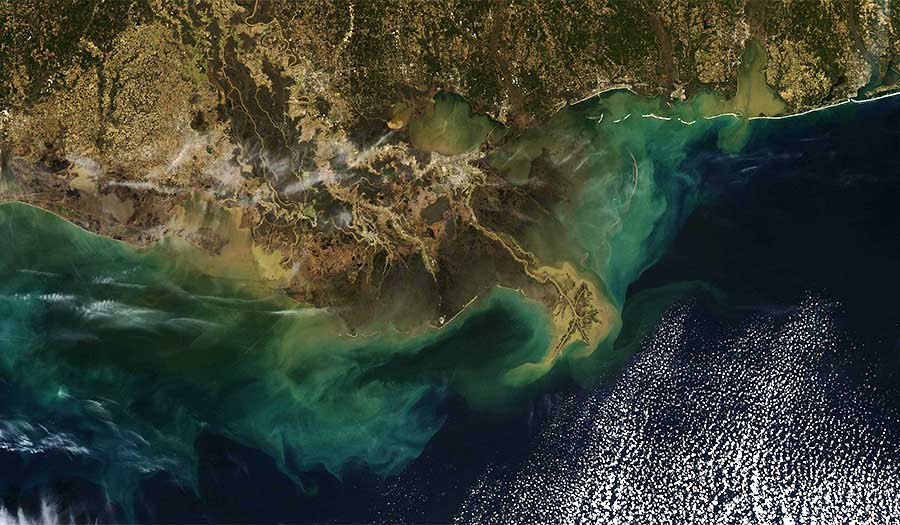
Goals for shrinking the size of oxygen-starved dead zones in the Gulf of Mexico will likely not be met, according to new findings by researchers from the University of Waterloo.

The results, which were published in the journal Science, showed that as of August 2017 the Gulf of Mexico’s dead zone was the largest ever measured.

“Despite the investment of large amounts of money in recent years to improve water quality, the area of last year’s dead zone was more than 22,000 km2—about the size of the state of New Jersey,” said Kimberly Van Meter, lead author of the paper.

Dead zones occur when nutrients from chemicals such as nitrogen and phosphorus flow into an area. These cause algal blooms that starve oxygen and prevent most marine life from thriving.

The study estimated that the amount of nitrogen being dumped into waterways—mostly through farming—must be reduced by 60 percent in order to reduce dead zones in the Gulf.

Yet this would require “long-term commitment and large-scale changes in agricultural management practices,” according to the report in Science. Even if “agricultural [nitrogen] use became 100% efficient, it would take decades to meet target [nitrogen] loads due to legacy N [pollutants that remain in the environment] within the Mississippi River Basin.”


SHARE

Related Stories

Analysis: ‘Breakneck’ Ebola Epidemic in Congo Outpaces World’s Response
Analysis

Analysis: ‘Breakneck’ Ebola Epidemic in Congo Outpaces World’s Response

Europe Faces a Ukrainian Drone Problem as Kyiv Targets Russian Oil Exports
Geopolitics

Europe Faces a Ukrainian Drone Problem as Kyiv Targets Russian Oil Exports

Kansas Farmers Hit Hard by Weather Extremes and Growing Costs, Wheat Crop Could Be Worst Since 1972
Weather & Environment

Kansas Farmers Hit Hard by Weather Extremes and Growing Costs, Wheat Crop Could Be Worst Since 1972

Latest Stories

  • Analysis: ‘Breakneck’ Ebola Epidemic in Congo Outpaces World’s Response
    Analysis

    Analysis: ‘Breakneck’ Ebola Epidemic in Congo Outpaces World’s Response

  • Europe Faces a Ukrainian Drone Problem as Kyiv Targets Russian Oil Exports
    Geopolitics

    Europe Faces a Ukrainian Drone Problem as Kyiv Targets Russian Oil Exports

  • Kansas Farmers Hit Hard by Weather Extremes and Growing Costs, Wheat Crop Could Be Worst Since 1972
    Weather & Environment

    Kansas Farmers Hit Hard by Weather Extremes and Growing Costs, Wheat Crop Could Be Worst Since 1972

  • In Iran’s Capital, Weapons Demonstrations Send a Signal at Home and Abroad as Threat of War Remains
    Middle East

    In Iran’s Capital, Weapons Demonstrations Send a Signal at Home and Abroad as Threat of War Remains

  • Kids Are in a ‘Reading Recession,’ as Test Scores Continue to Decline
    Education

    Kids Are in a ‘Reading Recession,’ as Test Scores Continue to Decline

  • Mali at Risk of Splintering After Jihadi and Separatist Attacks
    Analysis

    Mali at Risk of Splintering After Jihadi and Separatist Attacks

FREE SUBSCRIPTION

Learn the why behind the headlines.

Subscribe to The Real Truth for FREE news and analysis.