The Serengeti-Mara Squeeze
One of the World’s Most Iconic Ecosystems Under Pressure
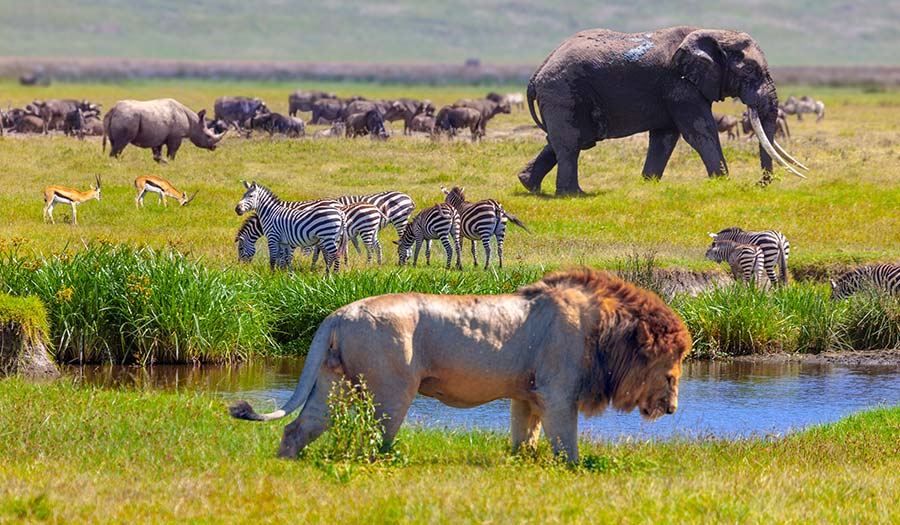
Increased human activity around one of Africa’s most iconic ecosystems is “squeezing the wildlife in its core,” damaging habitation and disrupting the migration routes of wildebeest, zebra and gazelle, an international study has concluded.
The Serengeti-Mara ecosystem is one of the largest and most protected ecosystems on Earth, spanning 25,000 square miles and taking in the Serengeti National Park and Maasai Mara National Reserve in East Africa.
Every year, a million wildebeest, half a million gazelle and 200,000 zebra make the perilous trek from the Serengeti National Park in Tanzania to the Maasai Mara Reserve in Kenya in their search for water and grazing land.
Now, an international team of scientists has discovered that increased human activity along the boundaries is having a detrimental impact on plants, animals and soils.
The study was led by the University of Groningen with collaborators at 11 institutions around the world, including the universities of York, Glasgow and Liverpool.
Population Growth
The study looked at 40 years of data and revealed that some boundary areas have seen a 400 percent increase in human population over the past decade, while larger wildlife species in key areas in Kenya have declined by more than 75 per cent.
The study reveals how population growth and an influx of livestock in the buffer zones of the parks has squeezed the area available for migration of wildebeest, zebra and gazelles, causing them to spend more time grazing less nutritious grasses than they did in the past. This has reduced the frequency of natural fires, changing the vegetation and altering grazing opportunities for other wildlife in the core areas.
The study shows that the impacts are cascading down the food chain, favoring less palatable plants and altering the beneficial interactions between plants and microorganisms that enable the ecosystem to capture and utilize essential nutrients.
Future Shocks
The effects could potentially make the ecosystem less resilient to future shocks such as drought, the scientists warn.
The authors conclude that, even for reasonably well-protected areas like the Serengeti and Mara, alternative strategies may be needed that sustain the coexistence and livelihood of local people and wildlife in the landscapes surrounding protected areas. The current strategy of increasingly hard boundaries may be a major risk to both people and wildlife.
Urgent Need
Dr. Colin Beale, from the University of York’s Department of Biology, said: “Protected areas across East Africa are under pressure from a wide range of threats. Our work shows that encroachment by people should be considered just as serious a challenge as better-known issues such as poaching…”
Dr. Michiel Veldhuis, lead author of the study from the University of Groningen, said: “There is an urgent need to rethink how we manage the boundaries of protected areas to be able to conserve biodiversity. The future of the world’s most iconic protected area and their associated human population may depend on it.”
Dr. Simon Mduma, Director of the Tanzanian Government’s Wildlife Research Institute, added: “These results come at the right time, as the Tanzanian government is now taking important steps to address these issues on a national level.”
“This paper provides important scientific evidence of the far-ranging consequences of the increased human pressures around the Serengeti-Mara ecosystem, information that is now urgently needed by policy makers and politicians.”