How Can the World Boost Efforts to End Child Labor in 2021?
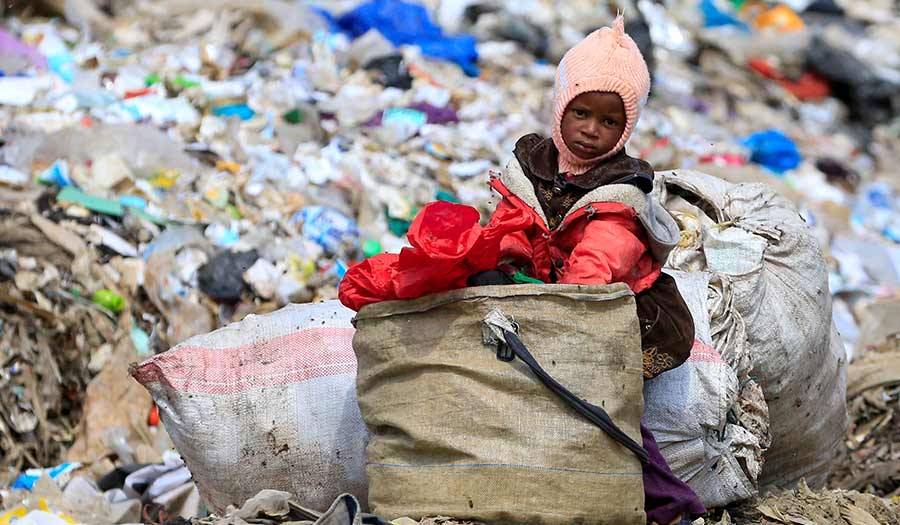
Thomson Reuters Foundation – The world is set to boost efforts to stop children working as 2021 marks the International Year for the Elimination of Child Labor, amid concerns that COVID-19 has fueled the practice.
The resolution by the 193-member United Nations General Assembly (UNGA) aims to increase awareness and spur action to end child labor worldwide by governments and other actors.
The number of child laborers worldwide has dropped significantly to 152 million children from 246 million in 2000, according to the U.N. International Labour Organization (ILO).
But the coronavirus pandemic could reverse two decades of work to combat the practice, and jeopardize a U.N. global goal of ending child labor in all forms by 2025, the ILO has warned.
Children who were already working before the pandemic may now be facing longer hours and worse conditions, while others could be forced to work by families struggling to survive the economic downturn, according to several experts and campaigners.
The Thomson Reuters Foundation spoke to leading anti-child labor organizations and advocates about how the world can turn a year of commitment into one of concrete action on the ground.
Jo Becker, Children’s Rights Advocacy Director, Human Rights Watch (HRW)
“The choices that governments make now are crucial. They can both lessen the worst impacts of the crisis on children in the short term and set children up for success in the long term.
A critical step that governments can take is to get children back into school as soon as possible once COVID-19 is under control. Authorities should follow up individually with children who do not show up for classes and try to re-engage them.
Governments and donors also need to help vulnerable families directly to address the financial distress that sends children to work. Regular cash transfers to poor families can help them meet their basic needs without resorting to child labor.”
Cornelius Williams, Associate Director of Child Protection, UNICEF
“COVID-19 has further highlighted how the most vulnerable children are exposed to exploitation during pandemics, including being forced into child labor.
This must be the warning sign for governments, civil society and U.N. agencies to step up and prioritize strategies to eliminate child labor.
We are calling for more comprehensive social protection, easier access to credit for poor households, the promotion of decent work for adults, measures to get children back into school, increased investments in social services, and more resources for labor inspections and law enforcement.”
David Westlake, CEO, International Justice Mission (IJM) UK
“Successfully eliminating child labor will require local governments to be resourced and committed to enforcing the laws that protect children.
We hope the UNGA declaration leads to greater investment by national governments, donor nations, and international organizations in increasing the capacity for countries around the world to investigate and suppress the worst forms of child labor, and to hold those who exploit children accountable.
In recognizing the persistent scourge of child labor in 2021, we have the opportunity to integrate policies and programs that will protect children from violence and exploitation into COVID-19 recovery plans.”
Victor Sande-Aneiros, Writer and Editor, Child Rights International Network (CRIN)
“We would like to see eradicated all forced, exploitative and harmful work carried out by anyone of any age.
However, for children and adolescents who work in a capacity that doesn’t amount to forced, exploitative and harmful labor, we would like to see their work recognized as such, for them to be granted the same labor rights and protections as any worker, and for their work to be regulated to prevent violations.
Child labor unions have for years been calling for labor rights and protections to be extended to them. We would also like to see members of child labor unions invited to global conferences on so-called child labor.”
Alison Sutton, Global Director of Child Protection, Save the Children
“If we want to see results on the ground, we’re going to need real support for communities, including families, local leaders, and employers, as they all have an extremely important role in preventing child labor.
There’s been a huge impact on schools closures for this generation, causing the biggest education emergency in history.
The knock-on effects can be deep and long lasting, and the world needs to put education at the very heart of global recovery efforts.
Local communities can help to identify the children and families most at risk, while governments need to make this a priority and invest in child-focused programs to protect them.”
Rose Caldwell, CEO, Plan International UK
“We are at a critical juncture in the fight against child labor. The COVID-19 pandemic is hitting household incomes hard, meaning that global poverty and food insecurity is rising.
The poorest and most marginalized are worst affected and a growing number of children are being forced to work to support their families.
Girls are especially vulnerable; they are the first to be denied their right to an education, or to suffer the triple burden of housework, schoolwork and work outside of the home.
We urge those in power to engage girls, youth groups, and current and former child laborers throughout the process. Only by listening to those affected can we create a world where every child has the right to a safe education.”