Tokyo Olympics Q&A: 6 Months Out and Hints of Cancellation
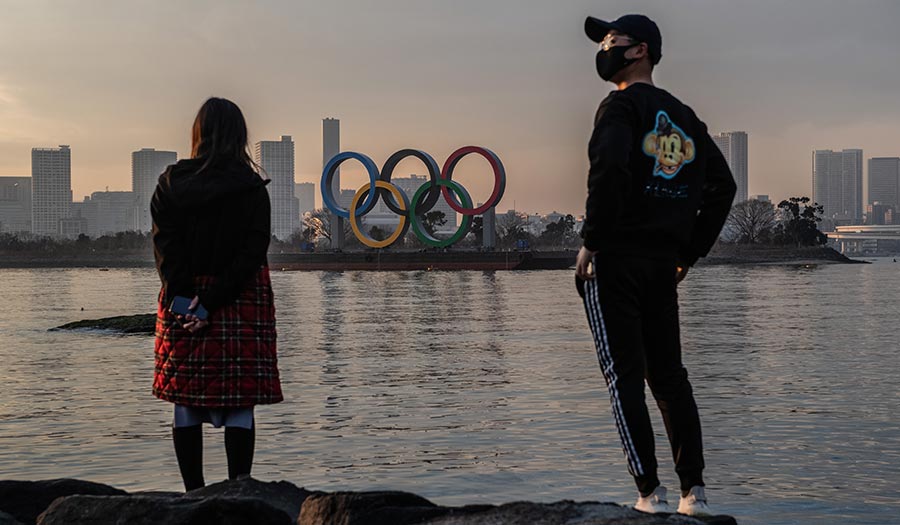
TOKYO (AP) – The Tokyo Olympics are to open in six months on July 23 and organizers have no public program planned to mark the milestone.
There is too much uncertainty for that right now.
Tokyo and other parts of Japan are under an emergency order because of surging coronavirus cases with about 4,500 deaths attributed to COVID-19.
Instead of a countdown celebration, the focus is on the virus and speculation around the Olympics being canceled. Should they take place during a spreading pandemic—vaccine or no vaccine? Organizers say they will with exact details yet to be revealed.
It has been this way since the Olympics were postponed almost 10 months ago.
Q: When will a final decision be announced about holding the Olympics?
A: The International Olympic Committee and local organizers are adamant they will happen. Mark the date—March 25. That is when the torch relay, heavily sponsored by Coca-Cola and Toyota, begins from northern Japan, crisscrossing the country for four months with 10,000 runners headed to Tokyo. It is hard to imagine the relay going ahead, but the Olympics being canceled. Remember, it was in late March last year that the Olympics were postponed.
Q: Recent polls show 80 percent in Japan want the Olympics canceled or postponed. So why is Japan and the International Olympic Committee pushing ahead?
A: A key is the billions already “sunk” into the event, and the income Tokyo will generate for the IOC. The IOC gets almost three-quarters of its income from selling TV rights. Another 18 percent is from sponsors. Unlike other sports businesses like the NBA or English soccer, the IOC has only two major events—every four years—to rely on.
Only five Olympics have ever been canceled, all during wartime: the 1916, 1940 and 1944 Summer Olympics, and Winter Games in 1940 and 1944. But that was before big money was involved.
Japan has spent at least $25 billion preparing for the Olympics. In addition, China will host the 2022 Winter Olympics in Beijing. Japan would not want to cede the stage to China.
Japanese Prime Minister Yoshihide Suga is framing the Olympics as “a proof of human victory against the coronavirus.”
Q: Will these Olympics look different?
A: Almost certainly. First, athletes will be told to arrive later than usual, and leave early. The idea is to keep the Athletes Village sparsely populated. It is hard to imagine much interaction between athletes, the public and the media. Fewer athletes than usual are likely to appear in the opening ceremony. Japanese media are reporting only 6,000 Olympic athletes will take part. The Olympics involve 11,000 athletes.
However, from the perspective of the television viewer, everything may look similar to previous Olympics. The venues are basically TV stages, and they look the same from one Olympics to the next. Fans are now accustomed to viewing sports events in empty stadiums.
One caveat. Ticket sales account for $800 million in income for local organizers. No fans means lost revenue and more costs. Those costs must be absorbed by Japanese government entities. Several Japanese government audits have estimated Olympic spending at $25 billion or more. All but $6.7 billion is public money. Local sponsors have also poured in $3.5 billion.
Q: Will vaccinations be required?
A: Not clear. IOC President Thomas Bach has urged all “participants” to be vaccinated. But he has said athletes will not be required to. But that was the IOC speaking. The Japanese government could override this with different rules for entry and requirements for quarantines.