What Is Behind Haiti’s Political Strife?
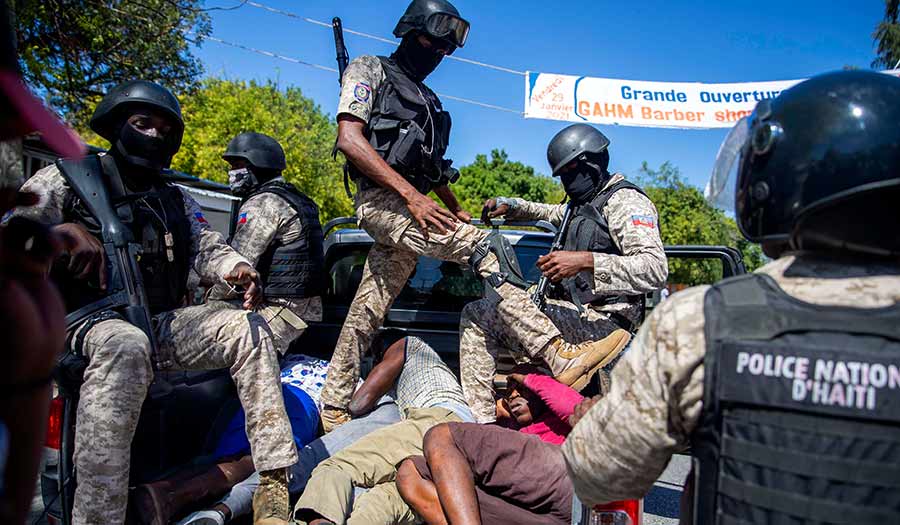
PORT-AU-PRINCE, Haiti (AP) – Political strife in Haiti has deepened as opposition leaders and supporters claim that President Jovenel Moise’s five-year term has expired, demanding that he step down on February 7. But on that day, Mr. Moise announced that authorities had arrested 23 people accused of plotting an alleged coup to kill him and overthrow his government, including a high-ranking police official and a Supreme Court judge favored by the opposition. Hours after the arrests, the opposition nominated a supposed transitional president that no one has recognized.
Here is what is driving the protests and what the ongoing demonstrations and alleged coup conspiracy mean for Haiti.
Who Is Protesting and Why?
Opposition leaders from various political parties organized protests in the weeks leading up to February 7, the day they allege that Mr. Moise’s term ended. Hundreds of supporters marched in the streets, often clashing with police as they clamored that Mr. Moise step down. Haiti’s Constitution allows presidents to serve a five-year term, and opponents argue that Mr. Moise already reached that limit.
Mr. Moise won after former president Michel Martelly’s term expired in 2016, receiving more than 50 percent of the vote but with only 21 percent voter turnout in a country of more than 11 million people. The elections were so chaotic, though, that it forced the appointment of a provisional president for one year, so Mr. Moise was not sworn in until February 2017.
He has repeatedly said he will step down in February 2022 and has called for legislative and presidential elections to be held September 19, with a runoff scheduled for November 21. The administration of U.S. President Joe Biden appears to support Mr. Moise, with a State Department spokesman recently saying that a new elected president should succeed him when his term ends in 2022.
What Else Is Driving the Protests?
Critics accuse Mr. Moise of amassing more power in recent months, noting that he already has been ruling by presidential decree ever since he dissolved the majority of Parliament in January 2020 after failing to hold legislative elections in 2019 amid political gridlock.
Mr. Moise has also approved a decree that created an intelligence agency that answers only to the president and another that limits the powers of a court that audits government contracts and had accused Mr. Moise and other officials of embezzlement and fraud, allegations they have denied.
Another recent decree classifies robbery, arson and blocking public roads—a common ploy during protests—as terrorism, leading to heavy penalties. Some of the decrees drew rare criticism from the international community as well.
Opponents are also rejecting an upcoming constitutional referendum scheduled for April 25, the first one to be held in more than 30 years. It calls for the creation of compulsory military service for those age 18, would create the position of a vice president to replace that of prime minister and establish a unicameral legislature to be elected every five years to replace the current Senate and Chamber of Deputies.
In addition, the draft only states that a president cannot serve for more than two terms; it says nothing about whether they can be served consecutively as is currently prohibited. Experts note that the current Constitution bars changes to it via a referendum.
Was There a Plan to Oust Mr. Moise?
On Sunday, Mr. Moise announced that authorities arrested 23 people accused of a coup conspiracy to allegedly kill the president and overthrow his government. Among those detained is a high-ranking police official and a Supreme Court judge who was one of three judges favored by the opposition to become a potential transitional president.
Authorities said they seized several weapons and a copy of the judge’s speech if he were to temporarily replace Mr. Moise, along with a recording with top security officials at the National Palace talking about an alleged plot to arrest the president. The opposition condemned the arrests and noted the judge has automatic immunity as they accused Mr. Moise’s administration of political repression.
What Is Next?
The opposition named another Superior Court Judge, Joseph Mecene Jean-Louis, as Haiti’s supposed transitional president after Mr. Moise announced the arrests. Mr. Jean-Louis, who is the court’s oldest judge, said in a brief statement that he accepted the position. Neither Mr. Moise nor anyone in the international community has recognized him.
The normally congested streets in the Haitian capital of Port-au-Prince and elsewhere remain largely empty amid growing political uncertainty as Mr. Moise’s administration continues to face a spike in violence and demands for better living conditions.