Texas Freeze Led to Release of Tons of Air Pollutants as Refineries Shut
NEW YORK/HOUSTON (Reuters) – The largest U.S. oil refiners released tons of air pollutants into the skies over Texas this past week, according to figures provided to the state, as refineries and petrochemical plants in the region scrambled to shut production during frigid weather.
An arctic air mass that spread into an area not used to such low temperatures killed at least two dozen people in Texas and knocked out power to more than 4 million at its peak. It also hit natural gas and electric generation, cutting supplies needed to run the plants along the U.S. Gulf Coast.
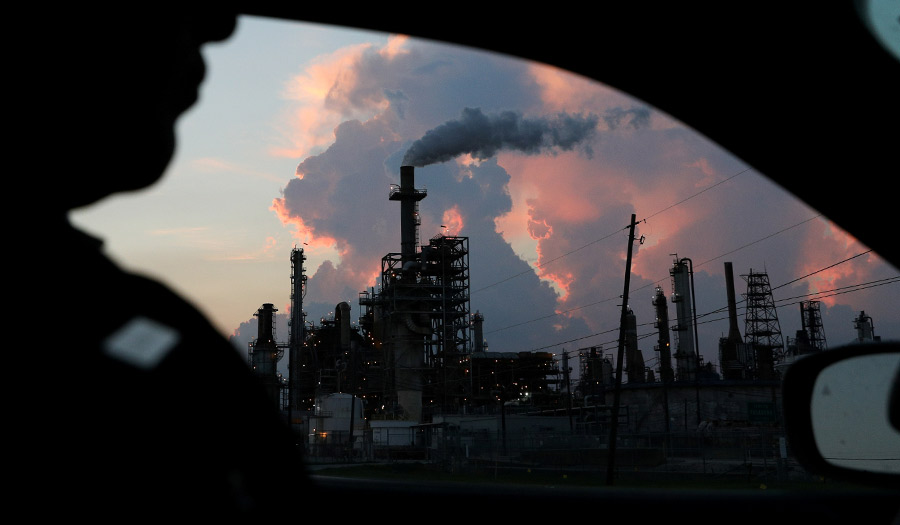
Shutdowns led to the refineries flaring, or burning and releasing gases, to prevent damage to their processing units. That flaring darkened the skies in eastern Texas with smoke visible for miles.
“These emissions can dwarf the usual emissions of the refineries by orders of magnitude,” said Jane Williams, chair of the Sierra Club’s National Clean Air Team.
The five largest refiners emitted nearly 337,000 pounds of pollutants, including benzene, carbon monoxide, hydrogen sulfide and sulfur dioxide, according to preliminary data supplied to the Texas Commission on Environment Quality (TCEQ).
Valero Energy Corp said in a filing with the TCEQ that it released 78,000 pounds over 24 hours beginning last Monday from its Port Arthur, Texas, refinery, citing the frigid cold and interruptions in utility services.
The 118,100 pounds of emissions from Motiva’s Port Arthur refinery from Monday to Thursday were more than three times the excess emissions that it declared to the U.S. Environmental Protection Agency for the whole of 2019.
Marathon Petroleum Corp’s Galveston Bay Refinery released 14,255 pounds over less than five hours on Monday, equivalent to about 10 percent of its total releases above permitted levels in 2019.
Exxon Mobil Corp said its Baytown Olefins Plant emitted nearly a ton of benzene and 68,000 tons of carbon monoxide, citing in its disclosure the halting of “multiple process units and safe utilization of the flare system.”
Exxon blamed the shutdown of two Texas refineries on the freezing weather and loss of natural gas supplies. A spokesman said its petrochemical plants in Texas and Louisiana had supplied 560 megawatts to local communities, helping power about 300,000 homes.
“We don’t typically provide comment on our operations beyond our filings,” said Marathon spokesman Jamal Kheiry. “However, I can say that the safety of our workers, our neighbors, and the environment are our top priorities as we operate our facilities.”
Final figures on pollution releases are due to be submitted to the state in two weeks.
“No Safe Amount”
The flaring continued through the week as refiners kept plants out of service.
“We had six or seven flares going at one time,” Hilton Kelly, who lives in Port Arthur, home to refineries operated by Motiva, Valero and Total SE, said on Friday. “It’s still happening now.”
Sharon Wilson, a researcher at advocacy group Earthworks, said the releases were alarming, in part because “there is no safe amount of benzene for human exposure.”
State data showing oil and gas producers were flaring methane this past week “is just making things worse, and it could have been prevented” by winterizing facilities, she said.
Texas oil and gas companies filed 174 notices of pollution releases above permitted levels between February 11 and February 18, four times the number the prior week, according to TCEQ data.
Total pollution at Houston-area facilities during the cold snap totaled about 703,000 pounds, about 3 percent of the total pollution over permitted amounts for all of 2019 and almost 10 percent of 2018’s releases, according to TCEQ data analyzed by advocacy group Environment Texas.