Before the Ever Given: A Look at the Crises that Closed Suez
DUBAI, United Arab Emirates (AP) – Since it opened in 1869, Egypt’s Suez Canal has been a source of national pride and a focus of international conflict. It is one of the world’s great maritime shortcuts, connecting the Red and Mediterranean Seas through a narrow passage that chops thousands of miles off most east-west shipping voyages.
A different sort of crisis recently thrust the Suez Canal into the global spotlight. A skyscraper-sized container ship called the Ever Given got stuck sideways across the waterway last week. The obstruction halted canal traffic—valued at over $9 billion a day—disrupting a global shipping network already burdened by the coronavirus pandemic. Hundreds of ships waiting to cross the canal piled up in a colossal traffic jam.
Nearly 19,000 vessels passed through the Suez Canal last year, carrying over 10 percent of global trade, including 7 percent of the world’s oil. While its shutdown this week is historic, the canal is no stranger to disruption. Here is a look at some major incidents that have closed or threatened the bottleneck in the past.
The “Suez Crisis”
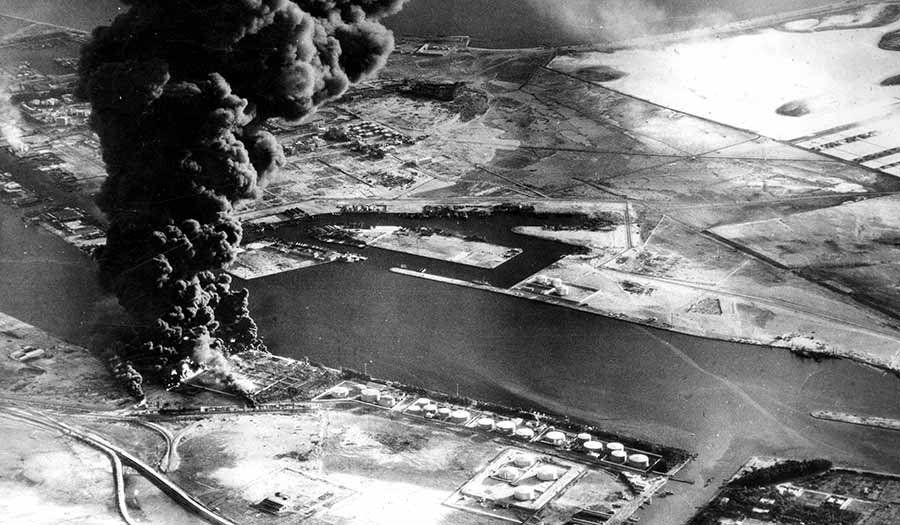
In 1956, Egypt’s then-President Gamal Abdel Nasser nationalized the canal. The seizure, celebrated by Egyptians as a defiant break from European imperialism, prompted Britain, France and Israel to intervene militarily and occupy the canal zone.
As fighting raged, sunken ships sealed off the canal for months. The United States and the Soviet Union, which openly opposed the invasion, ultimately forced the three countries to withdraw. Egypt was able to reopen the canal in March 1957, in what was seen across the region as a victory for pan-Arab nationalism.
The 1967 Mideast War
A decade later, at the outbreak of the 1967 Mideast war, Egypt closed the canal to international shipping as Israeli forces struck again at the canal zone and entrenched in the Sinai Peninsula. This time, the canal was shut for eight years. Accumulating mines, bombshells and sunken vessels, the waterway became a fortified trench in the war. It was only after peace talks with Israel that Nasser’s successor, Egyptian President Anwar Sadat, reopened the waterway in 1975.
During the closure, over a dozen cargo ships were stranded midway through the canal in the Great Bitter Lake. The closed canal cost the world $1.7 billion in lost trade and increased shipping costs and Egypt $250 million in lost toll revenues annually, according to a U.N. study.
The shutdown forced Europe-bound vessels to avoid Suez by rounding the southern tip of Africa, encouraging shippers to find economies of scale by developing increasingly large supertankers—a trend that, ironically, led ships to swell to the size of the stranded Ever Given.
A Target for Militant Attacks
The canal divides mainland Egypt from the restive Sinai Peninsula, where the Egyptian military has been fighting a yearslong insurgency led by a local affiliate of the Islamic State group. The violence has threatened to spill over and disrupt global trade. In the summer of 2013, a Sinai-based militant group called the Furqan Brigades attacked two vessels in the waterway with rocket-propelled grenades, causing slight damage. Despite repeated vows to target the waterway, Egyptian militants so far have failed to impact maritime traffic there.
Other Ships Have Run Aground
Groundings of vessels previously have closed the narrow waterway, which can be difficult to navigate when there’s poor visibility. The first reported accident occurred in 1937, when high winds and rain squalls caused the U.K.-owned passenger liner Viceroy of India to ram into the bank and halt marine traffic for a day. Over the century, several other freighters have crashed or briefly shut down the waterway for up to three days, including a Greek-owned oil tanker in 1954, a Russian tanker in 2004 and a container ship that broke down in 2018 and triggered a multi-ship collision.
In all cases, however, the groundings were swiftly resolved. Never before has a ship become wedged athwart the width of the canal, like the Ever Given.
The Ever Given
The giant quarter-mile-long Ever Given, a Panama-flagged, Japanese-owned ship that hauls cargo between Asia and Europe, got stuck last Tuesday in a single-lane stretch of the canal. The ship’s operators insist it crashed into the bank because of strong winds and a sandstorm, but the circumstances of the grounding remain unclear. Egyptian authorities suggested Saturday that human error may have been a factor.
Salvage teams on Monday were finally able to free this colossal container ship, ending a crisis that had clogged one of the world’s most vital waterways and halted billions of dollars a day in maritime commerce.
Helped by the tides, a flotilla of tugboats wrenched the bulbous bow of the skyscraper-sized ship from the canal’s sandy bank, where it had been firmly lodged since March 23.
At least 367 vessels, carrying everything from crude oil to cattle, are backed up as they wait to traverse the canal. Dozens of others have taken the long, alternate route around the Cape of Good Hope at Africa’s southern tip—a 3,100-mile detour that costs ships hundreds of thousands of dollars in fuel and other costs.
Canal officials also will do a detailed inspection of the area where the Ever Given was grounded, especially the bank “to see how much of that rock has been displaced and might have impacted the deep water of the canal,” said Captain Nicolas Sloane, vice president of the International Salvage Union who was involved in salvaging the Costa Concordia, the cruise ship that tipped over off Italy in 2012.
If all goes well, the canal authority could open up the waterway to a northbound convoy by Tuesday morning, he told The Associated Press.
The unprecedented shutdown, which raised fears of extended delays, goods shortages and rising costs for consumers, has prompted new questions about the shipping industry, an on-demand supplier for a world now under pressure from the coronavirus pandemic.
“We’ve gone to this fragile, just-in-time shipping that we saw absolutely break down in the beginning of COVID,” said Captain John Konrad, the founder and CEO of the shipping news website gcaptain.com. “We used to have big, fat warehouses in all the countries where the factories pulled supplies…Now these floating ships are the warehouse.”