What Will Change Under Israel’s New Government?
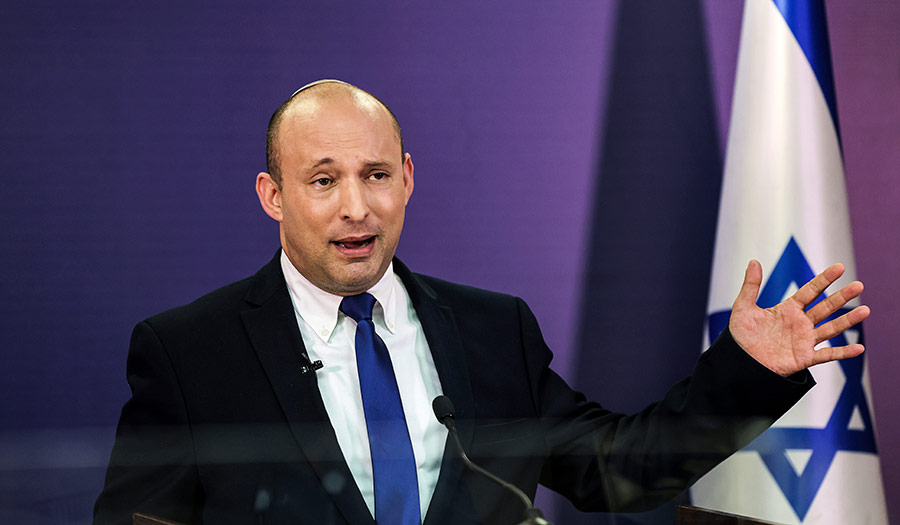
JERUSALEM (AP) – Naftali Bennett was sworn in Sunday as Israel’s new prime minister, ending Prime Minister Benjamin Netanyahu’s record 12-year rule and a political crisis that resulted in four elections in the country in less than two years.
The next government, led by Mr. Bennet’s ultranationalist Yamina party, has vowed to chart a new course aimed at healing the country’s divisions and restoring a sense of normalcy.
The coalition consists of eight parties from across Israel’s political spectrum, including a small Arab party that has made history by joining a government for the first time. If even one party bolts, the government would be at serious risk of collapse, and Mr. Netanyahu, who intends to stay on as opposition leader, is waiting in the wings.
Here is a look at what to expect.
A Fragile Coalition
The coalition holds only a slight majority in the 120-member Knesset and includes parties from the right, left and center. Each party signed a coalition agreement ahead of a Friday deadline, keeping the transition on track.
But just about the only things they agree on are that Mr. Netanyahu, who is on trial for corruption, should leave office, and that the country cannot endure another back-to-back election.
They are expected to adopt a modest agenda acceptable to Israelis from across the ideological divide that steers clear of hot-button issues. Their first big challenge will be to agree on a budget, the first since 2019. Economic reforms and infrastructure spending may follow.
Mr. Bennett will serve as prime minister for the first two years, followed by the centrist Yair Lapid, a former journalist who was the driving force behind the coalition. But that is only if the government survives that long.
Managing the Conflict
Mr. Bennett is a religious ultranationalist who supports settlement expansion and is opposed to a Palestinian state. But he risks losing his job if he alienates his dovish coalition partners.
That will likely mean a continuation of Mr. Netanyahu’s approach of managing the decades-old conflict without trying to end it. Annexing the occupied West Bank and invading Gaza are probably off the table, but so are any major concessions to the Palestinians.
Every Israeli government has expanded Jewish settlements in the occupied West Bank and east Jerusalem, which the Palestinians want for their future state.
The new government is expected to maintain Mr. Netanyahu’s hardline stance on Iran and oppose U.S. President Joe Biden’s efforts to revive its international nuclear deal. But senior officials have already vowed to do so behind closed doors rather than bringing the rift out into the open, as Mr. Netanyahu did during the Obama years.
The new government will also likely work with the U.S. to strengthen ties with Arab states.
Healing Divisions
The biggest change will likely be felt domestically, as the government aims to sew divisions in Israeli society between Jews and Arabs and between ultra-Orthodox and secular Israelis.
“The government will work for all the Israeli public—religious, secular, ultra-Orthodox, Arab—without exception, as one,” Mr. Bennett said Friday. “We will work together, out of partnership and national responsibility, and I believe we will succeed.”
The United Arab List, a small party with Islamist roots led by Mansour Abbas, is the first Arab party to sit in a coalition. In return for helping to oust Mr. Netanyahu, he is expected to secure large budgets for housing, infrastructure and law enforcement in Arab communities.
Israel’s Arab citizens make up 20 percent of the population. They have close familial ties to the Palestinians and largely identify with their cause, leading many Jewish Israelis to view them with suspicion. Tensions boiled over during last month’s Gaza war, when Jews and Arabs fought in the streets of Israel’s mixed cities.