Islamic State Hits Back, Aided by Power Vacuum in Iraq and Syria
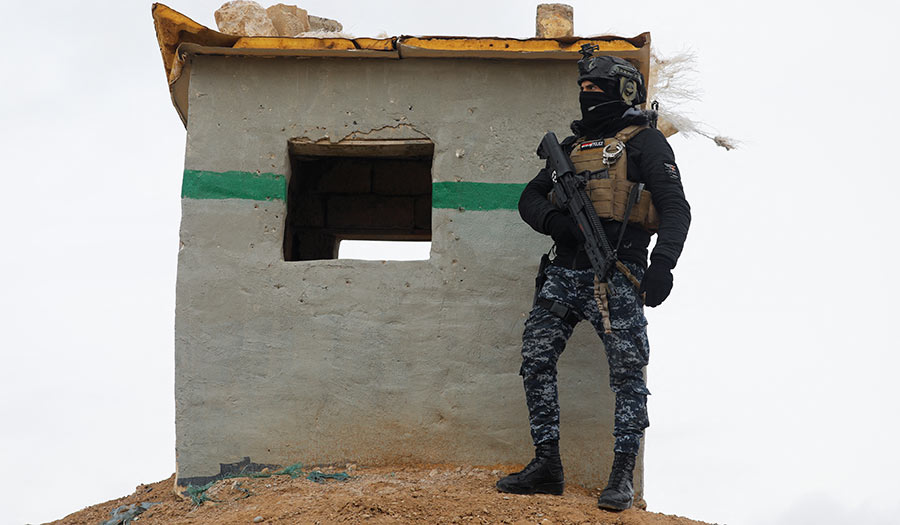
JALAWLA, Iraq (Reuters) – Yousif Ibrahim no longer travels by night along the roads around his hometown of Jalawla in northeastern Iraq. He fears getting caught up in attacks by Islamic State.
“The police and army don’t come into our area much anymore. If they do, they get shot at by militants,” said the 25-year-old, who sells fish for a living in a nearby market.
Nearly three years after the group lost its final enclave, Islamic State fighters are re-emerging as a deadly threat, aided by the lack of central control in many areas, according to a dozen security officials, local leaders and residents in northern Iraq.
Islamic State is far from the formidable force it once was, but militant cells often operating independently have survived across a swathe of northern Iraq and northeastern Syria, and in recent months they have launched increasingly brazen attacks.
“Daesh [Islamic State] isn’t as powerful as it was in 2014,” said Jabar Yawar, a senior official in the Peshmerga forces of Iraq’s northern autonomous Kurdistan region.
“Its resources are limited and there’s no strong joint leadership,” he told Reuters in the city of Sulaimaniya. “But as long as political disputes aren’t solved, Daesh will come back.”
Some fear that could be starting to happen.
In late January, Islamic State carried out one of its deadliest attacks against the Iraqi army for years, killing 11 soldiers in a town near Jalawla, according to security sources.
The same day, its militants stormed a prison in Syria under the control of U.S.-backed Kurdish militia in an attempt to free inmates loyal to the group.
It was the biggest attack by Islamic State since the collapse of its self-declared caliphate in 2019. At least 200 prison inmates and militants were killed, as well as 40 Kurdish troops, 77 prison guards and four civilians.
Officials and residents in northern Iraq and eastern Syria lay much of the blame on rivalries between armed groups. When Iraqi, Syrian, Iranian and U.S.-led forces declared Islamic State beaten, they faced off against each other across the territory it had ruled.
Now Iran-backed militias attack U.S. forces. Turkish forces bomb Kurdish separatist militants. A territorial dispute rumbles on between Baghdad and Iraq’s autonomous Kurdish region.
The tensions are undermining security and good governance, causing confusion that Islamic State once thrived on.
For Ibrahim, that means crossing checkpoints manned variously by Iraqi soldiers and Shia Muslim paramilitaries to get to work in a town controlled until a few years ago by Kurds.
The remote farmland between each military outpost is where Islamic State militants hide out, according to local officials.
A similar pattern plays out across the 400-mile corridor of mountains and desert through northern Iraq and into Syria where Islamic State once dominated.
Towns like Jalawla bear the scars of fierce fighting five or so years ago—buildings reduced to rubble and scarred with bullet holes. Banners honoring slain commanders from different armed groups jostle for space in town squares.
Iraqi Disputes
In some parts of Iraq where Islamic State operates, the main dispute is between the government in Baghdad and the autonomous northern Kurdish region, home to huge deposits of oil and strategic territory that both sides claim.
The jihadists’ deadliest attacks in Iraq in recent months have taken place in those areas. Dozens of soldiers, Kurdish fighters and residents have been killed in violence that local officials blamed on militants loyal to the group.
According to Yawar, Islamic State fighters use the no-man’s-land between Iraqi army, Kurdish and Shia militia checkpoints to regroup.
“The gaps between the Iraqi army and the Peshmerga are sometimes 40 kilometers [25 miles] wide,” he said.
Mohammed Jabouri, an Iraqi army commander in the province of Salahuddin, said the militants tended to operate in groups of 10-15 people.
Because of the lack of agreement over territorial control, there are areas where neither the Iraqi army nor Kurdish forces can enter to pursue them, he added.
“That’s where Daesh is active,” he told Reuters by telephone.
Iraqi state paramilitary forces aligned with Iran in theory coordinate with the Iraqi army, but some local officials say that does not always happen.
“The problem is that local commanders, the army and the paramilitaries…sometimes don’t recognize each other’s authority,” said Ahmed Zargosh, mayor of Saadia, a town in a disputed area.
“It means Islamic State militants can operate in the gaps.”
Zargosh lives outside the town he administers, saying he fears assassination by Islamic State militants if he stays there at night.
Syria and the Borders
Islamic State militants at the other end of the corridor of contested territory, in Syria, are taking advantage of the confusion to operate in sparsely populated areas, according to some officials and analysts.
“Fighters [are] entering villages and towns at night and having complete free rein to operate, raid for food, intimidate businesses and extort ‘taxes’ from the local population,” said Charles Lister, a senior fellow at the Middle East Institute think-tank.
“They’ve got many more local fissures, be they ethnic, political, sectarian, to exploit to their advantage.”
Syrian government forces and Iran-backed militias hold territory to the west of the Euphrates river and U.S.-backed Kurdish forces are stationed to its east, including where the prison attack occurred.
The picture on the Iraqi side of the frontier area is no less complex.
Soldiers and fighters aligned with Iran, Turkey, Syria and the West control different segments of land, with separate checkpoints sometimes just a few hundred feet apart.
Iran and its proxy militias seek to maintain control of Iraqi-Syrian border crossings that are Tehran’s gateway to Syria and Lebanon, according to Western and Iraqi officials.
U.S. officials blame those militias for attacking the 2,000 or so American troops stationed in Iraq and Syria fighting Islamic State. Tehran has not commented on whether Iran is involved.
Turkey, meanwhile, launches drone strikes from bases in northern Iraq against Kurdish separatist militants operating on either side of the border.
Collapse of the Caliphate
At the peak of its power from 2014-2017, Islamic State ruled over millions of people and claimed responsibility for or inspired attacks in dozens of cities around the world.
Its leader Abu Bakr al-Baghdadi declared his caliphate over a quarter of Iraq and Syria in 2014 before he was killed in a raid by U.S. special forces in northwest Syria in 2019 as the group collapsed.
Armed forces in northern Iraq and northeast Syria say that the sheer number of groups, all enemies of Islamic State, would squash any resurgence.
In the wake of the prison assault, the U.S.-led military coalition fighting Islamic State said in a statement that recent attacks had ultimately made it weaker.
Not all local communities are convinced.
“After the Syria prison attack, we’re scared Daesh could come back,” said Hussein Suleiman, a government worker in the Iraqi town of Sinjar, which Islamic State overran in 2014 and where it slaughtered thousands of members of the Yazidi minority.
“Islamic State came from Syria last time. Iraqi troops and Kurdish forces were here then too, but they fled.”