Six Months of Taliban: Afghans Safer, Poorer, Less Hopeful
KABUL, Afghanistan (AP) – Afghanistan has undergone a dramatic transformation in half a year of Taliban rule.
The country feels safer, less violent than it has in decades, but the once aid-fueled economy is barreling toward collapse. Tens of thousands of Afghans have fled or have been evacuated, including large numbers of educated elites. They either fear for their economic future or lack of freedom under a group that ascribes to a strict interpretation of Islam. During its previous rule in the late 1990s, the Taliban barred girls from school and women from work.
Tuesday marks six months since the Afghan capital of Kabul was ceded to the Taliban with the sudden and secret departure of the country’s U.S.-backed president. The takeover of Kabul had been preceded by a months-long Taliban military campaign to take control of provincial areas, many of which fell with hardly a fight.
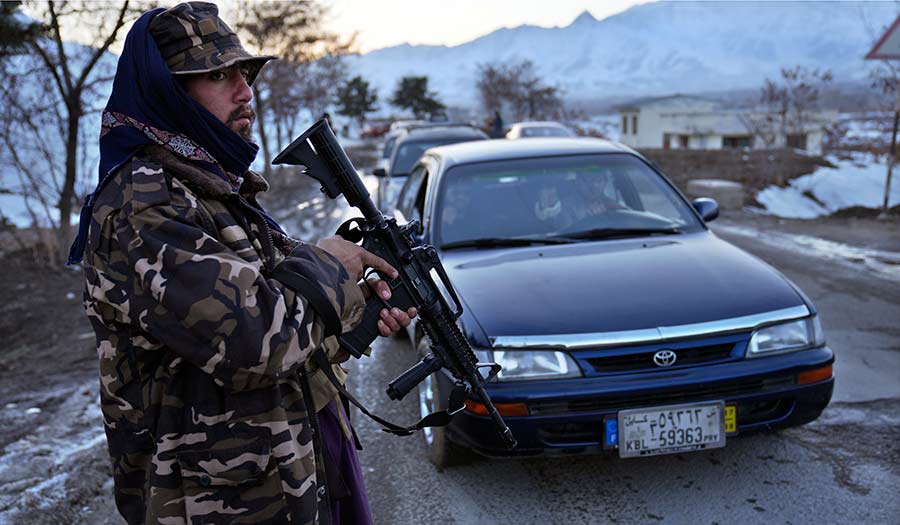
Today, the sight of armed Taliban fighters roaming the street still jars and frightens residents. But women have returned to the streets, and many young men have put on Western clothes again after initially shedding them for the traditional shalwar kameez, the long shirt and baggy pants favored by the Taliban.
Unlike in the 1990s, the Taliban are allowing some women to work. Women are back in their jobs in the health and education ministries, as well as at Kabul International Airport, often next to men. But women are still waiting to return to work in other ministries. Thousands of jobs have been lost in the economic downward spiral, and women have been hit hardest.
The Taliban have cracked down on women’s protests and harassed journalists, including briefly detaining two foreign journalists working with the UN refugee agency last week.
Girls in grades one to six have been going to school, but those in the higher grades are still locked out in most parts of the country. The Taliban promised all girls will be in school after the Afghan new year at the end of March. Universities are gradually reopening and private universities and schools never closed.
Poverty is deepening. Even those who have money have a hard time accessing it. At banks, lines are long as residents wait for hours, sometimes even days, to withdraw a limit of $200 a week.
More than $9 billion in Afghanistan’s foreign assets were frozen after the Taliban takeover. Last week, President Joe Biden signed an executive order that promised $3.5 billion—out of $7 billion of Afghanistan’s assets frozen in the United States—would be given to families of America’s 9/11 victims. The other $3.5 billion would be freed for Afghan aid.
Afghans across the political spectrum have decried the order, accusing the U.S. of taking money that belongs to Afghans.
On Tuesday, about 3,000 Afghans in the capital protested Mr. Biden’s order carrying placards calling “Biden the world thief of 2022.”
“9/11 had nothing to do with Afghans,” one placard read. “Shame Shame Mr. Biden, you kill us, you bomb us and now you steal our money.”
Tuesday’s was the largest demonstration yet against the order and was organized by an umbrella group of private money dealers.
The Taliban have re-opened the country’s passport office, which is clogged with thousands of people a day. The Taliban have promised Afghans they can travel, but only with proper documents.
Those trying to leave seem largely driven by fear of a failing economy or the desire for greater freedom in a more liberal society.
Several officials linked to the former U.S.-backed government have returned. One of the returnees, former ambassador Omar Zakhilwal, said he encountered no rancor from the Taliban.
He said he hoped that the Taliban will “find the courage” to open their ranks, guarantee minorities a say in the government and go further to guarantee rights of all Afghans.