Explainer: Undoing of Roe Quickly Shifts Abortion in States
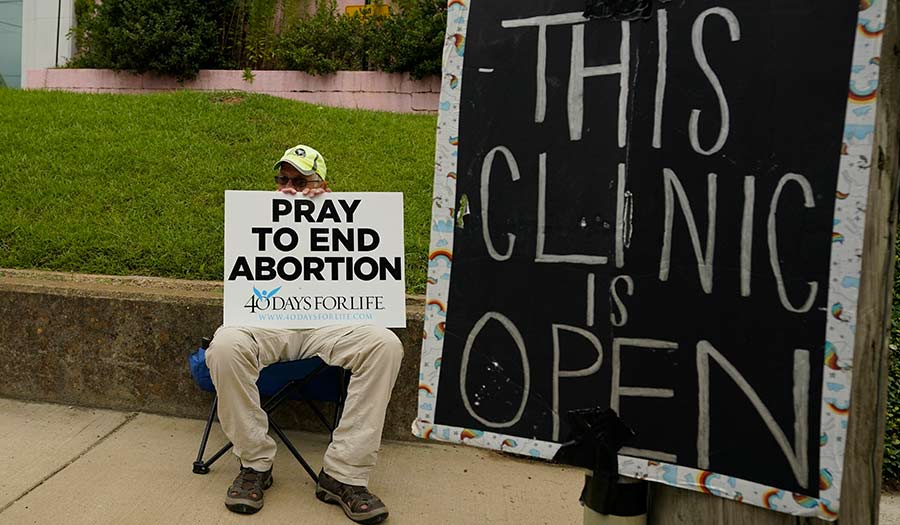
Anti-abortion groups hoped and strategized for decades for a U.S. Supreme Court ruling that was delivered in June, ending a court-protected right to abortion after nearly 50 years.
The fallout was immediate and far-reaching—and it is not over yet.
The midyear ruling overturning the 1973 Roe v. Wade decision which established the right to abortion, shaped the national political agenda for the rest of the year and put abortion access in flux. The shifts are expected to keep coming as lawmakers, voters and judges weigh in.
After the Dobbs v. Jackson ruling that left abortion up to the states, bans went into effect in some states. Elsewhere, officials enacted new protections for abortion.
With the bans, a generation of court battles has emerged over whether they square with state constitutions.
In a half-dozen statewide ballot measures this year, voters sided with abortion rights.
Here’s a look at what has changed, what has not and what remains unclear six months after the landmark Dobbs v. Jackson decision.
The Bans
Abortion is currently considered illegal at all stages of pregnancy, with various exceptions, in 13 states: Alabama, Arkansas, Idaho, Kentucky, Louisiana, Mississippi, Missouri, Oklahoma, South Dakota, Tennessee, Texas, West Virginia and Wisconsin.
In Georgia, it is banned once cardiac activity can be detected—around six weeks, which is before women often realize they are pregnant.
Some of the bans are in “trigger laws” that were passed years ago in anticipation of a ruling like Dobbs. Some are in laws that predate Roe v. Wade.
Lawmakers in Indiana and West Virginia adopted new bans after this year’s ruling. Enforcement of Indiana’s is on hold because of a legal challenge.
In both states, there was little question about whether bans would be adopted, but there were emotional debates over whether to include exceptions in the cases of rape and incest. Both states ultimately included those exceptions—and for abortions in the case of medical emergencies.
Bans in Arizona, Montana, North Dakota, Ohio, South Carolina, Utah and Wyoming are also not in effect, at least for now, as courts decide whether they can be enforced in the future.
Even in places where lawmakers favor bans, debates remain about which exceptions should be included. So far, states have been allowing later abortions to protect the woman’s physical health.
The Protections
Before and soon after the Supreme Court ruling, Democratic-controlled state and local governments took steps to protect abortion access.
They have enacted laws and signed executive orders to protect those who provide abortions for out-of-state patients from extradition, bar state employees from helping abortion-related investigations from other states, pay for more security at abortion clinics and provide funding for abortion.
In November, voters in California, Michigan and Vermont approved ballot measures to declare that the right to abortion is protected by the state constitutions. Voters in Kansas—who went to the polls in August—and Kentucky rejected measures that would have done the opposite and found that the state constitutions did not ensure abortion rights. Montana voters rejected a ballot measure that would have forced medical workers to intercede in the rare case of a baby born after an attempted abortion.
In December, New Jersey officials announced a grant to train more medical professionals to provide abortions.
The Impact
It will take time to assess the full impact of the Dobbs ruling through data, including the number of abortions and births.
The number of abortions has dropped nearly to zero in states with bans and risen in neighboring states, according to a survey conducted for the Society of Family Planning. Overall, the study found, the number of abortions fell.
But the survey does not include self-managed abortions received outside of clinics, medical offices, hospitals and virtual providers.
Doctors and researchers say that the number of requests for medication abortion pills increased dramatically after a draft version of the Dobbs ruling was leaked in May.
It will not be clear for at least several months, though, whether the number of births has changed since the ruling.
Getting abortions has become increasingly difficult for women who live in states with bans, in some cases resulting in increased medical complications and in others forcing residents to travel for hours or even days to reach a facility that can provide abortions legally.
The ruling also sparked other changes to life in the U.S.: For some medical students, it meant that residencies in liberal states became a priority. Teens and parents considered birth control anew. Democrats intent on protecting abortion rights fared better than expected in elections across the U.S. in November, even retaining control of the U.S. Senate.
And concerns that Supreme Court rulings could undo other court-mandated protections regarding marriage, sex and contraception led to the passage of a new federal law further protecting same-sex and interracial marriages.
The Enforcement
There have been no well-publicized criminal charges alleging violations of abortion bans since they were put into place—and maybe none at all.
“It could be a situation where the fear of being prosecuted is going to be the bigger impact than actual prosecutions,” said Mon Sahaf, a deputy director of Vera Institute of Justice.
Clinics in states with bans have closed or stopped providing abortions. Some have been extra cautious, halting abortions when the legality in the state in question was uncertain.
Mr. Sahaf says enforcement of abortion laws is tricky because it requires using medical records and could be seen as unfair in many communities.
Prosecutors have expressed reluctance about taking on the cases. Ninety of them across the country pledged as Dobbs was announced that they would not enforce abortion bans. The group includes those in some of the most populous jurisdictions in states with bans or deep restrictions, including the district attorneys who oversee prosecutions in Birmingham, Alabama; Atlanta; Columbus, Ohio; Dallas; Milwaukee; and Nashville, Tennessee.
That doesn’t mean there are no legal repercussions for those who seek or provide abortion.
The attorney general in Indiana last month asked the state’s medical licensing board to discipline a doctor who spoke publicly about providing an abortion to a 10-year-old rape victim who traveled from Ohio after that state’s abortion ban took effect.
The Assistance
Abortion funds have been around for decades, largely as scrappy volunteer-run groups with small budgets trying to help women pay for abortions.
The Dobbs ruling inspired more contributions to the groups, but also brought them more challenges and a bigger political and legal role, including suing over abortion bans in Texas.
The groups are now helping women travel to other states for abortions, which increases transportation, lodging, childcare and other costs.
“Rage giving” after the Supreme Court ruling helped make the groups less underfunded. Oriaku Njoku, executive director of the National Network of Abortion Funds, said an influx of donations this year has allowed some funds to bring on their first paid staff members.
Destini Spaeth, director of the North Dakota WIN Abortion Access Fund, said enough money rolled in at the fund in May, when a version of the Dobbs ruling was leaked, and June, when the final decision was released, to provide a year’s worth of services.
The fund, like others, pays for abortion care and related services such as transportation, lodging, medical testing and birth control.
At another fund, Atlanta-based ARC Southeast, interim Executive Director Jalessah Jackson said that because of bans in the region, her organization is getting fewer callers after Dobbs. But the costs for travel, childcare and other services has risen largely from people needing to go farther for abortion care.
What’s Next
With split partisan control in Washington, federal policy changes are unlikely in 2023. Even with Democrats in charge this year, President Joe Biden’s administration’s efforts to protect abortion hit roadblocks.
Still, state lawmakers are looking to strengthen both abortion bans and protections.
Among bills already introduced for 2023 state legislative sessions are measures in Texas that would take tax incentives away from businesses that help employees obtain abortions and in Missouri and Montana to ban bringing pills used to induce abortion into the state.
On the other side, there are pushes in red states including South Carolina, South Dakota and Texas to amend the state constitutions to ensure a right to abortion and plans by Minnesota Democrats, who will control the legislature in January, to codify abortion protections in state law.