Can Earth Sustain the Population Boom?
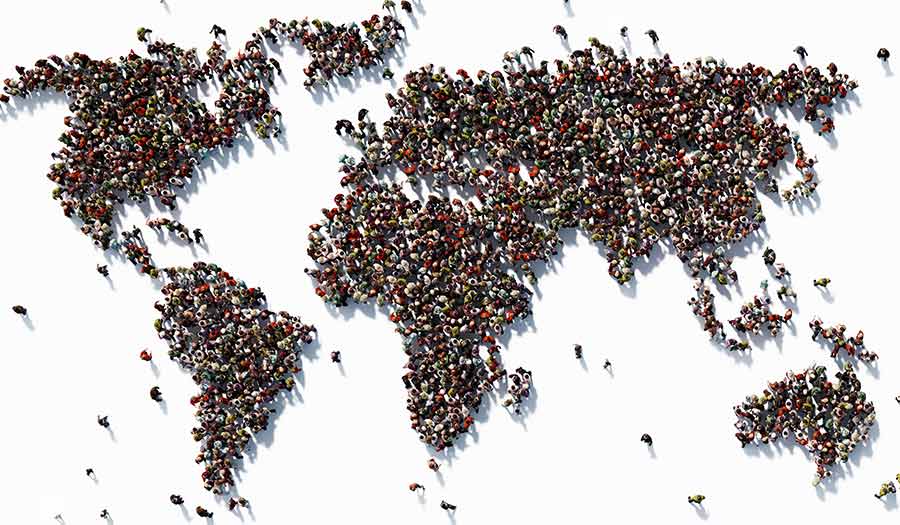
The global population milestone of 8 billion provides a perfect lens to view the trends of 2022, 2023 and beyond.
In 2022, a mother had a child who became the 8 billionth human being on our planet Earth.
The infant may have gasped its first breath in Somalia—a nation on the brink of famine, in the middle of a decades-long civil war, and still feeling economic effects from COVID-19 shutdowns.
Or the 8 billionth babe could have been birthed in India, which is poised to overtake China as the world’s most populous nation in 2023. While India is poised to be an economic powerhouse, the growth comes with environmental costs: the nation is home to 35 of the world’s 50 most-polluted cities.
Or the child could have been born in the U.S., a nation vexed with political infighting, 600-plus mass shootings, and well over a dozen weather disasters, each costing $1 billion-plus in damages.
We can never know for sure where baby number 8 billion came to be, but the United Nations estimated we ticked over this milestone on November 15. The governing body used the symbolic date to reflect on the state of the globe.
There are some successes. According to the UN, “This rapid growth of the human population is a testament to achievements in public health and medicine, such as improvements in sanitation and disease control, better access to clean drinking water, and the development of vaccines, antibacterial drugs, and other effective medical therapies.”
This, coupled with improvements in nutrition and higher standards of living, has contributed to the unprecedented growth seen today.
We reached 7 billion only 12 years ago in 2011. We are headed toward 10.8 billion by 2080.
The report noted that 46 of the globe’s least-developed nations are among the world’s fastest-growing—with population booms worsening already existing problems.
“The relationship between population growth and sustainable development is complex and multidimensional,” said Liu Zhenmin, UN Under-Secretary-General for Economic and Social Affairs. “Rapid population growth makes eradicating poverty, combatting hunger and malnutrition, and increasing the coverage of health and education systems more difficult.”
Every region has its own crises, which are set to grow increasingly complex as populations boom.
Daniel Wordsworth, World Vision International CEO, described the scale of the challenges in sub-Saharan Africa as like “a whole bunch of fishing lines that are all tangled up” (Australian Broadcasting Corporation). He said there is no “root cause driver” for these crises.
Now apply this analogy to the entire world. Everything becomes infinitely more complex when factoring in the entire globe—all 195 countries.
The 8,000,000,000 population provides a perfect lens to view what happened in 2022—and what humanity will face in 2023 and beyond.
The series continues in Part 2: War’s Long Shadow