UN: Months After Pakistan Floods, Millions Lack Safe Water
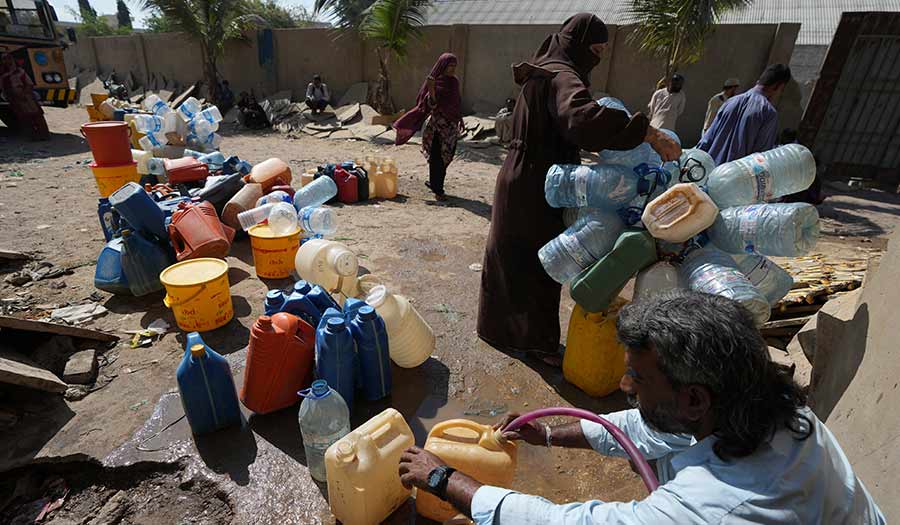
ISLAMABAD (AP) – The United Nations children’s agency on Tuesday warned that after last summer’s devastating floods, 10 million people in Pakistan, including children, still live in flood-affected areas without access to safe drinking water.
The statement from UNICEF underscored the dire situation in impoverished Pakistan, a country with a population of 220 million that months later is still struggling with the consequences of the flooding, as well as a spiraling economic crisis. The floods killed 1,739 people, including 647 children and 353 women.
So far, less than half of UNICEF’s funding appeal for Pakistan—45 percent of $173.5 million—has been met. According to the agency, before the floods struck last June, water from only 36 percent of Pakistan’s water system was considered safe for human consumption.
The floods damaged most of the water pipeline systems in affected areas, forcing more than 5.4 million people, including 2.5 million children, to rely solely on contaminated water from ponds and wells, UNICEF said.
“Safe drinking water is not a privilege, it is a basic human right,” said Abdullah Fadil, the UNICEF representative in Pakistan. “Yet, every day, millions of girls and boys in Pakistan are fighting a losing battle against preventable waterborne diseases and the consequential malnutrition.”
“We need the continued support of our donors to provide safe water, build toilets and deliver vital sanitation services to these children and families who need them the most,” Mr. Fadil added.
Amid the crisis, Pakistan faces uncertainty about a bailout from the International Monetary Fund. Analysts say the revival of the $6 billion IMF bailout, which was signed in 2019, would help Pakistan. If the global lender released a key installment of the package, it would encourage other international financial institutions to help the country, they say.
At a UN-backed conference in Geneva in January, dozens of countries and international institutions pledged more than $9 billion to help Pakistan recover and rebuild from the floods. But most of the pledges were in form of project loans and the projects are still in the planning stages.
Prime Minister Shahbaz Sharif’s government is also facing a surge in militant attacks and political instability as his predecessor, Imran Khan, is campaigning for early elections. Mr. Sharif has rejected the demands by Mr. Khan, who was ousted in a no-confidence vote in Parliament last April.
Mr. Sharif seeks political and economic stability to ensure speedy reconstruction in the flood-hit areas, where the weakest and the children are paying the price.
“In flood-affected areas, more than 1.5 million boys and girls are already severely malnourished, and the numbers will only rise in the absence of safe water and proper sanitation,” UNICEF said.
The floods caused more than $30 billion in damages as large swaths of the country remained under water for months, forcing millions to live in tents or make-shift homes near stagnant waters that led to the spread of disease.
Mr. Sharif’s government is also trying to provide food and cash assistance to flood survivors as the Islamic fasting month of Ramadan starts this week, adding more financial burdens to the poorest of the population.
The UNICEF warning came ahead of World Water Day, which will be observed on Wednesday as part of global efforts to highlight the importance of freshwater and advocate for sustainable management of the vital resource.