Why a Government Default Could Be Worse Than a Shutdown
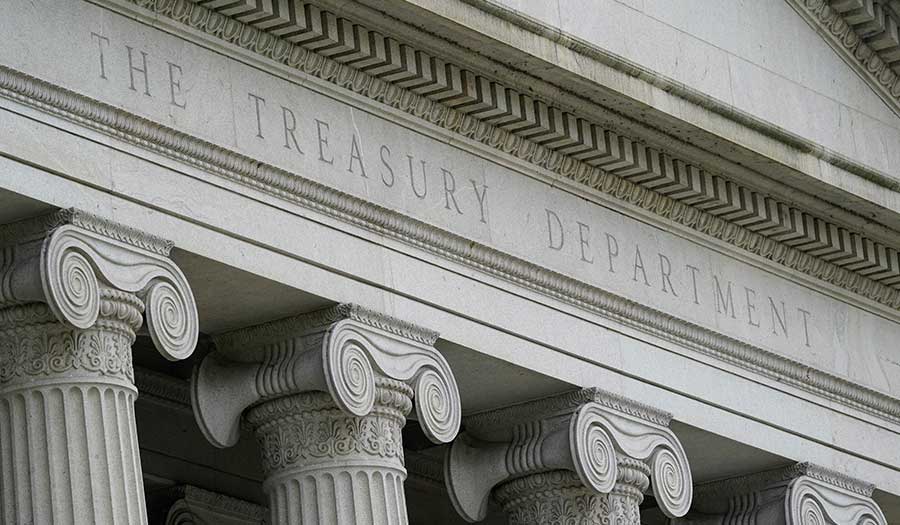
WASHINGTON (AP) – All the hand-wringing over a potential government default if Congress doesn’t increase the government’s $31.4 trillion debt ceiling has conjured up images of past government shutdowns. In shutdowns, “essential” workers—TSA agents and such—showed up, but most federal employees stayed home. Work piled up in offices, and litter piled up in untended national parks.
However, there’s a big difference between a government shutdown and a default on the nation’s debts.
America very well knows what happens in a shutdown—it’s had four of them in the past 30 years. There’s a lot more uncertainty about a default, which could well have more wide-ranging and devastating impacts, at home and around the world. There’s never been a default, and negotiators are trying to find a way to avoid one now.
Here is a look at what is known—and not—about both.
Government Shutdown
A shutdown occurs when Congress does not approve funding legislation so that the government can keep spending money to remain open.
When Congress hasn’t authorized or extended government funding, there is no authority to spend money. Essential work continues—the military remains on guard—but most federal workers are sent home, and activities cease until Congress acts.
This is harmful to the economy, and can disrupt many lives, but it is far from catastrophic.
The U.S. has experienced four true government shutdowns where operations were impacted by more than one business day, according to the Committee for a Responsible Federal Budget. That usually includes limitations on government services—like park maintenance and benefit checks—and non-essential federal employees are sent home.
“We know what a government shutdown looks like,” said Shai Akabas, director of economic policy at the nonprofit Bipartisan Policy Center. “And everyone knows on which date that will occur.”
The White House keeps a long list of agency contingency plans in the event of a government shutdown. The country narrowly avoided one last December.
Government Default
A default would occur if the government exceeds its legal borrowing limit and can no longer pay all its creditors or pay for existing programs.
The uncertainty about a default starts with when it actually occurs and in what order the government would pay its bills with whatever money it still has coming in.
A default “would be a very different situation” from a shutdown, said Mr. Akabas. “We don’t know what the effects would look like because it’s never happened in the history of our country.”
He added that there is “massive uncertainty” about when the U.S. would reach its X-date, the moment when it no longer can borrow money to pay bills.
Brian Riedl, a senior fellow at the Manhattan Institute focusing on tax issues, said “there is no blueprint for how the government can manage a debt limit default,” and much of it would come down to how Treasury would pay or put off paying its bills.
President Joe Biden, Treasury Secretary Janet Yellen and countless economists have warned darkly about the “catastrophic” impacts of a default.
Ms. Yellen this week said it would destroy jobs and businesses and leave millions of families who rely on federal government payments to “likely go unpaid,” including Social Security beneficiaries, veterans and military families.
“A default could cause widespread suffering as Americans lose the income that they need to get by,” she said. Disruptions to federal government operations would impact “air traffic control and law enforcement, border security and national defense, and food safety.”
Who Gets Paid—and Who Does Not
Wendy Edelberg, an economist at the Brookings Institution, said that in the event of a default “it is widely assumed that Treasury would figure out how to make principle and interest payments until they had money to pay all non-interest payments.”
That means many programs could be up in the air until the U.S. raised enough money to pay for them, while debt holders like China would receive payments—in a scheme called “debt payment prioritization.”
So while Social Security recipients, for instance, continued to receive automated payments and scheduled checks during a shutdown, Mr. Akabas said, it’s not so clear that they would get paid in a default.
“Maybe workers will come into work,” maybe they won’t, Mr. Riedl said. “There is an assumption that federal workers would come into work and get paid eventually.”
“There’s no specific blueprint. It comes down to whether their agency gets funding,” he said. “If we do hit the debt limit, there’s going to be a lot of new court cases on who determines who gets paid and how.”
Where Negotiations Stand
Democratic and Republican leaders have said that a default will not occur, despite their standoff on raising the debt limit.
Before leaving Wednesday for a Group of Seven summit meeting in Japan, Mr. Biden said he was “confident” that the U.S. will be able to raise the debt ceiling.
Republicans are asking for steep spending cuts before they agree to raise the debt limit, and the president has in recent days shown a willingness to discuss possible budget changes.
Mr. Biden and House Speaker Kevin McCarthy have named top negotiators to discuss the contours of a deal. Yet debt limit talks came to an abrupt standstill Friday.
Rep. Garret Graves, tapped by Mr. McCarthy to lead the talks, emerged from an hourlong session at the Capitol and said gaps remained between House Republicans and the Democratic administration.
“It’s time to press pause because it’s just not productive,” Mr. Graves told reporters.
“We’ve got to get movement by the White House and we don’t have any movement yet,” Mr. McCarthy said. “So, yeah, we’ve got to pause.”