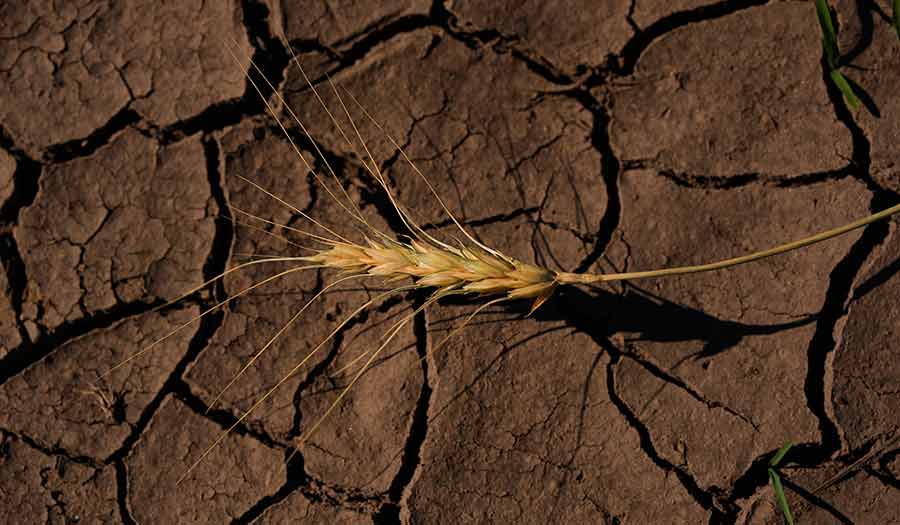
‘Without Water, There Is No Life’: Drought in Brazil’s Amazon Sharpens Fears for the Future
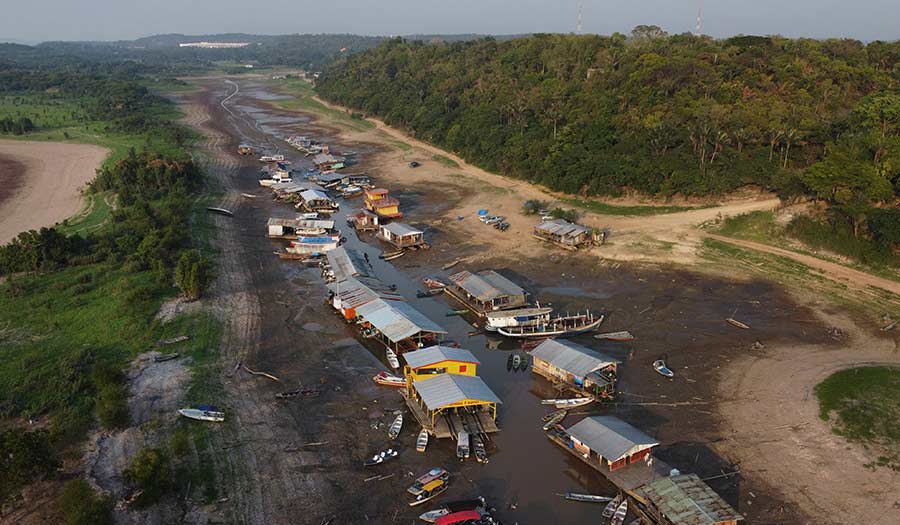
MANAUS, Brazil (AP) – Communities dependent on the Amazon rainforest’s waterways are stranded without supply of fuel, food or filtered water. Dozens of river dolphins perished and washed up on shore. And thousands of lifeless fish float on the water’s surface.
These are just the first grim visions of extreme drought sweeping across Brazil’s Amazon. The historically low water levels have affected hundreds of thousands of people and wildlife and, with experts predicting the drought could last until early 2024, the problems stand to intensify.
Raimundo Silva do Carmo, 67, makes his living as a fisherman, but these days has been struggling to simply find water. Like most rural residents in Brazil’s Amazon, Mr. do Carmo typically retrieves water untreated from the biome’s abundant waterways. On Thursday morning, he was making his fourth trip of the day to fill a plastic bucket from a well dug into the cracked bed of Lake Puraquequara, just east of Amazonas state’s capital Manaus.
“It’s dreadful work, even more so when the sun is hot,” Mr. do Carmo told The Associated Press. “We use the water to drink, to bathe, to cook. Without water, there is no life.”
Joaquim Mendes da Silva, a 73-year-old ship carpenter who has lived by the same lake for 43 years, said this drought is the worst he can recall. Area children stopped going to school a month ago because getting there by river became impossible.
Eight Brazilian states recorded the lowest rainfall in the period from July to September in over 40 years, according to CEMADEN, Brazil’s disaster warning center. The drought has affected most of the main rivers in the Amazon, the world’s largest basin, which accounts for 20 percent of the planet’s fresh water.
And as of last Friday, 42 of 62 municipalities in Amazonas had declared a state of emergency. Some 250,000 people have been affected by the drought so far, and that number may double by year’s end, according to the state’s civil defense authority.
In the Auati-Parana Extractive Reserve, about 450 miles west of Lake Puraquequara, over 300 riverine families are struggling to get food and other supplies. Only small canoes with reduced cargo can manage the trip to the closest city, and picking a route through shallow water has pushed travel time from nine hours to 14. Moreover, canals to the lakes where they fish for pirarucu, the Amazon’s largest fish and their primary source of income, have dried up, and carrying fish that weigh as much as about 440 pounds along trails would be extremely burdensome.
“We run the risk of catching fish in the lake, and it arrives spoiled. So there is no way for us to fish,” said Edvaldo de Lira, the local association president.
Dry spells are part of the Amazon’s cyclical weather pattern, with lighter rainfall from May to October for most of the rainforest. That already low rainfall is being further reduced this year by two climate phenomena: El Nino—the natural warming of surface waters in the Equatorial Pacific region—and the warming of northern tropical Atlantic Ocean waters, said Ana Paula Cunha, a CEMADEN researcher.
Average global temperatures soared to a record in September. Crushing heat waves have swept across large swathes of Brazil these past months, though it was winter. In its southern state of Rio Grande do Sul, devastating floods killed dozens.
Droughts have become more frequent in the Amazon’s Madeira River, whose basin extends some 2,000 miles from Bolivia to Brazil, with four of the five lowest river levels recorded in the past four years, said Marcus Suassuna Santos, a researcher with the Geological Survey of Brazil.
The Madeira’s level at Porto Velho is the lowest since measurements began in 1967. Nearby, Brazil’s fourth-largest hydroelectric dam, Santo Antonio plant, halted operations this week due to the lack of water. It’s the first time that happened since it opened in 2012.
Further north, in the Negro River basin, a different pattern has emerged. The Amazon’s main tributary has had seven of its largest floods in the past 11 years, with the worst in 2021. But the Negro River, too, is headed toward its lowest-ever water levels this year.
“We are already living a scenario of an altered climate that oscillates between extreme events, either of drought or heavy rains. This has very serious consequences not only for the environment, but also for people and the economy,” said Ane Alencar, science director for the Amazon Environmental Research Institute, or IPAM, a nonprofit.
“I think there is a very high chance that what we are living now, the oscillation, is the new normal,” Ms. Alencar added.
Brazil’s government has created a task force to coordinate a response. Ministers of President Luiz Inacio Lula da Silva’s government visited Manaus on Tuesday. Vice President Geraldo Alckmin promised food, drinking water and fuel to isolated communities, and said payments of the Bolsa Familia welfare program would be made in advance. Dredging on stretches of two rivers—Solimoes and Madeira—is in the works to improve navigability.
Heat, along with the falling rivers, is suspected in the deaths of more than 140 dolphins in Lake Tefe, around 300 miles east of Manaus, rocketed into headlines in Brazil and beyond, along with images of vultures picking at their beached carcasses. Excessive heat may have caused organ failure, said Ayan Fleischmann, a hydrologist at the Mamiraua Sustainable Development Institute.
Another hypothesis is bacteria, with abnormally warm waters acting as an additional stress factor.
“It is an unprecedented tragedy. Here in the region, no one had ever seen anything like it,” said Mr. Fleischmann. “It was a shock for everyone.”
Rainfall is forecast to be below average until the end of the year, according to the National Institute for Space Research. The drought’s impact is already rippling beyond the Amazon’s waterways, and into the rainforest.
Areas of forest along the riverbanks accumulate a thick layer of leaf litter, which makes them particularly susceptible to wildfire, said Flavia Costa, a researcher at the National Institute of Amazonian Research.
In Amazonas state, nearly 7,000 fires were reported in September alone, the second-highest figure for the month since satellite monitoring began in 1998.
The resulting smoke is choking Manaus’ more than 2 million inhabitants who are also experiencing sweltering heat. Last Sunday the city recorded its hottest temperature since regular measurements began in 1910.
The increased frequency of extreme weather events heightens the need for coordination between the federal, regional and municipal governments to prepare and create a system of alerts to mitigate impacts.
“From now on,” Ms. Alencar said, “things will get worse.”