Open Hatred of Jews Surges Globally, Inflamed by Gaza War
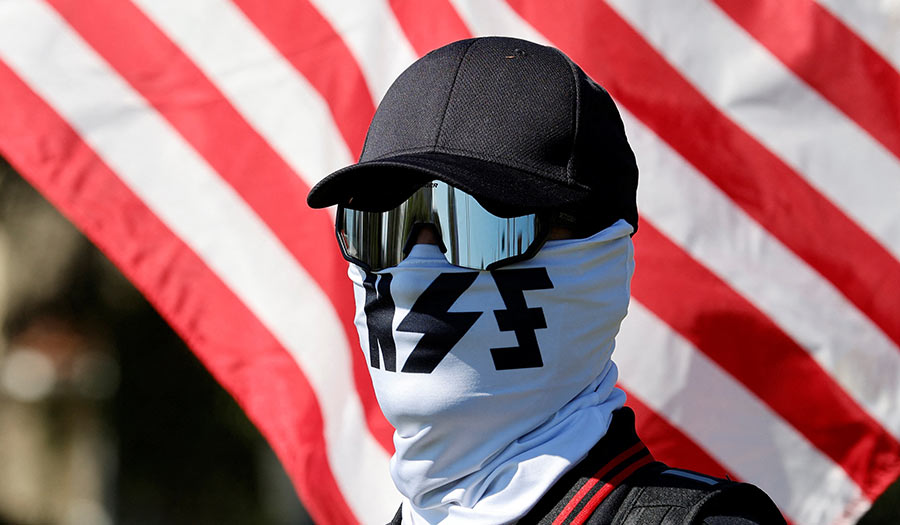
LONDON (Reuters) – In Los Angeles, a man screaming “kill Jews” attempts to break into a family’s home. In London, girls in a playground are told they are “stinking Jews” and should stay off the slide. In China, posts likening Jews to parasites, vampires or snakes proliferate on social media, attracting thousands of “likes.”
These are examples of incidents of antisemitism, which have surged globally since the attack by Hamas gunmen on southern Israel on October 7 and subsequent war with the Islamist group launched by Israel in the Gaza Strip.
“This is the scariest time to be Jewish since World War Two. We have had problems before, but things have never been this bad in my lifetime,” said Anthony Adler, 62, speaking outside a synagogue where he had gone to pray in Golders Green, a London neighborhood with a large Jewish community.
Mr. Adler, who runs three Jewish schools, temporarily closed two of them after October 7 because of fears of attacks on pupils, and has beefed up security at all three.
“The biggest fear is that there will be a random attack on our community, on our families and our children,” he said.
In countries where figures are available from police or civil society groups, including the United States, Britain, France, Germany and South Africa, the pattern is clear: The number of antisemitic incidents has gone up since October 7 by several hundred percent compared with the same period last year.
In some countries, such as the United States and Britain, Islamophobic incidents have also increased since October 7.
In the case of the antisemitic incidents, most consist of verbal abuse, online slurs or threats, graffiti and defacing of Jewish properties, businesses or sites of religious significance. Physical assaults represent a significant proportion.
One common thread is that anger over the deaths of thousands of Palestinians as a result of Israel’s bombardment of Gaza is invoked as justification for verbal or physical aggression towards Jews in general, often accompanied by the use of slurs and tropes rooted in the long history of antisemitism.
“Whatever their opinion on the conflict, even if they are extremely critical of the Israeli government’s policy, Jew is for them equal to Israel, equal to killing Palestinian children,” said political scientist Nonna Mayer, a member of France’s CNCDH, an independent human rights commission. She was describing what was in the minds of those behind antisemitic incidents.
‘Any Excuse’
The climate of fear is worse for many Jews than in previous rises in antisemitism linked to flare-ups of violence in the Middle East, partly because of the intensity of the Gaza conflict and partly because of the trauma of October 7.
“The idea that Israel was the ultimate shelter, that idea is totally shattered by what happened on October 7,” said Ms. Mayer.
The most chilling antisemitic incident globally was the storming of an airport in Russia’s Dagestan region recently by an enraged crowd looking for Jews to harm after a flight arrived from Tel Aviv.
Rabbi Alexander Boroda, president of Russia’s Federation of Jewish Communities, said in response that anti-Israeli sentiment had morphed into open aggression towards Russian Jews.
Shneor Segal, the chief Ashkenazi rabbi of Azerbaijan, said the incident showed that “antisemites will use any excuse—the current Middle East crisis being just the latest—to terrorize the dwindling numbers of us that still remain” in the Caucasus.
“And where do they think they are chasing these Jews away to? The very country whose existence is such an abomination to them!” he said, referring to Israel.
But without reaching such extremes, a string of incidents all over the world show the fears and tensions affecting Jewish communities.
In Buenos Aires, pupils at a well-known Jewish school were asked not to wear their usual uniforms to be less easily identifiable, parents said. Other schools canceled planned camping trips and activities outside their premises.
At Cornell University in upstate New York, security was increased around the Center for Jewish Living after online threats, including a call for it to be bombed.
In Johannesburg, pro-Palestinian protesters marched to an area with a large Jewish community on Saturday, tearing off pictures of Israeli hostages in Gaza from the perimeter walls of a community center while a Shabbat service was being held at a nearby synagogue.
“I feel rage towards the people who are trying to curtail my freedom of religion and my freedom of movement, for the most part based on their antisemitism,” said Akiva Carr, who was in the synagogue when the incident took place.
Official responses to the surge in antisemitism have varied from country to country.
In the United States and Western Europe, authorities have mostly been quick to express strong support for Jewish communities, denounce antisemitism and in some cases reinforce security at relevant locations.
In Israel, the government said after the Dagestan incident that Israeli citizens should “review the necessity to travel abroad at this time” and urged Israelis residing abroad to be vigilant and stay away from demonstrations.
In China, where the government routinely censors words or phrases it considers sensitive on social media, there was no indication that it had taken any steps to curtail a torrent of antisemitic vitriol on social media.
A Chinese foreign ministry spokesperson said Chinese law prohibits the use of the internet to propagate extremism, ethnic hatred or discrimination.