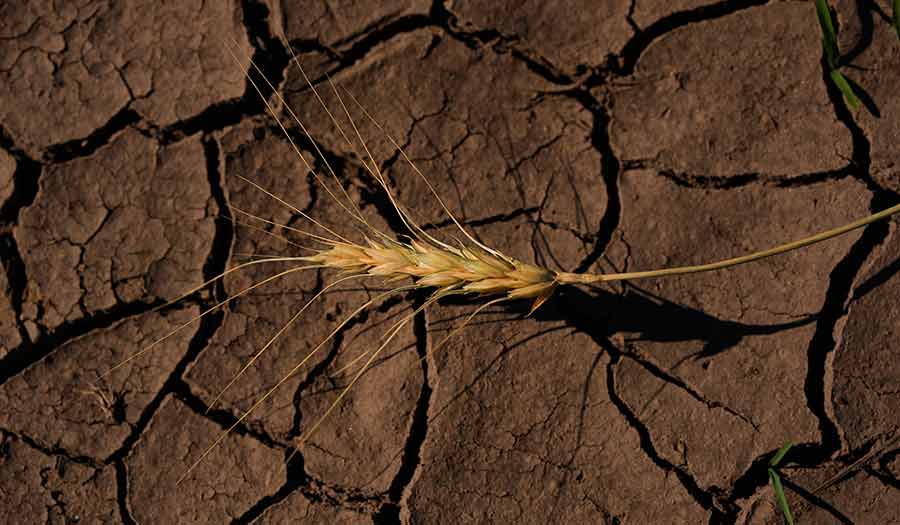
Groundwater Depletion Accelerating in Many Parts of the World, Study Finds
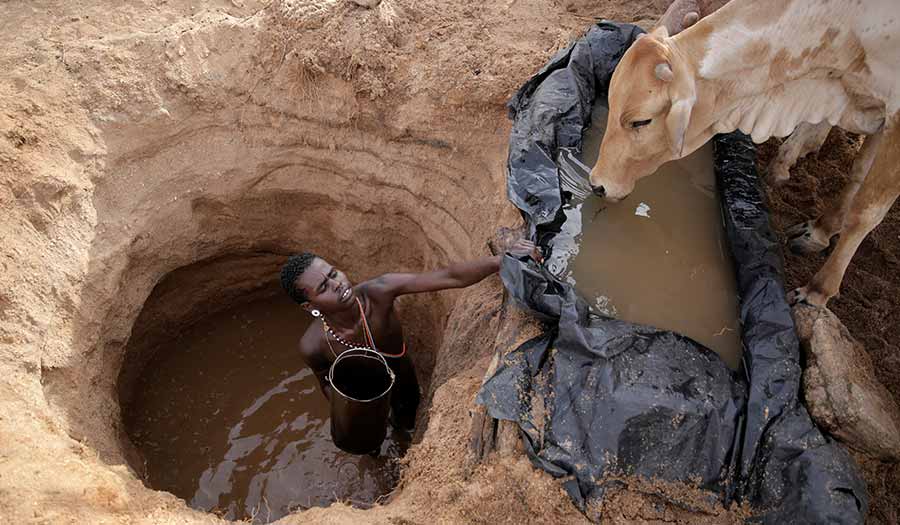
WASHINGTON (AP) – The groundwater that supplies farms, homes, industries and cities is being depleted across the world, and in many places faster than in the past 40 years, according to a new study that calls for urgency in addressing the depletion.
The declines were most notable in dry regions with extensive cropland, said researchers whose work was published Wednesday in the journal Nature. On the plus side: They found several examples of aquifers that were helped to recover by changes in policy or water management, they said.
“Our study is a tale of bad news and good news,” said Scott Jasechko, a professor of water resources at the University of California, Santa Barbara, and the study’s lead author. “The novelty of the study lies in its global scope.”
Groundwater is one of the largest freshwater sources anywhere in the world, making the depletion of aquifers a significant concern. Overpumping aquifers can make land sink and wells run dry—and threatens water resources for residential development and farms that use it to irrigate fields.
Mr. Jasechko and his colleagues analyzed groundwater data from 170,000 wells and nearly 1,700 aquifers across more than 40 countries that cover 75 percent of all groundwater withdrawals. For about a third of the aquifers they mapped, they were able to analyze groundwater trends from this century and compare them to levels from the 1980s and 1990s.
That yielded a more robust global picture of underground water supplies and how farms, and to a lesser extent cities and industries, are straining the resource almost everywhere. It also points to how governments are not doing enough to regulate groundwater in much or most of the world, the researchers and other experts commented.
“That is the bottom line,” said Upmanu Lall, a professor of environmental engineering at Columbia University and director of the Columbia Water Center who was not involved in the study. “Groundwater depletion continues unabated in most areas of the world.”
In about a third of the 542 aquifers where researchers were able to analyze several decades of data, they found that depletion has been more severe in the 21st century than in the last 20 years of the previous one. In most cases, that is happening in places that have also received less rainfall over time, they found. Aquifers located in drylands with large farm industries—in places such as northern Mexico, parts of Iran and southern California—are particularly vulnerable to rapid groundwater depletion, the study found.
But there are some cases for hope, Mr. Jasechko said.
That is because in about 20 percent of the aquifers studied, the authors found that the rate at which groundwater levels are falling in the 21st century had slowed down compared to the 1980s and ‘90s.
“Our analysis suggests that long-term groundwater losses are neither universal nor irreversible,” the authors wrote. But in a follow-up interview, one of them, University College London hydrogeology professor Richard Taylor, said that pumping too much groundwater can irreversibly damage aquifers when it causes land to subside or slump, and the aquifer can no longer store water.
In Saudi Arabia, groundwater depletion has slowed this century in the Eastern Saq aquifer, researchers found, possibly due to changes the desert kingdom implemented—such as banning the growth of some water-intensive crops—to its farming practices in recent decades to curb water use.
The Bangkok basin in Thailand is another example the study highlighted where groundwater levels rose in the early 21st century compared to previous decades. The authors cited groundwater pumping fees and licenses established by the Thai government as possible reasons for the improvement.
And outside Tucson, Arizona, they pointed to a groundwater recharge project—in which surface water from the Colorado River is banked underground—as another example where groundwater levels have risen considerably in the 21st century.
“That means there is an ability to act, but also lessons to be learned,” Mr. Taylor said.
Hydrologists, policy makers and other water experts often describe groundwater as a local or hyper-local resource, because of the huge differences in how water moves through rocks and soils in individual aquifers.
“You can’t extrapolate from one region to another, but you can clearly map the fact that we are depleting faster than we are accreting,” said Felicia Marcus, a former top water official in California and a fellow at Stanford University’s Water in the West Program who was not involved in the research.
That, said Ms. Marcus, means “you’ve got to intervene.”