13 Years After Fukushima Nuclear Disaster, Japan Remembers the Dead and Vows to Keep Rebuilding
TOKYO (AP) – Japan marked the 13th anniversary of the massive earthquake and tsunami that triggered a nuclear meltdown and left large parts of Fukushima prefecture uninhabitable on Monday with a minute of silence and memorial events, where officials pledged continued support for rebuilding.
The 9.0 magnitude quake and tsunami that ravaged parts of Japan’s northeastern coast on March 11, 2011, killed about 20,000 people and drove thousands from their homes in the prefectures of Miyagi, Iwate and Fukushima.
At 2:46 p.m.—the time when the earthquake struck—people across Japan stopped to observe a minute of silence. In Tokyo’s central Ginza shopping district, people stopped to pray on the sidewalk as a bell rang out, marking the moment.
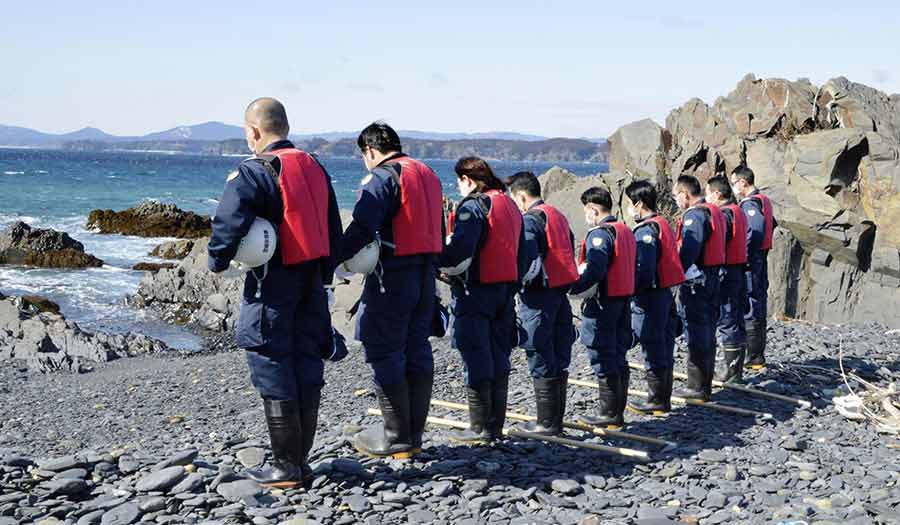
In the town of Minamisanriku in Miyagi prefecture, a team of 10 uniformed police officers sifted through gravel and sand on the beach in an annual search for the remains of people who are still missing. Survivors prayed by the bare girders that used to be the town’s disaster prevention center, where dozens died. In the town of Natori, about 400 people prayed and released balloons carrying messages of grief.
In Ishinomaki City in Iwate prefecture, residents gathered in a hilltop park where many of them took shelter 13 years ago, mourning as they stood facing the sea. In Rikuzentakata, about 100 people prayed atop a massive concrete seawall.
And at a ceremony in Fukushima prefecture, where some 20,000 people still cannot return to their homes because of radiation, Governor Masao Uchibori vowed that rebuilding will continue as the decades-long work of cleaning up the nuclear site continues.
“We will not give up,” he said. “I pledge in front of the quake and tsunami victims that we will accomplish recovery at any cost.”
On that day, a wall of water over 50 feet tall slammed into the coastal Fukushima Daiichi nuclear power plant, destroying its power supply and cooling systems, triggering meltdowns in three of its six reactors, and spewing radiation across the surrounding areas.
The disaster initially forced more than 160,000 people to leave their homes. Work to remove highly radioactive melted fuel debris has still not begun at the plant, and the overall decommissioning project is expected to last decades.
At the ceremony in Fukushima, Prime Minister Fumio Kishida renewed a pledge that the government will help secure jobs, livelihoods and the safe decommissioning of the plant so the former residents can return home.
“We will continue to do utmost for the full-fledged recovery and rebirth, as well as the recovery of the northeastern region,” he said.
Most deaths from the tsunami and earthquake took place in Miyagi and Iwate prefectures, north of Fukushima, but they have been able to recover faster because they were not exposed to nuclear waste. The reconstruction of roads, seawalls and other infrastructure has been largely completed in Iwate and Miyagi prefectures, but many former residents have not returned due to the loss of communities.
This year’s memorial events also remembered victims of the devastating quake that struck Japan’s north central region of Noto on January 1, which triggered renewed calls for a review of evacuation plans nationwide, including around nuclear plants.
Mr. Kishida later told reporters the government would work to ensure the ruined Fukushima Daiichi plant is decommissioned safely and transparently, citing recent mishaps including a contaminated water leak within the plant complex.
In a step the government and TEPCO say is crucial for decommissioning, the plant started releasing treated radioactive wastewater into the sea last August. The controversial discharges have faced protests by local fishers and neighboring countries—especially China, which has banned Japanese seafood imports.
National memorial services have not been held in Tokyo since the 10th anniversary, and municipalities in the disaster-hit areas now host local services each year.