Chemicals in Plastics Far More Numerous Than Previous Estimates, Report Says
LONDON (Reuters) – At least 3,000 more chemicals are in plastics—from food packaging to toys to medical devices—than previously estimated by environmental agencies, a report published on Thursday found, raising questions over pollution and consumer safety.
While the United Nations Environment Programme (UNEP) had previously identified around 13,000 plastic chemicals, the report by a team of European scientists found more than 16,000 chemicals in plastics—a quarter of which are thought to be hazardous to human health and the environment.
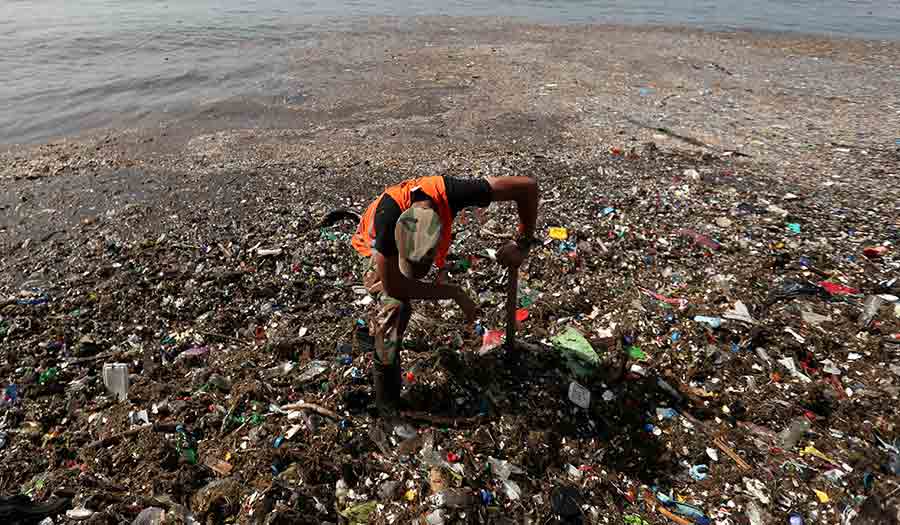
The report, funded by the Norwegian Research Council, comes as government negotiators grapple with devising the world’s first treaty to tackle mounting plastic pollution, as some 400 million tons of plastic waste are produced every year.
“To robustly solve plastic pollution, you actually have to look at the full life cycle of plastics and you have to address the chemicals issue,” said report co-author Jane Muncke, managing director of the Swiss nonprofit Food Packaging Forum.
That is because plastic chemicals can leach into water and food.
“We’re finding hundreds, if not thousands, of plastic chemicals in people now and some of them have been linked to adverse health outcomes,” Dr. Muncke said.
Such impacts include fertility issues and cardiovascular disease.
“When we look into...products that we’re using on a daily basis, we usually find between hundreds, if not thousands of chemicals in an individual plastic product,” said lead author Martin Wagner, an environmental toxicologist at the Norwegian University of Science and Technology.
Kimberly Wise White, vice president of regulatory and technical affairs for the American Chemistry Council, an industry group whose membership is dominated by plastics makers, said the findings sought to “advance a hazard framework that ignores real-world exposures and paints an incomplete picture for regulators and the public.”
While the plastics industry has said any global treaty should promote recycling and re-use of plastic, only addressing plastic waste does not go far enough to protect people, the report’s authors said.
Scientists flagged the need for greater transparency on what chemicals—including additives, processing aids, and impurities—are going into plastics, including recycled products.
A quarter of the identified chemicals lack basic information on their basic chemical identity, the report said.
“At the core of the problem is the chemical complexity of plastics,” said Mr. Wagner, who also serves on the board of the Scientists’ Coalition for an Effective Plastics Treaty.
“Often producers don’t really know which kind of chemicals they have in their products and that comes from very complex value chains.”
Only 6 percent of the chemicals found in plastics are regulated internationally. Without regulatory pressure, “there is no motivation to disclose what’s in the plastics,” he said.
That is something a plastics treaty could help to address. Negotiations continue next month in Ottawa, Canada, with the aim of finalizing a treaty come December in the South Korean city of Busan.