E-waste From Trashed Electric Devices Is Piling Up and Recycling Is Not Keeping Pace, UN Says
NAIROBI, Kenya (AP) – UN agencies have warned that waste from electronics is piling up worldwide while recycling rates remain low and are likely to fall even further.
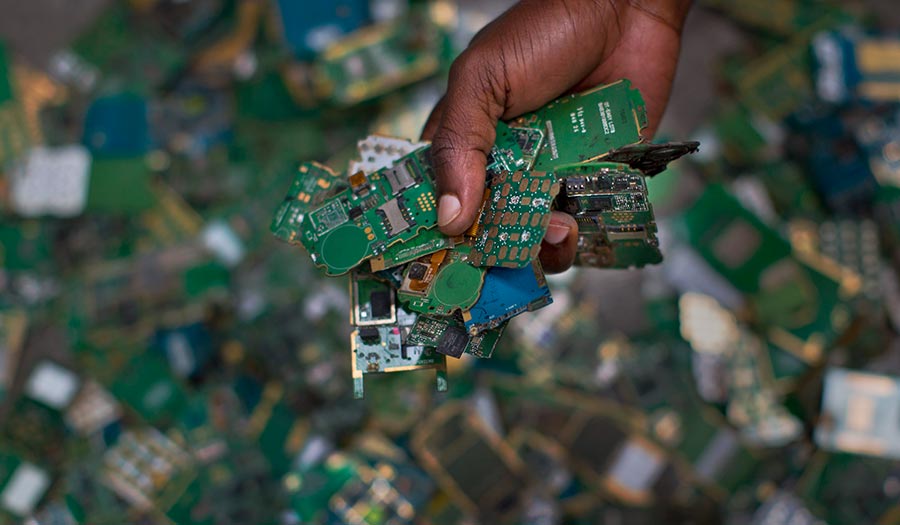
The agencies were referring to “e-waste,” which is defined as discarded devices with a plug or battery, including cellphones, electronic toys, TVs, microwave ovens, e-cigarettes, laptop computers and solar panels. It does not include waste from electronic vehicles, which fall into a separate category.
In a report released Wednesday, the UN’s International Telecommunications Union and research arm UNITAR said some 62 million tons of “e-waste” was generated in 2022, enough to fill tractor-trailers that could be lined up bumper to bumper around the globe. It is on track to reach 82 million tons by 2030.
Metals—including copper, gold and iron—made up half of the 62 million tons, worth a total of some $91 billion, the report said. Plastics accounted for 17 million tons and the remaining 14 million tons include substances like composite materials and glass.
The UN says 22 percent of the e-waste mass was properly collected and recycled in 2022. It is expected to fall to 20 percent by the end of the decade because of “staggering growth” of such waste due to higher consumption, limited repair options, shorter product life cycles, growing “electronification” of society, and inadequate e-waste management infrastructure, the agencies said.
They said some of the discarded electronic devices contained hazardous elements like mercury, as well as rare Earth metals coveted by tech industry manufacturers. Currently, only 1 percent of the demand for the 17 minerals that make up the rare metals is met through recycling.
About half of all e-waste is generated in Asia, where few countries have laws on e-waste or collection targets, according to the report. Recycling and collection rates top 40 percent in Europe, where per-capita waste generation is highest: nearly 18 kilograms (39 pounds).
In Africa, which generates the least of any of the five big global regions, recycling and collection rates hover at about 1 percent, it said.
“The latest research shows that the global challenge posed by e-waste is only going to grow,” said Cosmas Luckyson Zavazava, head of the ITU telecommunication development bureau. “With less than half of the world implementing and enforcing approaches to manage the problem, this raises the alarm for sound regulations to boost collection and recycling.”
For some, e-waste represents a way to earn cash by rummaging through trash in the developing world to find coveted commodities, despite the health risks.
At the Dandora dumpsite where garbage collected from the Kenyan capital of Nairobi ends up—even though a court declared it full over a generation ago—scavengers try to earn a living by picking through rubbish for e-waste that can be sold to businesses as recycled material.
Steve Okoth hopes the flow continues so he can eke out an income, but he knows the risks.
“When the e-waste comes here, it contains some powder which affects my health,” he said, adding that when electronic devices heat up, they release gases and he “can’t come to work because of chest problems.”
However, Mr. Okoth said they do not have any other options: “We are now used to the smoke because if you don’t go to work you will not eat.”
Recycling plants, like Nairobi’s WEEE center, have collection points across Kenya, where people can safely get rid of old electric equipment.
“We take inventory of the items,” said Catherine Wasolia, WEEE’s chief operating officer, to check for data on submitted devices and wipe them clean. Then they test each to assess if “it can be reused or repurposed.”
E-waste expert George Masila worries about the impact of electronic waste on soil.
“When you have all this e-waste—either in the dumpsites or mercilessly deposited anywhere else—it could have major effects on the soil,” Mr. Masila said. “Every year it rains and water flows and attracts all these elements that are deposited into the environment. You have water getting contaminated.”
He said greater recycling and re-use of such materials, “are some of the things we should be considering.”
Report authors acknowledged that many people in the developing world pay their bills through harvesting such e-waste, and called for them to be trained and equipped to make such work safer.
“We must try to support these people trying to find their niche,” said Ruediger Kuehr, senior manager of the sustainable cycles program at UNITAR.