Inquiry Finds 200,000 People Were Abused in Care in New Zealand Over Decades in ‘National Disgrace’
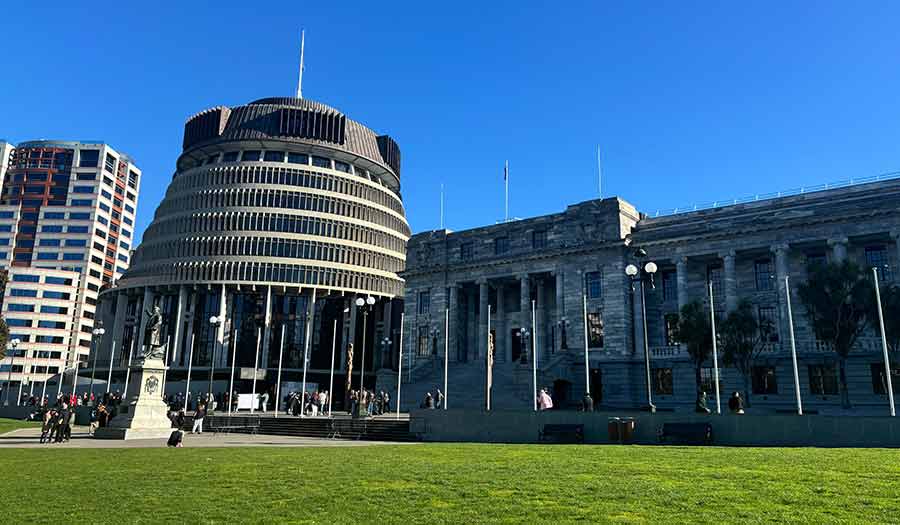
WELLINGTON, New Zealand (AP) – New Zealand’s independent inquiry into decades of abuse of children and vulnerable adults released a blistering final report Wednesday finding the country’s state agencies and churches failed to prevent, stop or admit to the mistreatment of those in their care.
The scale of abuse was “unimaginable” with an estimated 200,000 people abused over seven decades, many of them Maori, New Zealand’s Indigenous people, the report said.
In response to the findings, New Zealand’s government agreed for the first time that historical treatment of some children in a notorious state-run hospital amounted to torture, and pledged an apology to all those abused in state, foster and religious care since 1950.
But Prime Minister Christopher Luxon said it was too soon to say how much the government expected to pay in compensation—a bill the inquiry said would run to billions of dollars—or to promise that officials involved in denying and covering up the abuse would lose their jobs.
The prime minister said the government now heard and believed survivors, and that he was shocked by the findings. He said the government would formally apologize to survivors on November 12.
“We always thought that we were exceptional and different, and the reality is we’re not,” he said, noting “a dark and sorrowful day” for the country.
The findings by the Royal Commission—the highest level of inquiry that can be undertaken in New Zealand—capped a six-year investigation that followed two decades of similar probes around the world, as nations struggle to reckon with authorities’ transgressions against children removed from their families and placed in care.
The results were a “national disgrace,” the inquiry’s report said. Of 650,000 children and vulnerable adults in state, foster, and church care between 1950 and 2019—in a country that today has a population of 5 million—nearly a third endured physical, sexual, verbal or psychological abuse. Many more were exploited or neglected.
The figures were likely higher. Complaints were disregarded and records were lost or destroyed.
“These gross violations occurred at the same time as Aotearoa New Zealand was promoting itself, internationally and domestically, as a bastion of human rights and as a safe, fair country in which to grow up as a child in a loving family,” the inquiry heads wrote, using the country’s Maori and English names.
“If this injustice is not addressed, it will remain as a stain on our national character forever,” they wrote.
Hundreds of survivors and their supporters filled the public gallery Wednesday in Parliament, where lawmakers responded to the findings. They stood and sang a Maori song in an emotional scene.
The report lambasted some senior figures in government and faith institutions, who it said continued to cover up and excuse abuse in public hearings. Many of the worst episodes had long been common knowledge, it said, and officials at the time of the abuse were “either oblivious or indifferent” about protecting children, instead shoring up the reputations of their institutions and abusers.
The inquiry made 138 recommendations across New Zealand law, society and government. It adds to interim recommendations in 2021 that urged swift redress for those abused, some of whom were sick or dying. Few have been enacted.
The government pledged to supply answers by year’s end about plans for redress.
The new recommendations include seeking apologies from state and church leaders, including Pope Francis. The inquiry also endorsed creating offices to prosecute abusers and enact redress, renaming streets and monuments dedicated to abusers, reforming civil and criminal law, rewriting the child welfare system and searching for unmarked graves at psychiatric facilities.
Among investigations worldwide, New Zealand’s inquiry was the widest-ranging ever undertaken, according to those leading it. It examined abuse in state institutions, foster care, faith-based care and medical and educational settings, interviewing nearly 2,500 survivors of abuse.
Children were removed arbitrarily and unfairly from their families, the report said, and the majority of New Zealand’s criminal gang members and prisoners are believed to have spent time in care.
As in Australia and Canada, Indigenous children were targeted for placement in harsher facilities. The majority of children in care were Maori, despite the group making up less than 20 percent of New Zealand’s population during the period examined.
The report singled out churches, particularly the Catholic Church. As many as 42 percent of those in faith-based care by all denominations were abused, according to a report produced for the inquiry. The Catholic Church said in a 2020 briefing to the commission that accusations had been made against 14 percent of its New Zealand clergy during the time covered by the inquiry.
One recommendation urged an investigation into priests from one Catholic order who had been sent to Papua New Guinea to evade accusations of abuse in Australia and New Zealand.
Senior Catholic figures in New Zealand said in a written statement they had received the report and “will now read and review it carefully.”
The average cost of abuse in a survivor’s lifetime is 857,000 New Zealand dollars ($508,000), the inquiry found. Health care and other government-funded measures account for less than a quarter of that, while the remainder quantifies the survivor’s suffering and lost opportunities.
Those abused have had little recourse under New Zealand law to sue or seek compensation. Some accepted small out-of-court settlements. As recently as 2015, the government rejected the need for such an inquiry, and government agencies argued that abuse had not been endemic.
Tu Chapman, a survivor and advocate, told The Associated Press that immediate action was needed on redress to prove that the government takes the findings seriously: “Further delay is just impacting survivors even more who have waited 30, 40, 50, 60, 70 years.”
The episode was “a nationwide intergenerational shame” that was far from over, said Chris Hipkins, leader of New Zealand’s main opposition party, Labour, which commissioned the inquiry while in power.