Explainer: Why Is Mpox an Emergency Again, and How Worried Should You Be?
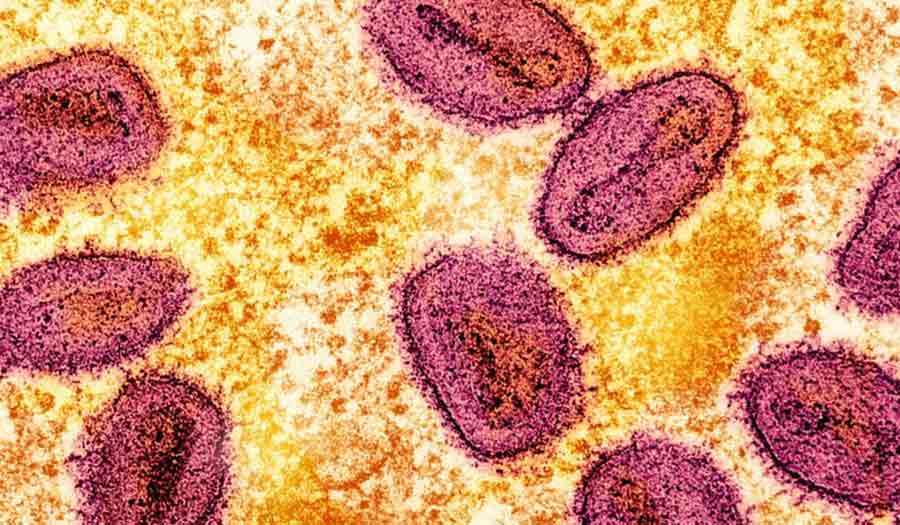
LONDON (Reuters) – The World Health Organization has declared that an outbreak of mpox, a viral infection that spreads through close contact, represents a global health emergency for the second time in two years.
Here is what that means.
What Is Mpox?
Mpox is a viral infection that causes flu-like symptoms and pus-filled lesions, and while usually mild, it can kill. Children, pregnant women and people with weakened immune systems, such as those with HIV, are all at higher risk of complications.
The WHO declared the recent outbreak of the disease a public health emergency after a new offshoot of the mpox virus, first identified in Democratic Republic of Congo, began spreading to other neighboring countries.
Mpox transmits through close physical contact, including sexual contact, but there is no evidence that it spreads easily through the air.
The new offshoot has caused global alarm because it appears to spread more easily between people.
What Is a Global Health Emergency?
A “public health emergency of international concern,” or PHEIC, is the WHO’s highest form of alert. It is announced when diseases are spreading in new or unusual ways, and is aimed at galvanizing international cooperation and funding to tackle an outbreak.
The WHO’s declaration follows a similar label from the Africa Centres for Disease Control and Prevention earlier this week.
Why Is Mpox an Emergency Again?
Two years ago, the WHO declared mpox was an emergency when a form of the disease, clade IIb, began to spread globally, largely among men who have sex with men.
That outbreak was brought under control after behavior change and safe sex practices, plus vaccines, helped people at risk protect themselves in many countries.
But mpox has been a public health problem in parts of Africa for decades. The first ever human case was in Congo in 1970, and it has had outbreaks ever since.
The current outbreak, Congo’s worst ever, has seen 27,000 cases and more than 1,100 deaths since January 2023, largely among children.
Two strains of mpox are now spreading in Congo—the endemic form of the virus, clade I, and a new offshoot called clade Ib, with the term ‘clade’ referring to a form of the virus.
The new offshoot has now moved from eastern Congo to Rwanda, Uganda, Burundi and Kenya.
Sweden reported the first case of the new form, clade Ib, outside Africa on Thursday.
A WHO spokesperson said the case reiterated the need for partnership, and the agency continues to advise against travel restrictions to stop the spread of mpox.
Pakistan on Friday also confirmed a case of the mpox virus in a patient who had returned from a Gulf country, though it was unclear whether it was of the new variant or of the clade that has been spreading globally since 2022.
What Happens Now?
Scientists hope that the emergency declarations will speed up efforts to get more medical tools and funding to Congo to help the authorities there tackle the outbreak. Better surveillance is needed to study the virus and help stop the spread.
But in 2022, a WHO appeal for $34 million to fight mpox got no take-up from donors, and there was huge inequity in who had access to vaccine doses. African countries had no access to the two shots used in the global outbreak, made by Bavarian Nordic and KM Biologics.
Two years later that remains the case, although there are efforts to change that, the WHO said on Wednesday as it appealed for dose donations from countries with stockpiles.
Africa CDC said it has a plan to secure doses, without elaborating further, but stocks are currently limited.
How Worried Should You Be?
Fatality rates vary, and depend heavily on the healthcare available to the sickest patients. In Congo in this outbreak, the rate across both clade I and clade Ib has been around 4 percent. Clade II, which spread globally, was much less deadly.
However, mpox is not COVID-19. There are tools that are proven to work to stop it from spreading and help those at risk, and it does not spread as easily.
The challenge now, which the emergency declarations aim to highlight, is making sure those tools reach those who need them most, in Congo and neighboring countries.