Libya’s Instability Will Worsen Further Without a Unified Government and Elections, UN Envoy Says
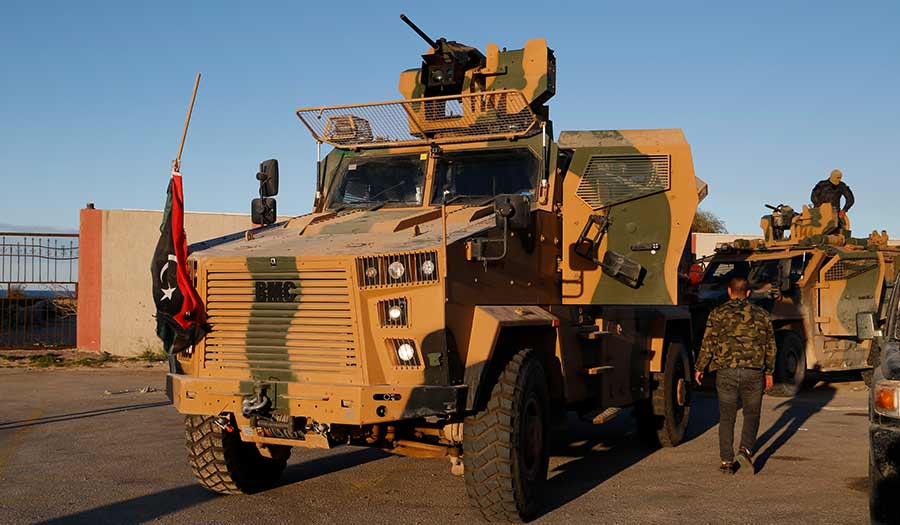
UNITED NATIONS (AP) – The top UN official in Libya warned Tuesday that the political, military and security situation in the oil-rich north African country has deteriorated “quite rapidly” over the past two months—and without renewed political talks leading to a unified government and elections there will be greater instability.
Stephanie Khoury painted a grim picture to the UN Security Council of rival government forces unilaterally making military moves toward each other in July and August, sparking mobilizations and threats to respond, and unilateral attempts to unseat the Central Bank governor and the prime minister in the country’s west.
Libya plunged into chaos after a NATO-backed uprising toppled and killed longtime dictator Moammar Gadhafi in 2011. In the chaos that followed, the country split, with rival administrations in the east and west backed by rogue militias and foreign governments.
The country’s current political crisis stems from the failure to hold elections on December 24, 2021, and the refusal of Prime Minister Abdul Hamid Dbeibah—who led a transitional government in the capital of Tripoli in the west—to step down. In response, Libya’s east-based parliament appointed a rival prime minister who was replaced, while the powerful military commander Khalifa Hifter continues to hold sway in the east.
Ms. Khoury warned the council that “unilateral acts by Libyan political, military and security actors have increased tension, further entrenched institutional and political divisions, and complicated efforts for a negotiated political solution.”
On the economic front, she said, attempts to change the Central Bank governor are fueled by the perception of political and security leaders, and ordinary Libyans, that the bank “is facilitating spending in the east but not in the west.”
Ms. Khoury also pointed to the unilateral decision by the Libyan National Army, which is under Mr. Hifter’s control, to close the Sharara oil field, the country’s biggest, “causing the Libya National Oil Corp. to declare force majeure on Aug. 7.” Force majeure frees companies from contractual obligations because of extraordinary circumstances.
The National Oil Corporation accused the Fezzan Movement, a local protest group, of responsibility for the shutdown. But several Libyan papers reported that it was a result of Mr. Hifter’s retaliation against a Spanish company that is part of the joint venture operating Sharara for an arrest warrant issued by Spanish authorities accusing him of arms smuggling.
In one of the latest political acts, some members of the east-based House of Representatives met in Benghazi on August 13 and voted to end the mandate of the Government of National Unity and Presidency Council in the west. The House members also voted to transfer the role of Supreme Commander of the Armed Forces to the speaker of the House of Representatives, and endorsed its designated government in the east “as the only legitimate executive”—moves immediately rejected by leaders in the west.
Ms. Khoury told council members “the status quo is not sustainable.”
“In the absence of renewed political talks leading to a unified government and elections you see where this is heading—greater financial and security instability, entrenched political and territorial divisions, and greater domestic and regional instability,” she warned.
Ms. Khoury said the UN political mission in Libya is focusing on de-escalating tensions and is proposing talks as a first step “to develop a set of confidence-building measures between all parties to bring an end to unilateral actions and create a more conducive environment for resuming the political process.”