Five Things to Know About Israel’s Attack on Iran
JERUSALEM (AP) – Israel delivered its long-expected response to Iranian missile attacks early Saturday by carrying out a series of airstrikes against the Islamic Republic.
Here is what to know.
Multiple Targets Were Struck
Under the cover of darkness early Saturday, Israel struck multiple sites in different parts of Iran. Explosions were heard in the capital, Tehran, which sits deep inside the country.
The Israeli military said its “precise and targeted strikes” hit missile air defense systems and “aerial capabilities” as well as missile manufacturing facilities used to produce weapons that have been used against Israel. Iran insisted the strikes caused only “limited damage.”
It was not immediately clear how hard of a blow Israel dealt, with neither country providing detailed assessments of the destruction. Iran said the strikes targeted military bases in the provinces of Ilam, Khuzestan and Tehran.
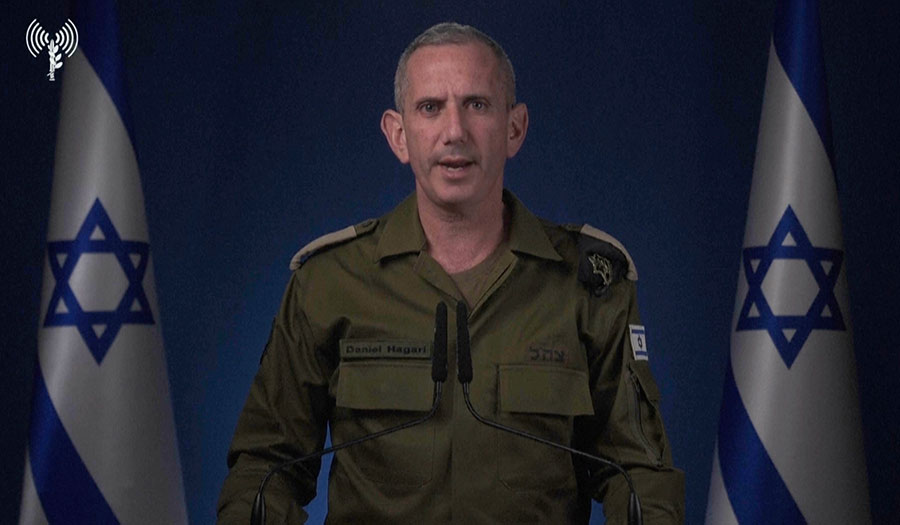
Israel appeared confident in its battering of Iran’s air defenses, with military spokesman Rear Admiral Daniel Hagari saying that “Israel now has broader aerial freedom of operation in Iran.”
What Was Not Hit Also Matters
The strikes did not appear to target facilities that would all but ensure a harsh Iranian response. Those most notably include Iran’s oil infrastructure, the backbone of the OPEC member’s economy, and its nuclear facilities.
U.S. President Joe Biden earlier this month said he would not support an Israeli strike on Iranian nuclear sites.
U.S. officials felt they had secured agreement from Israel not to hit nuclear or oil sites after dispatching another air-defense missile battery and associated troops, though those assurances were not set in stone.
This Attack Has Finished
Israel signaled that the pre-dawn bombardment was the end of this attack.
“The retaliatory strike has been completed, and its objectives have been achieved,” Mr. Hagari said early Saturday, still the Sabbath in Israel.
Not long after, Iran’s Civil Aviation Organization said commercial flights would resume after being halted because of the airstrikes. Tehran’s shops were open and streets were calm, though lines grew at gas stations as residents stocked up on fuel.
The Israeli attacks aimed to deter future aggression and “show we won’t be silent,” but to do so in a way that would minimize the embarrassment for Iran, said Yoel Guzansky, a researcher at the Tel Aviv-based Institute for National Security Studies.
Outrage and Calls for Restraint
The White House indicated that it wants the strikes to end the direct exchanges of fire between Israel and Iran, and warned Iran against responding.
British Prime Minister Keir Starmer said there was a “need to avoid further regional escalation” and called on all sides to show restraint.
Reactions in the region were tougher. Saudi Arabia, Iran’s main Arab rival, condemned the strike, calling it a threat to regional security and “a violation of international laws and norms.”
Turkey accused Israel of having “brought our region to the brink of a greater war” and said “putting an end to the terror created by Israel in the region has become a historic duty.”
Syria and Iraq were among other countries in the region condemning the strikes. So did Hamas, which along with other militants attacked Israel on October 7, 2023, killing 1,200 people, mostly civilians, and taking some 250 hostages into Gaza.
Israel’s retaliatory offensive in the Gaza Strip has so far killed more than 42,000 Palestinians, according to local health officials, who do not differentiate between civilians and combatants but say women and children make up for more than half the deaths.
Iran’s Response Will Be Key
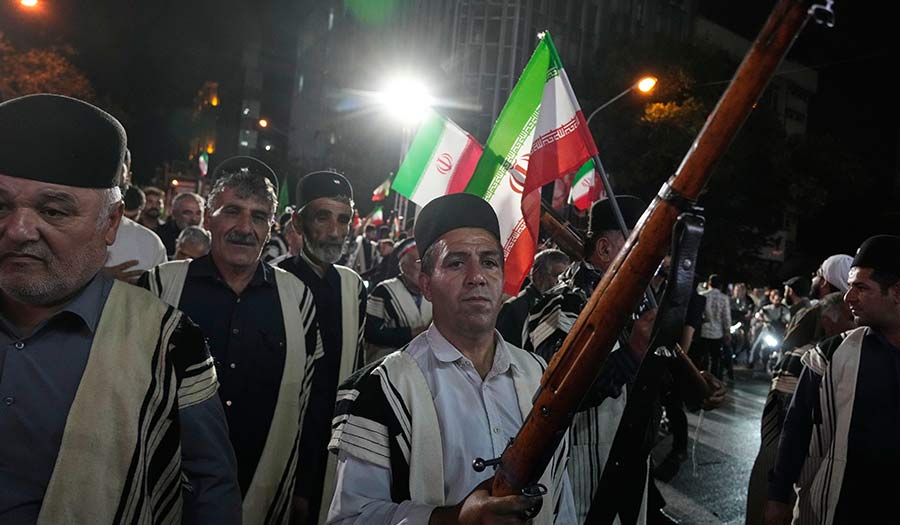
The Iranian Foreign Ministry said Iran would respond to the airstrikes, calling them a clear violation of international law as it asserted Tehran’s right to self-defense.
Israel characterized Saturday’s attack as a response to previous aerial assaults by Iran using missiles and exploding drones in April and another missile attack this month. Many of those projectiles were shot down before reaching their targets.
Iran could attempt another direct bombardment, though doing so risks provoking yet another direct Israeli attack on its territory at a moment when its defenses are weakened.
It could also encourage allied militant groups such as Hamas in Gaza and Hezbollah in Lebanon to intensify their attacks, though both have suffered serious blows in their ongoing wars with Israel.
“Iran will play down the impact of the strikes, which are in fact quite serious,” predicted Sanam Vakil, the director of the Middle East and North Africa program at the London-based think tank Chatham House.
She said Iran is “boxed in by their own military limitations, economic constraints from sanctions and by the U.S. election outcome,” which could affect the course of further escalation or diplomatic outreach.