India’s Capital Chokes as Air Pollution Levels Hit 50 Times the Safe Limit
NEW DELHI (AP) – Authorities in India’s capital shut schools, halted construction and banned non-essential trucks from entering the city on Monday after air pollution shot up to its worst level this season.
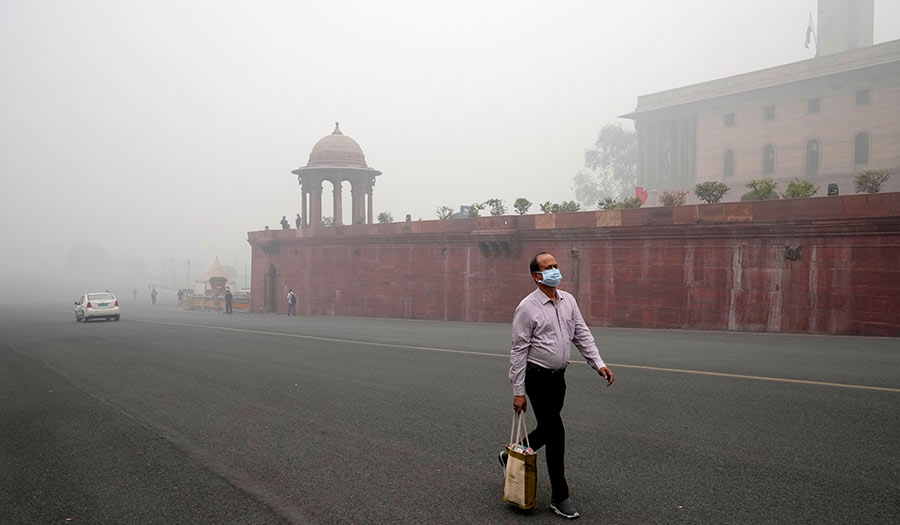
Residents of New Delhi woke up to thick, toxic smog enveloping the city of some 33 million as the air quality became increasingly hazardous. It rose further into the severe category, according to SAFAR, the country’s main environmental agency, which measures tiny particulate matter in the air that can enter deep into the lungs.
The deadly haze covered monuments and high-rise buildings in the capital, with visibility so low that airlines warned of delays.
In several areas of the city, pollution levels were more than 50 times higher than the World Health Organization’s recommended safe limit. Forecasts say the poor air quality will continue into the week.
Air pollution in northern India rises every year, particularly in winter, as farmers burn crop residue in agricultural areas. The burning coincides with colder temperatures, which trap the smoke in the air. The smoke is then blown into cities, where auto emissions add to the pollution.
Emissions from industries and the burning of coal to produce electricity are also linked to the pollution, which has been steadily ticking up in recent weeks.
Starting Monday, authorities began enforcing stage 4 of a graded response action plan, or GRAP 4, based on the severity of the air pollution. Earlier stages of the plan were already in place, and stage 4 includes stricter curbs.
Classes for all grades except 10 and 12 will be held online and no trucks will be allowed to enter the city except for those carrying essential items. Some older, diesel guzzling vehicles have been banned inside the city, and all construction activities have been halted. Authorities also urged children, the elderly and others with chronic diseases or respiratory issues to avoid going outside as much as possible.
Over the weekend, farmers in neighboring Uttar Pradesh state burned their fields, releasing plumes of gray smoke that winds likely carried into New Delhi and other nearby areas. Despite the poisonous air, many in the capital continued their usual routines, including morning walks in the city’s beloved Lodhi Garden.
“Everyone has a sore throat,” said Sanjay Goel, a 51-year-old shopkeeper in New Delhi. “They should ban crop residue burning...it’s just smoke everywhere.”
The worsening air quality in the capital also sparked outrage from residents on social media. Many complained of headaches and hacking coughs, describing the city as “apocalyptic” and a “gas chamber.” Others urged officials to solve the public health crisis once and for all. Several studies have estimated more than a million Indians die each year from pollution-related diseases.
Authorities have invoked similar measures in the past and have at times deployed water sprinklers and anti-smog guns in an attempt to control the haze. But critics say there needs to be a long-term solution that drastically reduces pollution itself, instead of actions that aim to mitigate the effects after it has already plagued the region.