Tariff Threats Take Aim at Fentanyl Trafficking. Here Is How the Drug Reaches the U.S.
Associated Press – President Donald Trump’s plan to impose tariffs on goods from Mexico, Canada and China is partly aimed at combating the illicit flow of fentanyl into the U.S., where the opioid is blamed for some 70,000 overdose deaths annually.
Mexico agreed Monday to send 10,000 troops to the U.S.-Mexico border as part of a deal with Mr. Trump to pause the tariffs for a month—and hold off levying its own. Canada reached its own deal with Mr. Trump hours later, delaying the trade war and pledging several steps against fentanyl trafficking.
China has not signaled major changes in tackling the flow of fentanyl into the U.S., and has said it would retaliate for any U.S. tariffs.
What role do Mexico, Canada and China play in fentanyl reaching the U.S.? And how much can their governments do?
Where Does Fentanyl Come From?
The ingredients in fentanyl are largely produced by companies in China and used by pharmaceutical companies to make legal painkillers. But a portion of those chemicals is purchased by the Sinaloa and Jalisco cartels in Mexico.
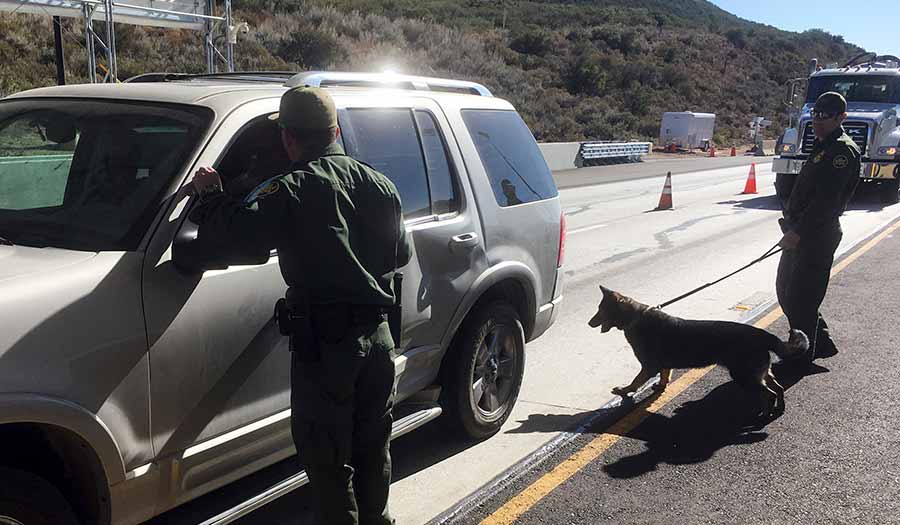
Cartels make the synthetic opioid in labs and then smuggle it into the U.S., largely at official land crossings in California and Arizona. The small amounts of fentanyl in any shipment—the drug is 50 times more potent than heroin—and its lack of odor, make detection and seizures extremely challenging.
Fentanyl is also made in Canada and smuggled into the U.S., but to a much lesser extent. U.S. customs agents seized 43 pounds of fentanyl at the Canadian border during the last fiscal year, compared with 21,100 pounds at the Mexican border.
Seizures of fentanyl jumped by as much as tenfold under President Joe Biden, an increase that may reflect improved detection.
What Changed After President Trump Threatened Tariffs?
Mexico announced in December the seizure of more than a ton of fentanyl pills in what it described as the largest bust of synthetic opioids in the country’s history. The haul was striking because fentanyl seizures in Mexico had fallen dramatically in the first half of 2024.
Under President Claudia Sheinbaum, who took office in October, Mexico’s security forces appear to be far more aggressive than they were under her predecessor. Former President Andres Manuel Lopez Obrador denied that fentanyl was even produced in Mexico, contradicting officials in his own administration.
To pause the tit-for-tat tariffs, Mexico agreed to immediately deploy 10,000 National Guard troops to the border to battle drug trafficking, while the U.S. committed to do more to stop the trafficking of guns into Mexico, said Mr. Trump and Ms. Sheinbaum on social media.
Facing tariff threats, Canadian Prime Minister Justin Trudeau has highlighted his country’s recent $1.3 billion investment in border enforcement, including chemical detection tools at entry ports and a new unit focused on the oversight of precursor chemicals.
Once Mr. Trump ordered the tariffs, Mr. Trudeau rebuked the move and geared up for a trade war before reaching a deal with Mr. Trump Monday to pause the use of tariffs for at least a month.
Mr. Trudeau posted on X that Canada would appoint a fentanyl czar, list Mexican cartels as terrorist groups and launch a “Canada- U.S. Joint Strike Force” to combat fentanyl, organized crime and money laundering.
China defended its efforts to combat fentanyl in what has been years of touch-and-go cooperation with the U.S. China does not have the same fentanyl crisis among its own population, and does not view it as a priority, said Zongyuan Zoe Liu, a senior fellow for China studies at the Council on Foreign Relations.
How Much Can Mexico, Canada and China Do?
Combating the production and movement of illicit fentanyl is particularly challenging.
Unlike heroin and cocaine, which are produced from plants, fentanyl is made with ingredients used for legal pharmaceutical drugs, and can be made in cheap labs that can be erected relatively quickly. And despite the dangers, demand in the U.S. for the highly addictive drug remains strong.
Mike Vigil, the former chief of international operations at the U.S. Drug Enforcement Agency, said he was skeptical that Mexico’s extra troops at the border on their own would make much of a dent in trafficking.
Once fentanyl leaves the labs, it is usually well concealed in hidden compartments of vehicles or in huge cargo trucks. Better detection technology is crucial, in addition to more troops, he said. The other challenge, Mr. Vigil added, is that combating the fentanyl trade will likely require more than just collaboration between the U.S. and its neighbors.
“Even if Mexico, Canada and these other countries snap their fingers and did away with the drug trade, as long as we have that demand, there will be another country that will satisfy that demand.”
To learn more, read {%577555}