Syria’s Worst Violence in Months Reopens Wounds of the Civil War
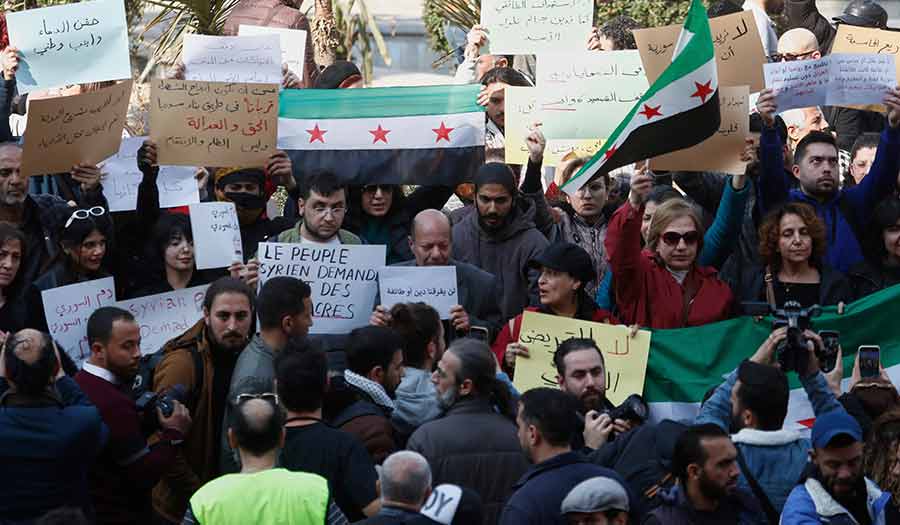
Associated Press – An ambush on a Syrian security patrol by gunmen loyal to ousted leader Bashar Assad escalated into clashes that a war monitor estimates have killed more than 1,000 people over four days.
The attack Thursday near the port city of Latakia reopened the wounds of the country’s 13-year civil war and sparked the worst violence Syria has seen since December, when insurgents led by the Islamist group Hayat Tahrir al-Sham, or HTS, overthrew Mr. Assad.
The counteroffensive against the Assad loyalists in the largely Alawite coastal region brought havoc to several cities and towns. Rights groups reported dozens of revenge killings resulting from Sunni militants targeting the minority Islamic sect, regardless of whether they were involved in the insurgency.
Here is a look at the latest violence in the war-wracked country.
What Started the Violence?
Tensions have been on the rise since Mr. Assad’s downfall following sectarian attacks against Alawites, who ruled Syria for over 50 years under the Assad dynasty. The assaults continued despite promises from Syria’s interim president that the country’s new leaders will carve out a political future for Syria that includes and represents all its communities.
In their ambush, the pro-Assad Alawite gunmen overwhelmed government security forces and later took control of Qardaha, Mr. Assad’s hometown, as Damascus scrambled to bring in reinforcements.
Defense Ministry spokesperson Col. Hassan Abdel-Ghani said Sunday that security forces have restored control of the region and will continue pursuing leaders of the galvanized insurgency.
But despite authorities calling for an end to the sectarian incitement, the clashes turned deadly, and many civilians were killed.
Who Are the Dead?
Most of the dead are apparently members of the Alawite community, who live largely in the country’s coastal province, including in the cities of Latakia and Tartous. Rights groups estimate that hundreds of civilians were killed.
The Alawite sect is an offshoot of Shia Islam, and it once formed the core constituency of Assad’s government in the Sunni-majority country.
Opponents of Assad saw Syria under the family’s rule as granting privileges to the Alawite community. As the civil war intensified, militant groups emerged across the country and treated Alawites as affiliates of Mr. Assad and his key military allies, Russia and Iran.
Syria’s new interim government is under Sunni Islamist rule. Interim President Ahmad Al-Sharaa, a former HTS leader, has promised that the country will transition to a system that includes Syria’s mosaic of religious and ethnic groups under fair elections, but skeptics question whether that will actually happen.
Little is currently known about the Alawite insurgency, which is composed of remnants of Mr. Assad’s web of military and intelligence branches, and who their foreign backers might be.
Why Were the Alawites Targeted?
The Syrian Observatory for Human Rights said 745 civilians were killed, mostly in shootings. In addition, 125 members of government security forces and 148 militants with armed groups affiliated with Mr. Assad were killed. Electricity and drinking water were cut off in large areas around Latakia, the group added.
Meanwhile, the Syria Campaign and the Syrian Network for Human Rights, which both advocated against Mr. Assad after the civil war began in 2011, said Saturday that both security forces and pro-Assad gunmen were “carrying out mass executions and systematic killings.”
The SNHR estimated that 100 members of the government’s security forces were killed Thursday, while 125 of an estimated 140 civilians were slain over the weekend in “suspected revenge killings.”
The Associated Press could not verify those numbers, and conflicting death figures during attacks in Syria over the years have not been uncommon. Two residents in the coastal region said that many homes from Alawite families were looted and set on fire. They spoke from their hideouts on condition of anonymity, fearing for their lives.
Damascus blamed “individual actions” for the widespread violence against civilians and said government security forces were responding to the gunmen loyal to the former government.
Can Damascus Restore Calm After the Clashes?
Damascus has struggled to reconcile with skeptics of its Islamist government, as well as with Kurdish-led authorities in the northeast and the Druze minority in the south. Interim president Ahmed al-Sharaa has lobbied to convince the United States and Europe to lift sanctions to pave the way for economic recovery to pull millions of Syrians out of poverty and make the country viable again.
Washington and Europe are concerned that lifting sanctions before Syria transitions into an inclusive political system could pave the way for another chapter of autocratic rule.
Mr. al-Sharaa appealed to Syrians and the international community in an address over the weekend, calling for accountability for anyone who harms civilians and mistreats prisoners. Such human rights violations were rampant under Mr. Assad. Blaming remnants of the former government for the outbreak of violence, and certain foreign parties supporting them, Mr. al-Sharaa also formed a committee composed mostly of judges to investigate the violence.
In a statement issued Sunday, U.S. Secretary of State Marco Rubio urged Syrian authorities to “hold the perpetrators of these massacres” accountable. Mr. Rubio said the U.S. “stands with Syria’s religious and ethnic minorities, including its Christian, Druze, Alawite, and Kurdish communities.”