A Year After the Baltimore Bridge Collapse, a Long Road to Recovery Is Ahead
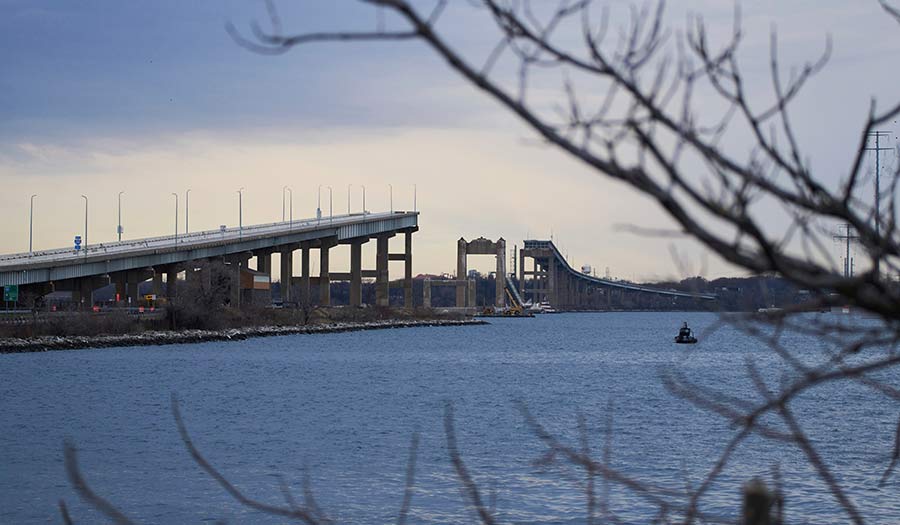
BALTIMORE (AP) – A year after the catastrophic collapse of Baltimore’s Francis Scott Key Bridge, Maryland leaders are honoring the six construction workers who were killed when the road they were repairing buckled underneath them.
Police were able to stop traffic moments before a cargo ship plowed into the bridge, but they did not alert the road crew in time.
“Everyone working on the scene shared that same priority—those men we lost in the water,” Baltimore Mayor Brandon Scott said during an anniversary ceremony Wednesday, recalling the horror that followed the collapse.
“While this day is a day of mourning, it is not a day of grief alone,” Mr. Scott said. “It is a day to commemorate the strength, resilience and that Baltimore grit that we showed the world in that moment.”
After the collapse, the Port of Baltimore was closed for months as debris blocked its main shipping channel. It made an impressive rebound during the second half of 2024, but now the Trump administration’s tariffs could threaten its ongoing recovery.
Just last week, federal investigators criticized the Maryland Transportation Authority for failing to address the bridge’s vulnerability to ship strikes—despite major changes in maritime shipping since it opened to traffic in 1977. They called upon other bridge owners to learn from the example.
For Maryland drivers, it has been a year without the Key Bridge, which connected various industrial communities north and south of Baltimore, allowing people to bypass downtown. Traffic has since increased significantly on alternate routes.
Named after the man who penned the national anthem, the Key Bridge was a beloved feature of Baltimore’s skyline and a symbol of its proud working-class history.
Here is what to know about the bridge’s collapse—and its replacement.
When Disaster Struck
It was just after 2 a.m. on March 26, 2024, when Governor Wes Moore got a call from his chief of staff, Fagan Harris. His words weren’t easy to grasp: “Governor, I’m sorry to tell you, but the Key Bridge is gone,” Mr. Moore recounted to The Associated Press.
“What do you mean ‘gone?’” the governor remembered asking.
Mr. Moore soon learned that a ship had lost power and crashed into one of the bridge’s supporting columns, killing the six workers who were filling potholes that night.
Once he grasped the scale of the tragedy, Mr. Moore said, the morning became a stream of phone calls.
“We remember the cold morning in March that changed our state forever, and we remember the tears we shed and the uncertainty that we all felt,” Mr. Moore said during remarks Wednesday.
But the initial shock was followed by heroism, he added, as first responders rushed to the scene.
In the weeks and months that followed, people gathered by the water’s edge and watched as crews worked diligently to clear the wreckage.
The main shipping channel to the Port of Baltimore reopened in just 11 weeks.
Honoring the Victims
On Tuesday, city and state leaders invited the victims’ families to visit the collapse site for a wreath-laying ceremony.
Relatives boarded a boat that chugged steadily toward the mouth of the Patapsco River where the Key Bridge once stood. As they approached its skeletal remains, the mood turned somber, punctuated by the sound of two women weeping.
One by one, family members stepped to the back of the boat and tossed wreaths of yellow and white flowers into the water, watching them drift away.
The six men were all Latino immigrants who came to the U.S. seeking better wages and brighter futures. Most had lived in the country for many years, working hard to support their families.
That’s exactly what they were doing before their untimely deaths—”just doing their job,” said Baltimore police Det. Aaron Jackson, a member of the department’s dive team who helped recover the bodies during a painstaking search effort that lasted several weeks.
“They deserve our utmost respect,” Maryland Transportation Secretary Paul Wiedefeld said.
A New Bridge in the Works
Officials say the new bridge should be finished sometime in 2028.
They unveiled designs last month for what will become Maryland’s first cable-stayed bridge. It could cost upwards of $1.7 billion but Congress has agreed to cover the full price tag for rebuilding.
Crews have been conducting soil testing and other work to finalize the designs. They plan to demolish the remaining pieces of the Key Bridge this spring.
Officials have said the designs will include the latest in pier protection technology, which has become increasingly important as cargo ships continue to get bigger and carry more cargo. The bridge will also be taller to provide more clearance.
Baltimore’s Port Rebounds
Last month, the port said 2024 was one of its most productive years—with 45.9 million tons of cargo passing through its facilities—second only to the year before, which saw a record 52.3 million tons.
The port also processed more farm and construction machinery than any other port in the country again in 2024. It ranked second for cars and light trucks, officials said.
Daraius Irani, chief economist for the Regional Economic Studies Institute at Towson University, described the rebound as “sort of a miracle.”
But the implementation of tariffs by the Trump administration could reduce imports there, a quarter of which come from Mexico, Canada and China, he said. Fewer goods passing through the ports would reduce revenue.
Ongoing Federal Investigations
The National Transportation Safety Board, which is investigating what caused the collapse, said its final report could be released in fall 2025.
Meanwhile, the board issued urgent safety recommendations last week, telling bridge owners to conduct vulnerability assessments. The recommendations apply to 30 owners of 68 bridges across 19 states.
The board is still investigating what caused the cargo ship to lose power as it approached the bridge. Investigators have said a loose cable could have caused electrical issues. The ship experienced two blackouts before it left the port en route to Sri Lanka.
The FBI also opened a criminal investigation into the circumstances leading up to the collapse, but officials have not yet provided any updates.
Maria del Carmen Castellon, whose husband was among those killed, called on federal authorities to deliver justice.
“Concrete and steel can be replaced,” said Maria Martinez, Maryland’s special secretary of small, minority and women business affairs, reading a message from Ms. Castellon. “The laughter of a father, the embrace of a husband, the future of six men—these are lost forever.”