India and Pakistan Do Not Fight Wars Like Other Countries. Here’s Why
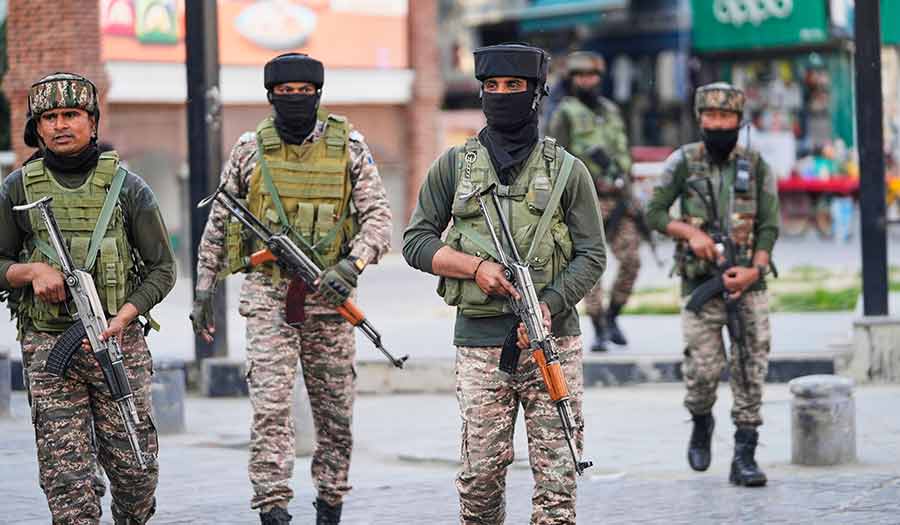
ISLAMABAD, Pakistan (AP) – India and Pakistan have fought three full-scale wars since they gained independence from Britain in 1947. They have also had dozens of skirmishes and conflicts, including one atop a glacier dubbed the coldest and highest-altitude battlefield in the world.
The latest escalation follows a deadly gun attack on tourists that India blames Pakistan for—Islamabad denies any connection. But they do not fight wars like other countries.
The dominant factor is their nuclear weapons arsenal, a distinct way of deterring major attacks and a guarantee that fighting does not get out of hand, even when the situation is spiraling.
Here is how—and why—India and Pakistan fight the way they do.
Their Nuclear Arsenals Can Destroy Each Other
“Pakistan and India have enough nuclear weapons to wipe the other side out several times over,” says security analyst Syed Mohammed Ali, who is based in Islamabad, the Pakistani capital. “Their nuclear weapons create a scenario for mutually assured destruction.”
Both countries have “deliberately developed” the size and range of their stockpile to remind the other about the guarantee of mutually assured destruction, he added.
Neither country discloses their nuclear capabilities but each is thought to have between 170 and 180 warheads that are short-, long- and medium-range. Both countries have different delivery systems—ways of launching and propelling these weapons to their targets.
The arsenals are a defensive move to prevent and deter further fighting, because “neither side can afford to initiate such a war or hope to achieve anything from it,” Mr. Ali said.
It might not look this way to the outsider, but nuclear weapons are a reminder to the other side that they cannot take things too far.
But the secrecy around their arsenals means that it is unclear if Pakistan or India can survive a first nuclear strike and retaliate, something called “second-strike capability.”
This capacity stops an opponent from attempting to win a nuclear war through a first strike by preventing aggression that could lead to nuclear escalation.
Without this capability, there is, in theory, nothing to stop one side from launching a warhead at the other.
Kashmir at the Crux of the Dispute
India and Pakistan have each laid claim to Kashmir since 1947, when both gained independence, and border skirmishes have created instability in the region for decades. Each country controls a part of Kashmir, which is divided by a heavily militarized border.
The two archrivals have also fought two of their three wars over Kashmir—a disputed Himalayan region divided between them where armed insurgents resist Indian rule. Many Muslim Kashmiris support the rebels’ goal of uniting the territory, either under Pakistani rule or as an independent country.
Border flare-ups and militant attacks in India-controlled Kashmir have prompted New Delhi to take an increasingly tough position on Islamabad, accusing it of “terrorism.”
In the latest conflict, India punished Pakistan by hitting what it said were sites used by Pakistan-backed militants linked to a gun massacre last month.
A Conventional Military Imbalance
India is one of the biggest defense spenders in the world, with $74.4 billion in 2025, according to the Military Balance report from the International Institute for Strategic Studies. It is also one of the world’s largest arms importers.
Pakistan is no slouch, spending $10 billion last year, but it can never match India’s deep pockets. India also has more than double the number of active armed forces personnel than Pakistan does.
While India’s armed forces are traditionally focused on Pakistan, it has another nuclear neighbor to contend with, China, and it is increasingly concerned with maritime security in the Indian Ocean. Those are two factors that Pakistan does not have to consider in its security paradigm.
Pakistan’s long and narrow shape, together with the outsized role of the military in foreign policy, makes it easier to move the armed forces around and prioritize defense.
A Pattern of Escalation and Defusing
Neither Pakistan or India are in a hurry to announce their military moves against the other and, as seen in the current flare-up of hostilities, it can take a while for confirmation of strikes and retaliation to surface.
But both launch operations into territories and airspace controlled by the other. Sometimes these are intended to damage checkpoints, installations, or sites allegedly used by militants.
They are also aimed at embarrassing or provoking—forcing leaders to bow to public pressure and respond, with the potential for miscalculation.
Many of these activities originate along the Line of Control, which divides Kashmir between India and Pakistan. It is largely inaccessible to the media and public, making it hard to independently verify claims of an attack or retaliation.
Such incidents raise international alarm, because both countries have nuclear capabilities, forcing attention back to India and Pakistan and, eventually, their competing claims over Kashmir.
The fear of nuclear war has put the two countries at the top of the agenda, competing with the papal conclave, U.S. President Donald Trump’s policies, and the Sean “Diddy” Combs trial in the news cycle.
No Desire for Conquest, Influence or Resources
Pakistan and India’s battles and skirmishes are away from the public eye.
Strikes and retaliation are late at night or early in the morning and, with the exception of the drone attacks on Thursday, they mostly take place away from densely populated urban centers. It shows that neither country has the desire to significantly harm the other’s population. Attacks are either described as surgical or limited.
Neither country is motivated by competition for resources. Pakistan has huge mineral wealth, but India is not interested in these and, while there are stark ideological differences between Hindu-majority India and Muslim-majority Pakistan, they do not seek control or influence over the other.
Other than Kashmir, they have no interest in claiming the other’s territory or exercising dominance.