The U.S. Academic Partnership with China, Under Strain for Years, Faces Its Biggest Threat
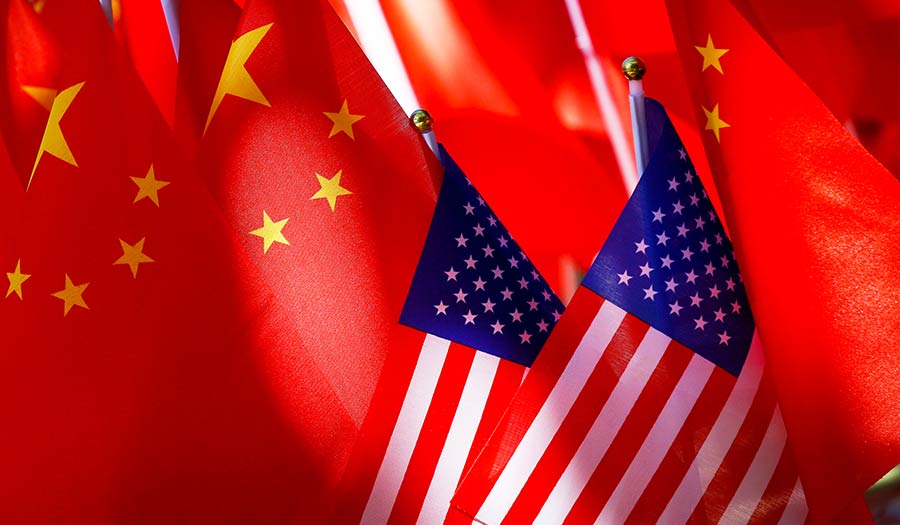
WASHINGTON (AP) – Frayed by tariff wars and political battles, the academic ties between the U.S. and China are now facing their greatest threat yet as the Trump administration promises to revoke visas for an unknown number of Chinese students and tighten future visa screening.
In a brief statement Wednesday, Secretary of State Marco Rubio said the U.S. will “aggressively” revoke visas for Chinese students, including those with ties to the Chinese Communist Party or studying “critical fields.”
Mr. Rubio’s statement threatened to widen a chasm between the two nations, building on a yearslong Republican campaign to rid U.S. campuses of Chinese influence and insulate America’s research from its strongest economic and military competitor.
Mr. Rubio’s announcement has rattled Chinese students and drawn swift condemnation from the Chinese government and some U.S. lawmakers. The Chinese Embassy on Thursday said it “lodged a solemn demarche with the U.S. side without delay” and urged the U.S. to correct its mistake and protect the rights of Chinese students. The visa policy also raised alarm at U.S. campuses that host more than 275,000 students from China and benefit from their tuition payments.
Chinese graduate student Kesong Cao, 26, decided to abandon his studies in the U.S. because of President Donald Trump’s policies.
“I do not feel welcome anymore,” said Mr. Cao, a student of cognitive psychology at the University of Wisconsin, who was waiting at Seattle’s airport Thursday to board a flight home to China.
Mr. Cao spent eight years in the U.S. and once dreamed of staying as a professor. “Now it seems like that dream is falling apart,” he said. “It’s a good time to jump ship and think about what I can give back to my own country.”
The scope of the visa crackdown was not immediately clear, with no explanation on what would constitute ties to the Communist Party. But the impact could be significant if the government goes after any student with family members in the party, said Sun Yun, director of the China program at the Washington-based think tank Stimson Center.
Academic Ties with China Were Built Over Decades
Academic leaders in the U.S. have spent years trying to tamp down growing hostility against Chinese students and scholars, saying the benefits of the relationship outweigh the risks. Collaboration between the countries produces tens of thousands of scientific papers a year, yielding major advancements in fields from earthquake prediction to disease treatment.
The academic alliance has been built up over decades since both sides resumed diplomatic ties in the 1970s. Chinese researchers are the most frequent international co-authors for U.S. researchers in science and engineering journal articles. Both sides are research powerhouses.
Any move that prevents the U.S. from welcoming the smartest people in the world is an “extremely bad idea,” said L. Rafael Reif, a former president of the Massachusetts Institute of Technology who pushed back against anti-China sentiment during Mr. Trump’s first term.
“This administration will be known historically as the one that began the decline of the U.S. by completely failing to understand the importance of science and technology—and the importance of gathering the most talented human capital from the world to work together towards a thriving United States,” Mr. Reif said in a statement to The Associated Press.
During his first term, Mr. Trump shortened the visas of some Chinese graduate students from five years to one, and he signed an order barring Chinese students from schools with direct links to the People’s Liberation Army.
More recently, the administration has taken sweeping action against international students. It revoked the legal status for thousands of foreign students in the U.S. this spring before reversing itself. The administration is also trying to block Harvard from enrolling students, a move put on hold by a judge.
David Lampton, a political scientist at Johns Hopkins University, is worried the U.S. will lose talent. “American universities and society have always successfully relied on their single-minded search for the world’s best brains,” he said.
Yet critics say it is a lopsided relationship that primarily benefits China.
Some Conservatives Say the Exchanges Are a U.S. Security Risk
A State Department spokesperson, Tammy Bruce, told reporters Thursday that the U.S. will not tolerate the Chinese Communist Party’s “exploitation of U.S. universities or theft of U.S. research, intellectual property or technologies to grow its military power, conduct intelligence collection or repress voices of opposition.”
House Republicans issued a report last year finding that hundreds of millions of dollars in federal funding has gone toward research that ultimately boosted Chinese advancements in artificial intelligence, semiconductor technology and nuclear weapons. The report argued China’s academic collaborations served as “Trojan horses for technology transfer,” accusing China of “insidious” exploitation of academic cooperation.
At least three American schools have ended their partnerships in China, including the University of Michigan and the Georgia Institute of Technology. Eastern Michigan University was the latest to terminate a Chinese partnership, just hours before Mr. Rubio’s announcement.
Critics also point to the imbalance in student exchange—only a few hundred U.S. students study abroad in China a year, compared to about 370,000 from China who studied in the U.S. in 2018. President Xi Jinping, in 2023, launched a campaign to invite 50,000 young Americans to visit China on exchange and study programs.
U.S. universities themselves have come to rely on Chinese students. Even as numbers level off, Chinese students remain the second-largest group of international students in the U.S. behind those from India. Foreign students are typically charged higher tuition rates, subsidizing the education for American students.
Gary Locke, a former U.S. ambassador to China, said the visa policy would “adversely and profoundly” affect U.S. higher education, research institutions, scientific discovery and startups.
“The real story isn’t just about visa numbers—it’s also about how this changes the competitive landscape for talent, innovation and economic growth in America. Treating every Chinese student as a security threat distorts facts and fuels discrimination against Chinese Americans,” said Mr. Locke, now chair of the Committee of 100, a group of prominent Chinese Americans focused on U.S.-China relations and issues faced by Chinese citizens in the U.S.