Post-Pandemic, U.S. Kids Still Struggle with Reading
When COVID-19 wrought havoc on society in early 2020, today’s youngest schoolchildren were infants or yet to be born. Now in their early school years, researchers are beginning to see how the pandemic years have shaped their education, even though many had yet to set foot in a classroom when it began.
First and second graders continue to perform worse than their pre-pandemic counterparts on math and reading tests, according to a report published March 10 by the education assessment and research group NWEA. But while math scores have inched up every year, reading scores remain stagnant, the report shows. The data suggests the slump in academic performance is not rooted only in instructional disruption. Broader societal shifts might be at play.
In the youngest students’ failure to recover, “there’s something kind of systemic here happening…within schools and outside of schools,” said Megan Kuhfeld, a researcher at NWEA. “We can’t pinpoint one specific cause.”
The pandemic’s effects on older children’s academic achievement are well-documented. COVID-19 forced kids out of classrooms and into online learning. Students lost out on face time with instructors, their mental health suffered in the isolation, and their well-being deteriorated as some families endured hardship. Some schoolchildren stopped showing up to school altogether.
The federal government gave billions of dollars to school districts to help students catch up—with mixed results. In 2024, reading scores for fourth- and eighth-graders continued a downward slide, according to the National Assessment of Educational Progress. Math scores, however, trended upward.
Testing for younger kids is less common, so the NWEA report offers insights into the depth of the academic disruption. It is based on assessments given to students in the 2024-25 school year.
Kindergarten scores for math and science remained roughly the same throughout the pandemic. First and second graders are trending in the same way as their older peers. Math and reading scores are still falling short of pre-pandemic levels, although math scores are slowly rising. Reading scores have remained roughly the same since the spring of 2021, when the first full school year in the pandemic was wrapping up.
It is unclear what is depressing the scores. Ms. Kuhfeld pointed to emerging data showing that fewer parents are reading to their children, an activity that has been shown to boost literacy. A 2024 survey of parents in the United Kingdom found that less than half of children under five were regularly read to, a 20-point drop from a dozen years prior. Less than half of parents indicated they enjoyed reading to their kids, too.
Schools are beginning to make concessions to accommodate students with weaker literacy skills and short attention spans. Many teachers no longer assign books to their students.
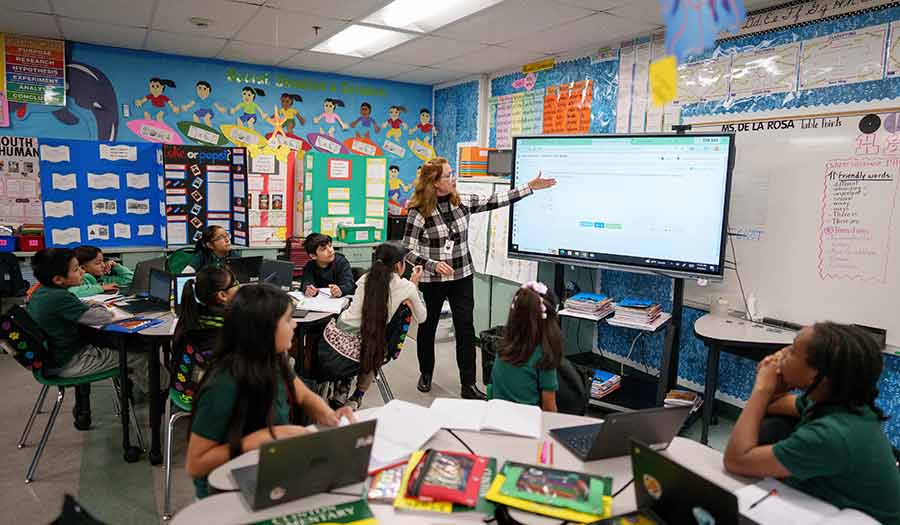
In Minnetonka Public Schools outside Minneapolis, school leaders say that while reading scores dipped during the pandemic, they have since recovered. Teachers now focus more on phonics and also regularly assess students on literacy. Students who are behind receive extra help on the parts of reading where they struggle. A student who has difficulty reading aloud might be asked to read to one of their classmates, for example.
But some things are out of the district’s control. During the pandemic, Associate Superintendent Amy LaDue said, many young children were homebound. They missed out on activities like going to museums and playing with other children, which are helpful for language and literacy development. She believes that is one factor that continues to hamper kids, especially those from low-income families.
“These kids weren’t in school when the pandemic happened, but [some] were…in early childhood and preschool,” Ms. LaDue said. “Their opportunities…to have those experiences outside of their home that build literacy skills and to apply them with peers probably were impacted because they were home.”
Along with interventions at school, a growing number of states and cities are investing in pre-kindergarten to help children with early literacy. California has introduced universal pre-kindergarten, and New York City is expanding its pre-kindergarten program to two-year-olds, giving toddlers an early start on learning. New Mexico has made child care free for nearly all families.
This article contains information from The Associated Press.